

Key takeaways
- Eight catfish and fish skinning pliers compared by jaw width, serration, handle and steel, plus how pliers stack up against a knife.
For catfish, pick a pair of skinning pliers with wide, flat, serrated jaws and a handle you can grip with a wet or gloved hand. Those two features do almost all the work: the jaws hold slick skin without tearing it, and the handle lets you pull steadily down the whole length of the fish. Everything else, from finish to colour, is secondary.
Skinning pliers are a narrow tool, and that is the point. A fillet knife can skin a fish, but pliers are faster on thick, tight skin like catfish and eel, they keep your fingers away from the spines, and they cost far less than a good knife. The eight pliers below are all sold as fish or catfish skinners. They differ in materials, handle covering and how much the listing tells you, so the notes below stick to what each title states and flag what to check before you buy.
Quick picks
- Everyday catfish skinner with coloured grips: HappyAlley Catfish Skinning Pliers
- Stainless steel and a covered handle for heavier use: Lee Fisher Sports Commercial Catfish Skinning Plier
- Commercial-style skinner from a long-running fish-tool brand: Maybrun Commercial Catfish Skinner
- Gloves included in the box: Soarzen Catfish Skinning Pliers
- One tool for catfish and for rib membranes at the smoker: Myron Mixon Rib Membrane Remover and Catfish Skinner Pliers
Our top picks


As an Amazon Associate we earn from qualifying purchases at no extra cost to you.
HappyAlley Catfish Skinning Pliers
HappyAlley’s title calls this a heavy duty steel fish skinner with ergonomic grips, aimed at catfish but described as multi purpose. It comes in red or black, and there are single and two-pack versions, so check which variant you are adding to the cart. A two-pack makes sense if you keep one pair at the cleaning table and one in the boat box.
The title does not give a jaw width, overall length or steel grade, so treat “heavy duty steel” as a general description rather than a spec. The bright colour is a practical plus, since a red handle is easy to find on a wet board or in a bucket of ice. It is a sensible first pair for someone who skins a few catfish a season. The question to settle on the listing page is how wide the jaw faces are, because narrow jaws roll the skin rather than clamp it.
Lee Fisher Sports Commercial Catfish Skinning Plier
The Lee Fisher Sports listing says commercial grade, stainless steel, and an ergonomic PVC handle, with a cutting edge to help start the skin. It also mentions poultry skinning, which tells you the jaw is meant for tough, slippery skin in general, not only catfish.
Stainless steel matters in this job because the tool is wet with slime and water every time you use it. Surface rust on the jaw teeth is the usual way a skinner wears out, and stainless slows that down, although no steel is rust-proof if you leave it in a damp tackle bag. The PVC covering gives a softer grip than bare metal and helps in cold weather. The title spells “plier” and a few other words loosely, and gives no dimensions, so look at the photos for jaw width and handle length. Suits someone who skins in volume, such as after a weekend of catfishing.
Maybrun Commercial Catfish Skinner
Maybrun’s listing is short: commercial catfish skinner, nothing more in the title. A second Maybrun listing in the same search shows a nickel finish in silver, so the line comes in at least two looks. Pick the one whose photos match what you want rather than assuming they are identical.
Because the title is silent on materials, the listing images and bullet points are where to look for the steel, finish and handle covering. Commercial-style skinners tend to be plain and sturdy: a flat jaw, a pivot, and a handle you can grip hard. That plainness suits anyone who would rather pay for a simple tool that does one thing. The honest limitation is the lack of stated specs, so read the full description before you order.
BUBBA Fish Skinners
BUBBA is best known for fillet knives, and this listing carries the brand’s name over to a fish skinner. The title is only “BUBBA Fish Skinners,” so it says nothing about size, steel or handle material. Anything beyond that has to come from the product page.
A brand-name skinner makes sense if you already own other BUBBA gear and like matching your kit, or if you simply prefer buying from a company with a wider fishing line. The plural in the title is worth a look: confirm whether the listing is for one tool or a set, and check the box contents. The main question is whether the jaw is wide and serrated enough for catfish, since a skinner for lighter fish may be smaller. Read the dimensions before assuming it handles a large flathead.
Mudville Skinning Pliers
Sold under the South Bend name, the Mudville Skinning Pliers are listed with nothing beyond the product name. The name points at skinning, but the listing words are all you can rely on, so there are no stated materials or dimensions to quote.
This is the kind of pair to consider if you want a low-fuss, traditional skinner and are comfortable judging it from the photos. Look at the jaw faces in the images: a good skinner shows broad, ridged faces that meet cleanly along their whole length, not just at the tips. Check whether the handles are bare metal or covered, because bare handles are slippery when covered in slime. As with the others whose titles are silent, ask the listing for steel type and length before you commit.
Soarzen Catfish Skinning Pliers with Nitrile Gloves
Soarzen’s listing describes a heavy duty fish skinner with precision jaws that strip catfish skin and rib membranes, and it says nitrile gloves are included. The glove detail is the practical hook: handling catfish is messy, and a disposable glove under your gripping hand keeps the slime off and gives the handle a bit more purchase.
Note that “zero meat damage” in the listing is marketing wording; how clean the skin comes off depends mostly on your cuts and your pull, not the pliers alone. Still, a bundle with gloves suits a beginner who has no fish-cleaning gear yet. Ordinary nitrile gloves are not cut-resistant, so they will not protect against a catfish spine or a slipped blade. If you want that protection, buy proper cut-resistant gloves separately. Check the listing for the glove size count and for any stated jaw width.
Capbuno Catfish Skinning Pliers
Capbuno’s title calls this a stainless steel fishing pliers for fish cleaning, filleting and anglers, specifically for removing catfish skin. Stainless steel is the one material fact it gives, and it is the one that matters most for a tool that lives wet.
The wording suggests a general-purpose cleaning tool rather than a pro-grade unit, so it fits an occasional user who wants a rust-resistant pair without paying for a commercial name. As with several others here, the title gives no dimensions or handle details. Before ordering, check the jaw width in the photos and whether the handles have any covering. If you plan to skin large channel or blue cats, a longer-handled model gives better leverage.
Myron Mixon Rib Membrane Remover and Catfish Skinner Pliers
This is the odd one out, and it is the only listing here that states a specific steel: 1045 steel with a PFOA-free Teflon coating and a galvanized rivet. It is sold under the Ergo Chef brand as both a BBQ rib membrane remover and a catfish skinner, with precision jaws for gripping a thin layer of skin or membrane.
The dual role is its selling point. If you smoke ribs and also skin the occasional catfish, one tool covers both jobs and sits in the same drawer. The coating gives the jaws a little slip-resistance when wet, though it can wear with hard use. Because the design is built around BBQ prep, check the jaw size against the fish you clean most. It is a good pick for a mixed kitchen and a questionable one if you skin large catfish all season. The small footprint is also easy to store.
Comparison
| Product | Key detail from the title | Best for |
|---|---|---|
| HappyAlley Catfish Skinning Pliers | Heavy duty steel, ergonomic grips, red or black | First pair for home catfish cleaning |
| Lee Fisher Sports Commercial Plier | Stainless steel, PVC handle, cutting edge | Frequent skinning, including poultry skin |
| Maybrun Commercial Catfish Skinner | Commercial; check listing | Simple, sturdy single-purpose tool |
| BUBBA Fish Skinners | Check listing | Anglers matching other BUBBA gear |
| Mudville Skinning Pliers | Check listing | Traditional catfish skinning on a budget |
| Soarzen Catfish Skinning Pliers | Nitrile gloves included | Beginners starting a kit |
| Capbuno Catfish Skinning Pliers | Stainless steel | Occasional use, rust resistance |
| Myron Mixon Skinner Pliers | 1045 steel, Teflon coating, galvanized rivet | Cooks who skin fish and pull rib membranes |
How to choose skinning pliers
Jaw width and serration
The jaw is the whole tool. Look for faces that are flat and broad, about as wide as a thumb, with fine ridges running across them. Wide faces spread the pull over more skin, so the skin does not tear at a single point. Teeth that are too coarse can punch through thin skin; teeth that are worn smooth slip. When you close the jaws with nothing between them, the faces should meet evenly along their length, not just at the tips.
Handle
A catfish is coated in slime, and your hands will be too. A covered or textured handle, or one with finger grooves, matters more than the colour. Longer handles give more leverage on a big fish, while shorter ones feel more precise on small channel cats. If you wear gloves, make sure the handle opening clears your hand at full squeeze.
Steel and finish
Stainless resists corrosion better than plain steel, and plated or coated steel is fine until the coating chips. Whatever the metal, rinse and dry the tool after each use. A pivot with a clean, tight joint matters more than a long steel spec sheet: if the jaws wobble or twist under load, you will lose grip right at the pull.
Pliers versus a knife
Knife skinning is a good fit for fish with fine, thin skin, and it lets you keep the skin attached for presentation. A fillet knife also skins a fillet by running the blade between the flesh and the skin, a technique that works on a wide range of fish; see the guide to the best fillet knives for that approach. For catfish, eel and other fish with thick, tight skin, pliers win: you cut once to start the skin and then pull, which is faster and puts less pressure on a blade.
What fish suit them
Catfish are the classic case, because the skin is tough, scaleless and does not come off with a scaler. Eel is similar. Bass and other scaled fish are usually scaled and filleted skin-on or skinned with a knife, so pliers are rarely needed. If you work with scaled fish, a fish scaler is the better first tool.
Safety
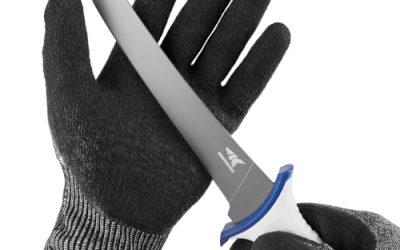
Catfish have sharp pectoral and dorsal spines that can puncture a hand. Pliers help because you grip the skin, not the fish, but you should still hold the fish steady with the other hand away from the spines, or pin it with a nail through the head. Cut-resistant gloves give an extra margin, and a stable surface helps too, so pair the pliers with a solid cutting board or a clamp board.
Use and care
- Secure the fish. Hang it from a nail or hook through the head, or lay it on a non-slip board with a clamp.
- Cut a shallow ring through the skin just behind the gills and pectoral fins. Cut only skin deep.
- Make a shallow cut along the back from the ring toward the tail, past the dorsal fin, and peel a small flap of skin free at the head.
- Clamp the pliers across the flap and pull firmly and smoothly toward the tail. Steady pressure beats jerking.
- Repeat on the other side, then trim any torn bits and rinse the carcass before you fillet.
- Rinse the pliers, dry them, and wipe the jaw faces with a light film of food-safe oil if you store them for months.
Common mistakes
- Cutting too deep at the head ring, which scores the meat and makes the skin rip.
- Pulling at an angle instead of straight along the body, which tears the flap.
- Gripping only a sliver of skin. Take a wide bite so the pull spreads out.
- Putting the pliers away wet, which is how the teeth rust first.
- Skipping the board. A fish that slides is the cause of most slips.
FAQ
Can skinning pliers be used on fish other than catfish?
Yes, on any scaleless fish with a tough skin, such as eel or bullhead. They are poor choices for scaled fish like bass, which are normally scaled or filleted with a knife.
Do I need to cut the skin before using pliers?
Yes. The pliers pull skin; they do not start it. A shallow cut around the head and along the back gives you a flap to grip. Without it, the jaws will just slide over the slime.
Are skinning pliers the same as fish bone pliers?
No. Bone pliers and tweezers are small, narrow tools for pulling pin bones from fillets. Skinning pliers have wide jaws for gripping skin. Using one for the other’s job gives poor results.
How do I keep the jaws gripping well?
Keep the faces clean and dry between uses. If the ridges clog with dried slime, scrub them with a stiff brush and warm soapy water, then dry the pliers completely.
For most home cooks, a stainless pair with broad jaws and a grippy handle is all the skinner you need. Spend the extra time checking the jaw width and the handle on the listing, and pair the tool with a stable board, kitchen shears for trimming fins, and a good fillet knife.
More from Amazon
Programs that pair well with the guide above. Offers and eligibility are set by Amazon and may change.
Free shipping on eligible items, Prime Video and more. Eligible new members can start with a free trial.
Start a Prime free trialA Prime membership for ages 18-24 with a trial period. Eligibility is set by Amazon.
See Prime for Young AdultsAudiobooks and podcasts to listen to on the go. Eligible new members can start with a free trial.
Try Audible freeAd-free music streaming. Eligible new subscribers can start with a free trial.
Try Music Unlimited freeAs an Amazon Associate we earn from qualifying purchases.



Write Your Review
No reviews yet. Be the first to share your experience!