

Key takeaways
- Seven fish lip grippers compared: trigger, floating, scale-equipped and compact styles, with size, material and catch-and-release advice.
For most anglers the right lip gripper is a 9-inch stainless trigger model with a lanyard or wrist strap, with a floating or scale-equipped version only if you actually need one. A gripper’s job is narrow: it clamps the lower lip so you can lift, unhook, weigh or release a fish without a hand in the mouth. Pick on jaw strength, handle grip and whether it survives being dropped over the side, not on how many extras are printed on the package.
What matters at the cleaning station is slightly different from what matters on the water. A wet, struggling fish is hard to pin down, and a gripper turns a two-handed wrestle into a one-handed hold. That is useful for bass, pike, catfish and other fish with a firm lip or jaw, and useless for fish with soft mouths or no usable lip. The seven grippers below cover the main styles: stainless trigger, floating, mechanical scale, digital scale, plastic, fiberglass-reinforced nylon and a compact stainless model for smaller fish.
Quick picks
- All-round stainless trigger gripper with a wrist strap: KastKing Paradox 9″
- Gripper that floats if it goes overboard: Rapala 9″ Floating Fish Gripper
- Lifting and weighing in one tool: Ghosthorn Fish Lip Gripper with Scale (11″)
- Digital readout with memory: Piscifun Fish Gripper with Digital Scale
- Plastic, budget-friendly and easy to rinse: Booms Fishing G05
- Smaller fish and lighter tackle: CUDA 6″ Fish Lip Gripper
Our top picks


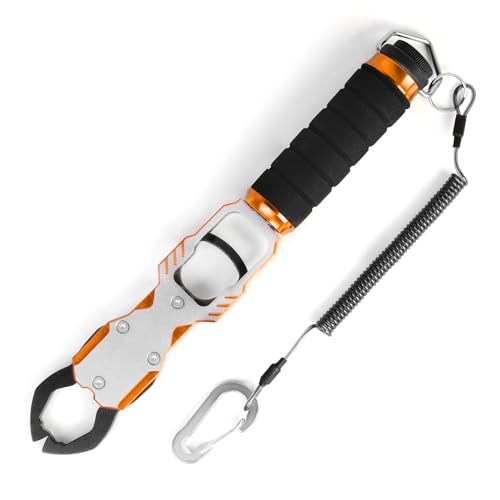
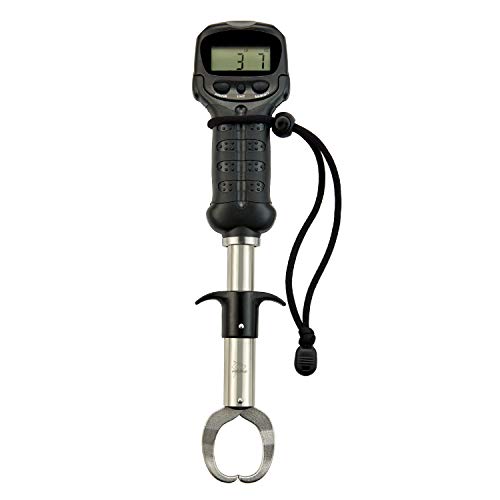


As an Amazon Associate we earn from qualifying purchases at no extra cost to you.
KastKing Paradox 9″ Fish Lip Gripper
The Paradox is a 9-inch gripper built from 420 stainless steel, with an easy-use trigger, a non-slip handle and an adjustable wrist strap. The title gives a weight capacity of 33 lb, which covers the large majority of bass, walleye and most pike you will keep or release from a boat or bank. The 420 grade is a common stainless for tools: it resists rust reasonably well and is easy to rinse clean, though it is not a premium alloy and should still be dried after saltwater.
Because it uses a trigger rather than a squeeze-handle clamp, you open the jaws, slide them onto the lip and let go. That makes one-handed use natural. The adjustable wrist strap is the detail worth having, since a gripper that falls in the lake is gone. Check the listing for whether the jaws are smooth or toothed and how much the head weighs, because the title does not say. Stainless is heavier than plastic and will sink.
Rapala 9″ Floating Fish Gripper
Rapala’s 9-inch gripper is described as having a floating design with one-handed operation, for both freshwater and saltwater. The title also mentions landing and releasing fish and boat and shore use. A floating body matters more than it sounds: the most common way to lose a gripper is to drop it while leaning over a gunwale or a dock, and a floating one can be scooped up with a net.
Floating grippers are usually made from lightweight plastic or composite materials rather than solid steel, so expect a trade-off in jaw rigidity compared with an all-stainless model. This listing is the white-and-black version, which is easy to spot on the water but will show grime from a fish-cleaning table. The title lists no weight capacity, so check the listing before using it on a fish over roughly 10 lb.
Ghosthorn Fish Lip Gripper with Scale (11″)
This is an 11-inch aluminum alloy gripper with a built-in 40 lb scale, a 360-degree swivel and a non-slip handle. The scale is the draw: you lift the fish by the lip and read the weight without a separate tool. The swivel lets the fish rotate without twisting the handle, which also takes some torque off the lip.
Aluminum alloy keeps weight down and resists rust, though it can dent and any surface finish will eventually wear. An 11-inch length keeps your fingers further from teeth and hooks, a real help with pike or a barbed treble. A mechanical scale in a gripper is an approximation. For a personal best or a tournament weight, check it against a known weight first, such as a sealed bag of water. Several near-identical Ghosthorn listings exist, so confirm you are ordering the model you intend.
Piscifun Fish Gripper with Digital Scale
Piscifun’s gripper pairs a stainless steel clip with a digital readout. The title lists a 60 lb capacity, a water-resistant body, an LCD display and a memory mode. The memory function holds a reading after the fish comes off, so you can note the weight at your leisure rather than reading it with a wriggling fish in hand.
A digital scale reads to a finer increment than a spring dial, which is useful when ounces matter, for example when logging fish over a season. The cost is the usual one for electronics near water: a battery, a display that can fog, and “water-resistant” is not “waterproof.” Rinse it with fresh water, do not submerge it, and carry a spare cell. The title does not give an overall length, so check the listing, because a short body puts your hand close to the fish.
Booms Fishing G05 Fish Lip Gripper
The G05 is a 9.4-inch plastic gripper that comes with a lanyard, sold in green in this listing. The title positions it as a saltwater and kayak tool for catfish and similar fish. Plastic has real advantages around fish: it will not rust, it is easy to rinse, it is light enough to forget about on a kayak, and it is generally the budget-friendly end of the category.
The limitation is strength. Plastic jaws flex under load and teeth can scratch them, so this suits small to mid-size fish better than a very heavy catch. The title gives no rated capacity, so check the listing and stay conservative. As a plastic body with a lanyard, it works well as a spare in the tackle bag or a dedicated tool for the cleaning table, where you want something you will not mind getting covered in slime.
Mossy Oak 10.5″ Fishing Lip Gripper
Mossy Oak’s gripper is a 10.5-inch model made of lightweight nylon and fiberglass, with a lanyard and non-slip handles, marketed for freshwater and saltwater. Fiberglass-reinforced nylon is stiffer than plain plastic and does not corrode, so it handles salt spray and repeated rinsing without pitting. At this length your hand sits well back from the fish.
The title does not state whether it floats or what weight it is rated for, and those two answers decide where it fits. Nylon composites are not always buoyant, so do not assume it will stay on the surface. Check the capacity before pairing it with a heavy fish. A two-piece set of the same gripper is also listed.
CUDA 6″ Fish Lip Gripper
The CUDA is a compact 6-inch stainless steel gripper with a T-handle and a lanyard included. The title rates it for up to 22 lb and describes it as intended for freshwater fish. A T-handle gives a fist-style grip, which suits a short tool better than a long pistol grip.
Short grippers keep your hand close to the fish, so they suit panfish, trout, smaller bass and other fish without sharp teeth. They are poor choices for pike, or any fish whose gill plates or teeth can cut. The stainless build should resist rust, but the title does not name the grade, so rinse and dry it after use. At 22 lb it is a modest-capacity tool, which is right for the size of fish it targets and not for anything bigger.
Comparison
| Product | Key spec from title | Best for |
|---|---|---|
| KastKing Paradox 9″ | 420 stainless, 33 lb capacity, trigger, wrist strap | General boat and bank use |
| Rapala 9″ Floating | Floating design, one-handed operation | Boat and dock fishing where drops happen |
| Ghosthorn 11″ with Scale | Aluminum alloy, built-in 40 lb scale, 360-degree swivel | Lifting and weighing in one tool |
| Piscifun Digital Scale | 60 lb capacity, LCD display, memory mode | Anglers who log weights |
| Booms G05 | 9.4″ plastic, lanyard (capacity: check listing) | Kayaks and rinse-and-forget use |
| Mossy Oak 10.5″ | Nylon and fiberglass, lanyard, non-slip handle (capacity: check listing) | Keeping hands away from teeth |
| CUDA 6″ | Stainless steel, 22 lb capacity, T-handle, lanyard | Panfish, trout and small bass |
How to choose a fish lip gripper
Trigger versus clamp. A trigger gripper has a spring-loaded jaw: you press the trigger to open, release it to close, and the spring holds the fish. This is the one-handed style most people want. Clamp or plier-style grippers need you to squeeze the handle to hold the grip, which tires the hand on a long session but gives finer control. For repeated lifting and releasing, choose the trigger.
Size and capacity. Match length to fish. A 6-inch tool suits panfish and trout. For bass, walleye and catfish, 8 to 10 inches is the working range. For pike, musky or saltwater fish with teeth, 10 inches or more keeps your fingers out of the way. Treat the stated capacity as a ceiling, not a target. If you routinely catch fish near the limit, move up a class, because jaws that flex or a lip that tears end the day early.
Material. Stainless steel is the strongest and the heaviest, and it sinks. Aluminum alloy is lighter and resists rust but dents. Plastic and nylon-fiberglass composites are light, corrosion-free and sometimes buoyant, at the cost of stiffness. For saltwater, rinse any metal gripper with fresh water after every trip regardless of the grade.
Floating or not. If you fish from a boat, kayak or dock, a floating gripper pays for itself the first time you drop it. Stainless models rely on the lanyard or wrist strap instead, so use it every time.
Built-in scales. A mechanical spring scale is convenient, but it drifts with temperature and wear. A digital scale is finer but depends on a battery and tolerates water poorly. Neither replaces a certified scale for tournament use. Treat the numbers as a good estimate and confirm against a known weight now and then.
Lanyards and wrist straps. A lanyard clipped to a belt loop or the boat is cheap insurance against a dropped tool.
Catch-and-release handling. A gripper should not be the only thing holding a heavy fish. Hanging a large fish vertically by its jaw strains the jaw and can injure it, so cradle the belly with your free hand and keep the fish low over the water or a wet surface. Use the gripper to control the fish, not to carry its whole weight for long, and get it back in the water quickly.
When not to use one. Soft-mouthed fish, species without a firm lip and fish with a delicate jaw are better handled with wet hands or a rubber-coated net. For fish you are keeping, a gripper is fine and makes the transfer to the board safer.
Use and care
- Wet your hand and the jaws before you touch the fish, then slide the open jaws over the lower lip and release the trigger. Keep the jaws on the firm part of the lip and clear of the gills and throat.
- Lift only as far as you need. Support the belly with the other hand for any fish you intend to release.
- Remove the hook before weighing if you can, so a thrashing fish does not wrestle the line while it hangs on the scale.
- Take the reading, then lower the fish and release the trigger. Do not drop a fish onto a hard deck from a height.
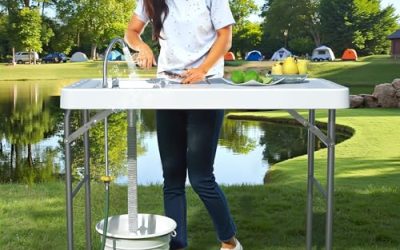
- If you are keeping the fish, move it straight to the board. A clamped board such as those in the guide to fish fillet boards with clamps holds it steady for the knife.
- Rinse the gripper in fresh water, work the trigger a few times to flush slime and salt from the spring, and dry it before storage. A drop of light oil on a metal spring helps.
Common mistakes: loading a plastic gripper past its rating, letting a heavy fish hang while taking a photo, forgetting the lanyard, and trusting a spring scale for a record. Before a trip, check that the spring still snaps shut and that the jaw hinge shows no cracks.
FAQ
Does gripping a fish by the lip hurt it?
It can if the fish is held vertically and carried by the jaw, especially a heavy one. Hold it briefly, keep the body supported with your free hand, and keep the time out of the water short. For fish you plan to release, minimal handling matters more than any specific tool.
Which fish are lip grippers wrong for?
Fish with soft or fragile mouths, and species without a firm lower lip, are poor candidates. Grippers also fit awkwardly on fish with very small mouths. Use wet hands or a net for those fish, and reserve the gripper for bass, pike, walleye, catfish and similar fish with a sturdy lip or jaw.
Are the built-in scales accurate enough?
For a quick estimate, yes. For a tournament or a record, no: spring scales drift, and digital models depend on battery and calibration. Hang a known weight from the gripper and compare it with the reading before you trust it.
Do I need a floating gripper?
Only if you fish over deep water from a boat, kayak or dock. A floating gripper can be netted if it drops, while a stainless one will not come back. If you choose stainless, use the lanyard or wrist strap every time and you will rarely lose it.
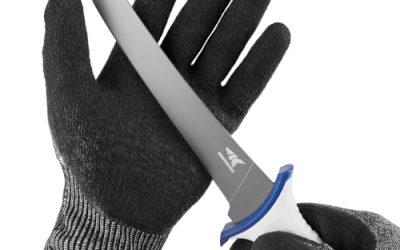
A lip gripper is a small tool that makes unhooking, weighing and releasing easier on both you and the fish. Pick the style that matches your boat and your fish, keep the lanyard on your wrist, and pair it with a good fillet knife and a fish scaler for what comes after the catch.
More from Amazon
Programs that pair well with the guide above. Offers and eligibility are set by Amazon and may change.
Free shipping on eligible items, Prime Video and more. Eligible new members can start with a free trial.
Start a Prime free trialA Prime membership for ages 18-24 with a trial period. Eligibility is set by Amazon.
See Prime for Young AdultsAudiobooks and podcasts to listen to on the go. Eligible new members can start with a free trial.
Try Audible freeAd-free music streaming. Eligible new subscribers can start with a free trial.
Try Music Unlimited freeAs an Amazon Associate we earn from qualifying purchases.
Write Your Review
No reviews yet. Be the first to share your experience!