

Key takeaways
- Sharpeners that suit thin, flexible fillet blades: guided, ceramic, stone and electric options, with angles and light-pressure tips.
For most anglers the safest pick is a guided or fixed-angle sharpener that holds the edge at roughly 15-17 degrees per side, because that is the range thin fillet blades are ground to. A guided system or a set of stones with an angle guide takes the guesswork out of the job. A small ceramic or fine diamond tool is the right companion for the boat or campsite. Aggressive carbide pull-through slots and fast electric machines can work, but they remove metal quickly and are easy to overdo on a blade that is only a millimeter or two thick.
A fillet knife is not a chef’s knife. The blade is long, narrow and flexible, so it bends away from the abrasive instead of staying put, and a heavy hand rounds the edge or chews up the tip. Every product below is a sharpener meant for knives, and each is judged on how well it suits that thin, springy steel: how it holds the angle, how gently it can cut, and whether you can carry it to the water.
Quick picks
- Most control at home: Work Sharp Precision Adjust Elite
- Guided sharpening you can take fishing: Work Sharp Guided Field Sharpener
- Pocket-size and fish-camp friendly: Smith’s Deluxe Fillet Knife & Hook Sharpener
- Gentle touch-ups between trips: Rapala Ceramic Sharpener or danco Fillet Knife Sharpener Puck
- Fast, repeatable edge indoors: Chef’sChoice 15XV EdgeSelect
Our top picks



 Chef’sChoice 15XV EdgeSelect Professional Electric Knife Sharpener
- Ideal for converting traditional 20-degree factory edges of…
- Advanced stropping stage and 100 percent diamond abrasives…
- Advanced, patented flexible spring guides for automatic adjustment…

 Intelitopia Complete Knife Sharpening Stone Set
- 【Complete Knife Sharpening Stone Kit】You don't need to…
- 【Dual Sided Whetstone】Our wet stone is made of…
- 【Multipurpose】Our professional-grade knife sharpener kit is highly durable…

As an Amazon Associate we earn from qualifying purchases at no extra cost to you.
Work Sharp Precision Adjust Elite
The title calls this a fixed-angle manual bench unit that moves from diamond to ceramic and finishes on a leather strop, and it lists pocket, kitchen, hunting and serrated edges. That is the full progression: reshape, refine, polish. Because the knife is held at a set angle while you pull the abrasive along it, you never have to freehand the thin part of a fillet blade, which is where most damage happens.
It suits the angler who fillets regularly at home and wants a clean 15-17 degree edge without learning stones. The honest question is how well the clamp or guide supports a very flexible 7-9 inch blade. Check the listing for maximum blade length and thickness, and plan to hold the spine steady so the blade does not flex under the abrasive. It takes more setup than a pull-through, which is the trade for control.
Work Sharp Guided Field Sharpener
This one is aimed squarely at hunting and fishing knives. The title describes a portable five-stage tool with diamond, ceramic and a leather strop, plus the promise of restoring an edge anywhere. A guided slot keeps the angle consistent, and the strop at the end removes the burr that otherwise tears fish flesh.
It is the best fit if you want one sharpener for the tackle bag that does more than a quick swipe. It also handles pocket knives and hunting blades, so it earns its space. The limit is the guide itself: a long, bendy fillet blade needs support near the tip, and the listing should tell you the knife length and thickness it accepts. Use the diamond stage sparingly and spend most of your time on ceramic and the strop.
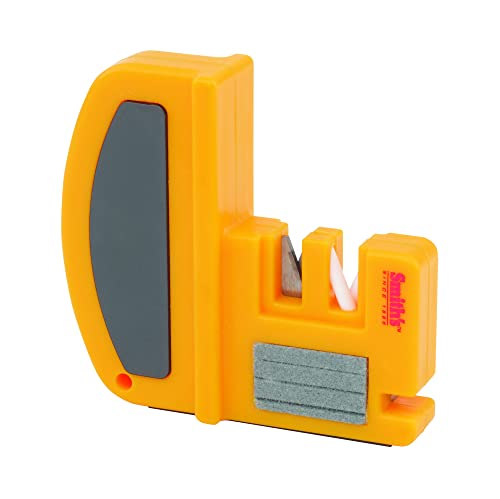
Smith’s 50729 Deluxe Fillet Knife & Hook Sharpener
The name says what it is for. The title lists multiple sharpening grooves, a line cutter, and use on pocket knives and straight blades, and it also sharpens fishing hooks. It is lightweight and portable, built to ride in a tackle box or vest rather than sit on a bench.
For a fisherman who also wants a sharp hook, this single tool covers two jobs. It suits quick edge maintenance during a trip, not repairing a chipped or badly dulled blade. The limitation to check on the listing is what abrasive each groove uses and how wide the knife groove is. With a thin, flexible fillet blade, keep the angle low and the strokes short, and stop as soon as the edge bites again.
danco Fishing Fillet Knife Sharpener Puck
This is a palm-size puck with coarse and fine surfaces made of ceramic and tungsten carbide, with a TPR grip and a lanyard for a tackle box or belt. A flat surface you drag the blade across gives you more feel than a slot, which helps on thin blades because you can feel the angle through the handle.
It is a good field tool for someone who wants something simpler than a guided kit. The carbide side cuts fast, so use it for a few strokes only and rely on the fine ceramic for finishing. The title does not give an angle guide, so you supply the angle yourself. Practice at home on a knife you do not mind scuffing before you trust it on your best fillet blade.
Chef’sChoice 15XV EdgeSelect Professional Electric Knife Sharpener
An electric three-stage machine with 100 percent diamond abrasives and precision angle guides, listed in the title for straight-edge and serrated knives. The guides hold the knife for you, so the angle is consistent from stroke to stroke, and the diamond stages work quickly on steel that has gone dull.
It is the pick for an angler who sharpens many knives at home and wants speed. The question to check is how a very flexible, narrow fillet blade behaves in the slots. Support the blade with a light touch, let the guide do the work, and do not force it, because the machine will remove metal faster than you can on a stone. Confirm the edge angle on the listing, since the title does not state it.
Rapala Ceramic Sharpener Single Stage
The title is short: a single-stage ceramic sharpener from a company known for fillet knives. Ceramic is a fine abrasive, so this belongs in the touch-up category. It brings back a slightly dulled edge and straightens a rolled one without taking much steel off.
That gentleness is why it suits flexible fillet blades. It is also a low-risk way to avoid wearing out a thin blade over many seasons. Its limit is just as clear: ceramic will not rescue a truly dull or chipped knife, and the title gives no size, shape or grit. Look at the listing photos to see whether it is a rod, stick or other form, then pair it with a coarser tool for deeper repairs.
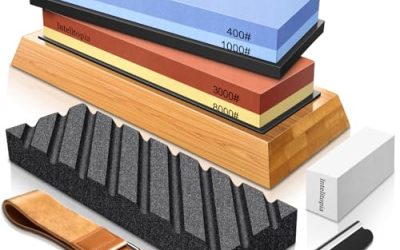
Intelitopia Complete Knife Sharpening Stone Set
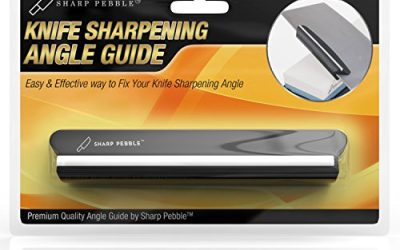
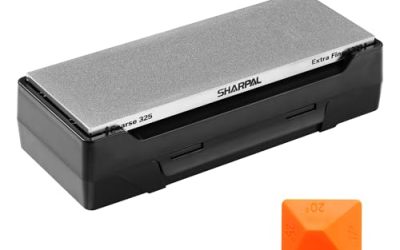
This is the traditional route. The title lists dual-grit whetstones at 400/1000 and 3000/8000, plus a leather strop, a flattening stone, a bamboo base, three non-slip rubber bases and an angle guide. That is everything you need to take a dull knife all the way to a polished edge.
Stones give the cleanest, most controllable result on a thin blade because you can use feather-light pressure. They suit the person who enjoys the process and has a flat table to work on. The honest drawback is the learning curve: a flexible blade lifts and drops angle easily, so use the supplied guide at first and soak the stones only if the listing directs it. It is not something you take on a boat.
AccuSharp Gourmet Series 15 Degree Knife Sharpener
This hand-held pull-through tool is built around a 15 degree angle, which falls right in the range thin fillet blades are made for. The title describes diamond-honed tungsten carbide reversible blades for straight-edge or serrated gourmet knives.
It is the quickest option on the list: pull the blade through a few times and the edge returns. That convenience is also the danger. Carbide pull-through sharpeners scrape steel away, so with a fillet knife use very light pressure, a few passes, and pull the blade smoothly along its length. Do not force the tip through the slot. It suits someone who wants fast kitchen maintenance and accepts the trade of less finesse for speed.
Comparison table
| Product | Key spec from the title | Best for |
|---|---|---|
| Work Sharp Precision Adjust Elite | Fixed angle, diamond to ceramic, leather strop, manual bench unit | Careful sharpening at home |
| Work Sharp Guided Field Sharpener | Portable, 5 stages, diamond, ceramic and strop | Guided edge on a fishing trip |
| Smith’s 50729 Deluxe | Multiple grooves, line cutter, hook sharpening | Tackle box maintenance |
| danco Sharpener Puck | Ceramic and tungsten carbide, coarse and fine | Quick field touch-ups |
| Chef’sChoice 15XV EdgeSelect | Electric, 3-stage, 100% diamond, angle guides | Fast, consistent edges indoors |
| Rapala Ceramic Sharpener | Single stage ceramic; check listing for size | Gentle touch-ups |
| Intelitopia Sharpening Stone Set | 400/1000 and 3000/8000 grit, strop, angle guide | Full control on a bench |
| AccuSharp Gourmet 15 Degree | 15 degree, diamond-honed carbide, pull-through | Quick kitchen refresh |
How to choose a sharpener for fillet knives
Match the angle. Thin fillet blades usually carry an edge of about 15-17 degrees per side. A sharpener that forces 20 degrees or more makes the edge thicker and the knife drag through flesh. Look for an adjustable guide, a 15 degree fixed setting, or stones with an angle guide.
Pick the type by how you work. Guided systems give consistent results and are forgiving. Stones give the best finish but demand technique. Pull-through sharpeners are fast but remove metal quickly, so treat them as occasional help. Electric machines are quick but need a light touch, and many do not have a slot designed for narrow, flexible blades. Ceramic rods and pucks are the best choice for trip maintenance.
Grit numbers. Around 400 grit reshapes a dull or damaged edge. 1000 grit is the working edge for most knives. 3000 to 8000 polishes. Leather strop or fine ceramic removes the burr. Because fillet steel is thin, you rarely need the coarsest grit unless the knife is chipped.
Steel hardness. Softer stainless fillet blades, common on budget knives, take an edge quickly and lose it quickly. Diamond abrasives work on any steel, and ceramic is fine for maintenance.
Portability. If you fillet at a fish-cleaning table or camp, choose a pocket-size ceramic or diamond tool with a lanyard or clip. Keep the larger guided kit or stones for the home shop.
Sharpening only pays off on a blade worth keeping. See the best fillet knives for the blades these sharpeners are meant to maintain, and for stone options in more depth, read about best whetstone knife sharpeners.
Use and care: common mistakes
- Secure the knife or stone. A sliding stone or a slipping hand is how thin tips get snapped.
- Start with the finest abrasive that still works. Move to a coarser grit only if the edge does not respond after a few strokes.
- Hold the angle steady, or use the guide. Lifting the spine a little too high turns a thin edge into a thick one.
- Use light pressure. The abrasive should do the cutting. Pressing hard on a flexible blade bends it and rounds the edge.
- Work from heel to tip in one smooth stroke, and alternate sides evenly.
- Finish with a few passes on a strop or fine ceramic to remove the burr.
- Rinse the blade, dry it fully and store it in a sheath. Salt water and fish slime dull and pit steel faster than you expect.
Common mistakes include sharpening at too steep an angle, using a coarse carbide slot every time, skipping the burr removal, and forcing the tip through a guide. If you also have an electric option in mind, compare it with best electric knife sharpeners before buying.
FAQ
What angle should I use for a fillet knife?
About 15-17 degrees per side suits most thin fillet blades. If your knife maker states a different angle, follow it. A steeper angle makes the edge sturdier but less keen, which you notice on delicate fish.
Can I use a pull-through sharpener on a fillet knife?
Yes, with care. Use very light pressure and only a few passes, because carbide pull-through slots take metal off quickly. Do not force a flexible blade, and finish with a ceramic or strop if you can.
How often should I sharpen?
Hone or touch up before each filleting session, using ceramic or a strop. Do a full sharpening on stones or a guided system only when the edge no longer responds to honing, which for most home anglers is a few times a year.
Are electric sharpeners safe for flexible blades?
They can be, but only if the guide holds the blade properly. Check that the model accepts narrow blades, keep the pressure light, and avoid repeating passes, since a machine removes steel faster than a stone.
Pick one tool for the bench and one for the boat, and keep the pressure light with both. A fillet knife that is sharpened gently and often will outlast one that is rescued with a coarse sharpener every few months.
More from Amazon
Programs that pair well with the guide above. Offers and eligibility are set by Amazon and may change.
Free shipping on eligible items, Prime Video and more. Eligible new members can start with a free trial.
Start a Prime free trialA Prime membership for ages 18-24 with a trial period. Eligibility is set by Amazon.
See Prime for Young AdultsAudiobooks and podcasts to listen to on the go. Eligible new members can start with a free trial.
Try Audible freeAd-free music streaming. Eligible new subscribers can start with a free trial.
Try Music Unlimited freeAs an Amazon Associate we earn from qualifying purchases.
Write Your Review
No reviews yet. Be the first to share your experience!