

Key takeaways
- Diamond sharpening stones for knives and fillet blades: grit numbers, single vs double-sided plates, flattening stones, and eight picks compared.
For most people who clean their own fish, a double-sided 8 x 3 inch diamond plate with a coarse side around 300-400 and a fine or extra-fine side around 1000-1200 is the one to buy. It reprofiles a chipped or dull blade quickly, it finishes thin fillet knives with a usable edge, and unlike a waterstone it never needs soaking and never dishes out of flat. If you only sharpen the odd hook or pocket knife on the boat, a small 4-inch handheld is enough.
Diamond plates are not all the same, though. Some are a thin layer of industrial diamond bonded to a flat steel plate and some are loose “sets” of small plates with a base. The picks below are limited to genuine diamond stones and plates: single-sided, double-sided and graded sets. Kits that mix in ceramic or oil stones, or that are built around a fixed-angle machine, were left out.
Quick picks
- Best all-round bench plate: SHARPAL 162N, 8 x 3 in, coarse 325 and extra-fine 1200.
- Best for frequent use: DMT DuoSharp 8-inch, fine and coarse in one plate.
- Best for flattening other stones: DMT D8F Dia-Sharp, a single fine 8 x 3 plate.
- Best for chipped or neglected knives: SHARPAL 169H, extra-coarse 220 and fine 600.
- Best for the tackle box: Smith’s DCS4, a 4-inch double-sided handheld that also fits hooks.
Our top picks




As an Amazon Associate we earn from qualifying purchases at no extra cost to you.
SHARPAL 162N Double-sided Diamond Sharpening Stone, 8 x 3 in
This is a full-size plate with a coarse 325 side and an extra-fine 1200 side. The title also lists a storage case with a non-slip base and an angle guide, which makes it a complete package for someone who has never used diamond before. The 8 x 3 inch face is long enough to draw a 9-inch fillet blade across in one or two strokes, and wide enough that the blade does not wander off the edge.
The 325 to 1200 spread covers most kitchen and fish-cleaning jobs: restoring a bevel on the coarse side, then refining on the extra-fine side. It suits anglers who want one plate that handles everything from a stainless fillet knife to a utility blade. The honest question is the angle guide: check the listing for the angles it offers, because a guide that only supports 20 degrees is too steep for thin fillet blades, which sit nearer 15-17 degrees per side.
DMT DuoSharp FWFC Double-Sided Diamond Stone, 8-Inch
DMT makes its plates by bonding monocrystalline diamond to a perforated steel plate, and the DuoSharp puts a fine side and a coarse side on one 8-inch body. The title gives the grades as fine and coarse without numbers; DMT has traditionally sold its coarse grade at about 325 mesh and its fine grade at about 600 mesh, but confirm that on the listing.
The coarse side is for setting a new edge or repairing damage, and the fine side takes over for regular touch-ups. That pairing is a good fit for a fillet knife that gets used often and needs a quick edge restoration at the end of a trip. The limitation is the gap between the two: fine at roughly 600 is a working edge, not a polished one, so if you want a push-cut on tomatoes you will want something finer. It is a premium-leaning choice in this lineup.
Trend Diamond Sharpening Stone Kit, 8 x 3 Inch Double Sided (300/1000)
Trend is better known to woodworkers than to anglers, and that heritage shows. The title describes an 8 x 3 inch double-sided bench stone with 300 and 1000 grit sides, a pouch, a cleaning block and a non-slip mat. A cleaning block is a useful extra: swarf from steel can clog the diamond surface, and a quick rub with a cleaner restores bite.
The 300/1000 spread is a touch wider than 325/1200 than the pair above, which means a noticeable jump in finish from one side to the other. It suits someone who sharpens chisels and plane irons as well as knives, since 8 x 3 inches is the bench-stone size woodworkers are used to. One thing to check on the listing: the title ends in a model code string (DWS/CP8/FC/A), so confirm the kit contents match the picture before you buy.
SHARPAL 169H Large 8 x 3 in Dual-Grit Diamond Stone, 220/600
This one is aimed at heavier work. The title lists an extra-coarse 220 side and a fine 600 side, described as monocrystalline diamond, plus an anti-slip pad and an angle guide. A 220-grit diamond surface removes steel quickly, so it is the plate to reach for when a knife has a rolled edge, a nick, or has been sharpened at the wrong angle for years.
Because the finest side is only 600, treat it as a reprofiling and repair plate rather than a finishing plate. Many people pair a plate like this with a finer stone, or follow it with a strop, to refine the edge. It suits owners of thick-bladed knives (boning, skinning, hunting) more than owners of thin fillet blades, where 220 is aggressive and light pressure matters.
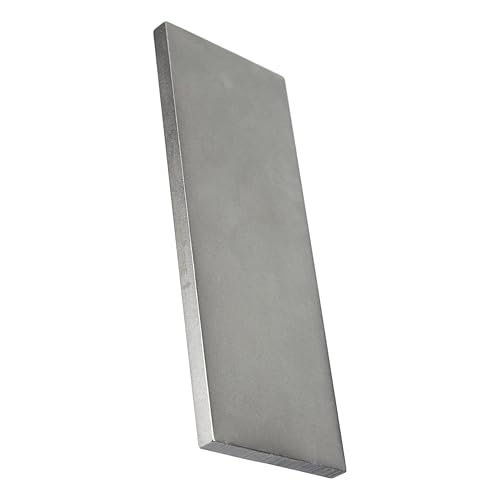
DMT D8F Dia-Sharp Bench Stone, Fine, 8 x 3 x 0.38 Inches
The D8F is a single-sided plate: one grade, fine, on an 8 x 3 x 0.38 inch steel plate, made in the USA according to the title. It has a non-slip base. Because it is a single grade it does one job, and it does it consistently: sharpening mid-range edges and flattening other stones.
A fine DMT plate is the classic tool for lapping a dished waterstone back to flat, which is why you see it on workshop benches. For knives, it works as a maintenance plate: put an edge back on a kitchen knife that is only slightly dull. The limitation is obvious: it has no coarse side for repairs and no extra-fine side for finishing, so it is best bought as a second plate alongside a double-sided one, not as your only stone.
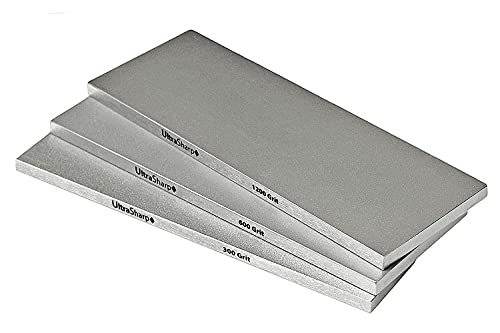
Ultra Sharp Diamond Sharpening Stone Set, 8 x 3, Coarse/Medium/Extra Fine
This set pairs three 8 x 3 inch diamond stones in coarse, medium and extra-fine grades. The title does not give grit numbers, so “check listing” is the honest answer to the question of how coarse or fine each really is. What you do get is a three-step progression, which gives more control than a two-sided plate.
A three-step set suits someone who wants to move methodically from repair, to shaping, to finishing, and who does not mind storing three plates. It is also useful for sharing between a kitchen and a fish-cleaning station. The trade-off is cost and bench space compared with one double-sided plate, and the lack of stated grit numbers means you cannot compare it directly with the other picks here.
DMT W7EFC Whetstone Mini Diamond Stone, Set of 3
The W7EFC is a set of three compact diamond stones in coarse, fine and extra-fine grades. They are small enough to sit in a tackle bag or a drawer, and the three grades give a full progression in a small footprint. DMT has traditionally rated extra-fine at about 1200 mesh, the finest of the three, and the same grading applies here, but verify on the listing.
Small stones demand more control: a short surface means you sharpen a long fillet blade in sections, and it is harder to keep the angle steady along the whole edge. That makes this set better for hooks, pocket knives and smaller blades, or for someone who already has good angle control. If you are sharpening 9-inch fillet knives regularly, a full-size plate is easier.
Smith’s DCS4 4-Inch Diamond Combination Sharpener
The DCS4 is a lightweight, 4-inch double-sided handheld. The title mentions use as an outdoor field sharpener and as a micro sharpener for fish hooks and pointed tools, which is the reason it earns a spot on a fishing site. It fits in a tackle box or jacket pocket and takes up almost no room.
It is not a bench plate. A 4-inch face is short for a long fillet knife, and the title does not list grit numbers, so check the listing for the coarse and fine grades. It is best treated as a field touch-up tool: refresh a hook point, tidy a pocket knife, or knock a burr off a blade at camp. It is budget-friendly, and good as a backup beside a full-size plate at home.
Comparison table
| Product | Key spec from the title | Best for |
|---|---|---|
| SHARPAL 162N | 8 x 3 in, 325 / 1200 grit, case and angle guide | All-round kitchen and fillet knives |
| DMT DuoSharp FWFC | 8-inch, fine / coarse, double-sided | Frequent use, quick edge restoration |
| Trend 300/1000 kit | 8 x 3 in, 300 / 1000 grit, pouch, cleaning block | Knives plus chisels and plane irons |
| SHARPAL 169H | 8 x 3 in, 220 / 600 grit, monocrystalline | Repairing chips and reprofiling |
| DMT D8F Dia-Sharp | 8 x 3 x 0.38 in, fine, single-sided | Flattening stones, maintenance sharpening |
| Ultra Sharp set | 8 x 3, coarse / medium / extra fine (check listing for grit numbers) | Step-by-step progression |
| DMT W7EFC mini set | 3 mini stones: coarse, fine, extra-fine | Tackle bag, hooks, small blades |
| Smith’s DCS4 | 4 in, double-sided, handheld | Field touch-ups, fish hooks |
How to choose a diamond sharpening stone
Grit numbers
Diamond grit is usually quoted in mesh, and roughly speaking 220-325 is coarse, 400-600 is medium to fine, and 1000-1200 is extra-fine for a diamond plate. Do not compare these numbers directly with waterstone grits. A 1000 diamond plate leaves a different kind of scratch pattern from a 1000 waterstone, and in practice most diamond plates top out around 1200-3000 before you move to a strop or ceramic hone for polish.
For fillet knives, which are thin, flexible and made of steel that is usually not extremely hard, a 600 to 1200 finishing surface is plenty. You want a clean, slightly toothy edge that bites into fish skin. A mirror polish is not needed.
Single-sided, double-sided or a set
A double-sided plate is the practical default: one side to repair, one to finish. A single-sided plate costs less and is best when you already own a stone of the other grade. A set of three or more plates gives finer control, but the extra grades often go unused. If you are unsure, start with a double-sided plate and add a fine or extra-fine plate later.
Mono versus poly diamond
Monocrystalline diamond particles are single crystals with a consistent shape and cutting action. Polycrystalline particles are clusters of tiny crystals that break down as you sharpen, leaving a finer surface over time. Monocrystalline plates generally stay aggressive longer; polycrystalline plates tend to give a smoother cut. Among the picks here, the SHARPAL 169H title says monocrystalline and DMT is also known for monocrystalline diamond. For the others the title is silent, so check the listing if this matters to you.
Size
Match the plate to the knife. An 8-inch plate suits fillet blades of 6-9 inches, because you can sweep the whole edge in a few strokes. A 6-inch plate works but needs more passes. Anything smaller than 4-5 inches is for hooks, scissors and touch-ups only.
Using a diamond plate to flatten other stones
A diamond plate is one of the best tools for flattening waterstones, which wear into a dish with use. Soak the waterstone, set the plate on top (or the stone on the plate), and rub in circles until the surface is flat and the pencil grid marks you drew on it have gone. A fine plate like the D8F is ideal for this. If you already own whetstones, read our guide to whetstone sharpeners and keep a diamond plate alongside them.
How to use a diamond stone
- Place the plate on a non-slip base or damp cloth so it cannot move. Diamond plates do not need soaking. Skip the oil as well.
- Add a few drops of water, or a squirt of water with a drop of dish soap, to float away swarf. Many makers say plates can also be used dry, but water keeps the surface cleaner.
- Set the angle. For thin fillet knives, 15-17 degrees per side is typical. For kitchen knives, 17-20 degrees. For thick hunting or skinning knives, 20-25. An angle guide or a stack of two coins under the spine helps you find it.
- Start on the coarse side only if the edge is dull or damaged. Use light pressure, as diamond cuts quickly and heavy pressure only wears the plate faster. Push the edge forward as if slicing a thin layer off the stone, covering the full length of the edge.
- Count your strokes on each side. Work until you raise a burr (a thin wire of metal) along the opposite edge. You can feel it by drawing your thumb gently across the edge, not along it.
- Move to the fine side, use fewer strokes and lighter pressure, and alternate sides. Finish with a few edge-trailing strokes to remove the burr.
- Rinse the knife, wipe it dry, and test on paper or a tomato skin. Rinse the plate and dry it before storing.
Care and common mistakes
- Pressing too hard. Diamond cuts on its own. Heavy pressure shortens plate life and can round the edge.
- Using the coarse side too often. Coarse removes a lot of steel. For regular maintenance, use the fine side or a strop. See our kitchen knife sharpeners page for other options.
- Letting the plate clog. Scrub with a nylon brush, a little soap and water, or a cleaning block, then dry thoroughly.
- Using abrasive cleaners. Avoid scouring powders that wear the diamond coating.
- Chasing a polish. A very fine, polished edge can be less useful on fish skin than one with a bit of tooth.
- Sharpening ceramic knives. Only diamond will cut ceramic, but check the knife maker’s guidance first.
Keep new plates flat on a shelf, not stacked under a heavy tool, and avoid dropping them on tile, as the base plate can bend. Before you sharpen a new fillet blade, read our guide to the best fillet knives, so you know what steel you are working with.
FAQ
Do diamond sharpening stones need to be soaked or oiled?
No. Diamond plates are used with a few drops of water, or dry. Do not soak them and do not use oil, because oil can clog the diamond surface and attract grit. Check the maker’s instructions for the specific plate.
Is a diamond stone better than a waterstone for fillet knives?
It depends on what you value. Diamond is faster, never dishes out of flat, and is simple to maintain. Waterstones can produce a finer, more polished edge and feel better to many sharpeners. Fillet blades are thin and soft enough that either works. If you want one tool with minimal upkeep, diamond is the easier choice.
How long do diamond plates last?
The diamond layer wears down gradually. Light pressure, regular cleaning and avoiding the coarse side for routine touch-ups all extend life. A plate that has lost its bite and no longer cuts steel quickly has reached the end of its useful life.
Can I use a diamond stone on serrated or stainless knives?
Yes, diamond cuts hard stainless steel easily. For serrated knives, use a narrow tapered diamond rod or the corner of a small plate, as the flat face cannot reach inside each scallop.
A double-sided 8 x 3 plate covers most of what a home angler needs, and a small handheld takes care of hooks and trip touch-ups. Pick the grit range that matches your knives, keep the pressure light, and the plate will serve for years. For a wider look at sharpening tools, see our guide to the best fish fillet knives to match your edge to the blade you own.
More from Amazon
Programs that pair well with the guide above. Offers and eligibility are set by Amazon and may change.
Free shipping on eligible items, Prime Video and more. Eligible new members can start with a free trial.
Start a Prime free trialA Prime membership for ages 18-24 with a trial period. Eligibility is set by Amazon.
See Prime for Young AdultsAudiobooks and podcasts to listen to on the go. Eligible new members can start with a free trial.
Try Audible freeAd-free music streaming. Eligible new subscribers can start with a free trial.
Try Music Unlimited freeAs an Amazon Associate we earn from qualifying purchases.
Write Your Review
No reviews yet. Be the first to share your experience!