

Key takeaways
- Using stainless steel. Metal surfaces dull a knife within a few cuts.
- Sharing a board for raw fish and ready foods. Keep a separate board for raw fish, or wash and sanitise between tasks.
- Buying a thin board. Anything below roughly a quarter inch warps and slips.
- Skipping grip. Without a clamp, a damp towel or non-slip feet, a wet fish and a sharp knife are a poor combination.
The best cutting board for fish is a non-porous HDPE (high-density polyethylene) board, ideally half an inch thick and larger than the fish you clean. Poly boards such as Rapala’s clamp fillet board for the dock, an NSF-style commercial poly board for the kitchen, and a rubber board like Hasegawa for sushi-grade knife work cover most needs. Bamboo and wood look good but absorb odor and moisture, so reserve them for plating, not raw fish.
Our top picks


As an Amazon Associate we earn from qualifying purchases at no extra cost to you.
Quick comparison
| Board type | Best for | Typical size | Material | Dishwasher-safe | Price tier |
|---|---|---|---|---|---|
| Rapala-style clamp fillet board | Dock, boat and garage filleting | Around 20 to 24 inches long with a clamp | HDPE with a clamp | Usually hand wash | Budget |
| Commercial poly board (Winco, Dexter-Russell style) | Kitchen prep and big fish | 18 x 24 in, half inch thick | HDPE or polypropylene | Yes, in most cases | Budget to mid |
| Boone Bucket Board | Fishing buckets and camps | Fits a standard bucket | Polyethylene | Hand wash | Budget |
| Hasegawa soft rubber board | Knife edge protection and sushi prep | Various sizes | Synthetic rubber | No, hand wash | Premium |
| Epicurean-style composite board | Everyday kitchen use | Mid sizes | Paper composite | Often yes | Mid-range |
| Bamboo fillet board with clamp | Light home use | About 18 inches | Bamboo | No | Budget |
Sizes are typical for each style rather than a single model; confirm dimensions on the maker’s listing.
Best overall for the kitchen: a large commercial poly board
An 18 by 24 inch board, half an inch thick, is the workhorse in seafood shops. It holds a whole salmon without hanging over the edge, stays flat, can be sanitized with diluted bleach, and goes into a commercial dishwasher in most cases. Its weak point is that it can slide on a wet counter, so put a damp towel or a rubber mat beneath it.
Best for the dock and boat: Rapala-style clamp board
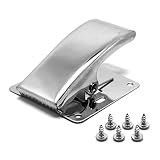
Search results frequently rank the Rapala poly fillet board first among fishing boards. The clamp holds the fish by the head or tail so you can run the knife through slippery flesh with one hand free. Boards with a clamp stay popular because they stop the fish sliding, which is the biggest safety risk when filleting. Check that the clamp tightens to match your board’s thickness and that the hardware is rust-resistant.
Best for camps and buckets: Boone Bucket Board
This polyethylene board sits on a bucket so scraps drop in directly. It works best for panfish and smaller species, and is not a good fit for large fish.
Best premium for fine knife work: Hasegawa soft rubber
Hasegawa boards are made from soft synthetic rubber that is gentle on knife edges and has a little give. Japanese chefs favor them for sushi and sashimi. They cost far more than poly, need hand washing and should not take a heavy cleaver, so they suit careful trimming rather than breaking down large fish.
Best everyday compromise: composite boards
Paper-composite boards such as Epicurean are dense and non-porous and tolerate heat. They are harder than poly, so they may wear a knife edge slightly faster but suit mixed kitchen use.
Best budget option: bamboo with clamp
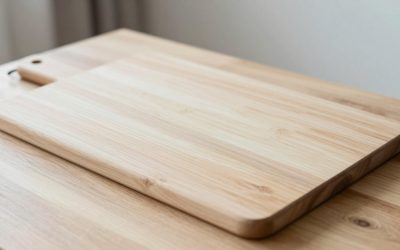
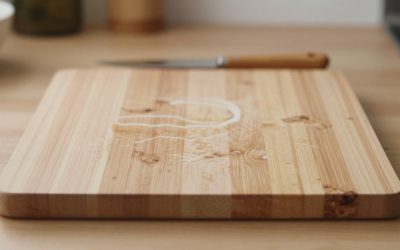
Bamboo boards with clamps are cheap and good for occasional filleting of small fish, but they take on odor and show cut marks. If you use one, oil it lightly and dry it fully after each use.
Worked calculation: choose the size
Board length should be at least the fish length plus 4 inches, so the tail and head do not hang off. Width should be at least the fish’s body depth plus room for your knife hand, around 6 inches for most species.
| Fish length | Minimum board length | Suggested board |
|---|---|---|
| Up to 12 inches (panfish, small trout) | 16 inches | Bucket board or small clamp board |
| 12 to 20 inches (bass, walleye) | 24 inches | Clamp board |
| 20 to 30 inches (salmon, striped bass) | 34 inches | Large poly slab or two boards side by side |
Cleaning and sanitising
- Rinse the board with cold water first, since hot water can set protein onto the surface.
- Scrub with dish soap and a stiff brush, paying attention to knife grooves.
- Sanitise with about 1 tablespoon of unscented household bleach per gallon of water, a ratio given by the USDA, and let it sit for a few minutes before rinsing.
- Stand the board on its edge to dry fully before storage.
- Resurface deep grooves by sanding, or replace the board if it is heavily scarred, because grooves hold bacteria and slime.
Mistakes to avoid
- Using stainless steel. Metal surfaces dull a knife within a few cuts.
- Sharing a board for raw fish and ready foods. Keep a separate board for raw fish, or wash and sanitise between tasks.
- Buying a thin board. Anything below roughly a quarter inch warps and slips.
- Skipping grip. Without a clamp, a damp towel or non-slip feet, a wet fish and a sharp knife are a poor combination.
Decision matrix by situation
| Your situation | Choose | Reason |
|---|---|---|
| Cleaning fish on a boat or dock | Clamp fillet board in HDPE | Holds the fish and rinses with a hose |
| Filleting at the kitchen counter | 18 x 24 inch commercial poly board | Large, flat and dishwasher-friendly |
| Slicing sashimi or trimming fillets | Soft rubber board | Protects the fine edge of a long knife |
| Small catches at a campsite | Bucket board | Scraps fall straight into the bucket |
| Occasional fish, mostly other food | Composite board, with a separate board for other raw meat | One board covers many jobs |
Material comparison
| Material | Odor and stain resistance | Knife friendliness | Upkeep |
|---|---|---|---|
| HDPE and polypropylene | High, non-porous | Good | Wash, sanitise, resurface when scarred |
| Soft rubber | High | Excellent | Hand wash, avoid heat |
| Paper composite | High | Fair, harder than poly | Wash, occasional oil in some brands |
| Bamboo and hardwood | Low to medium | Medium to hard on edges | Oil and dry, replace when cracked |
| Glass and stainless | High | Poor, dulls knives | Not recommended for knife work |
Food safety on the board
Raw fish carries bacteria that spread easily between boards, hands and sinks. Keep a dedicated board for raw seafood, wash it before it touches anything else and keep raw fish at or below 40 degrees Fahrenheit until you fillet it, which is the standard cold-holding guideline from the USDA and FDA. If you fillet outdoors, keep fish on ice and rinse the board with clean water between fish so slime does not build up and make the surface slippery.
Frequently Asked Questions
Is wood or plastic better for cutting fish?
Plastic, especially HDPE, is easier to sanitise and does not hold odor. Wood can be kept clean, but it needs more care and is less convenient for raw fish.
Do I need a clamp?
A clamp helps most when filleting whole fish because it holds the fish still. For steaks and fillets already cut, a regular board is enough.
How do I remove fish smell from a board?
Scrub with soap, then rub with lemon juice or a paste of baking soda and water, rinse and dry. Sanitising with a diluted bleach solution handles stubborn smells on plastic.
Can I put a poly board in the dishwasher?
Many commercial poly boards are dishwasher-safe, but check the maker’s note. High heat can warp thinner boards.
How thick should a fish cutting board be?
About half an inch is a good balance of stability and weight. Thinner boards flex and slide.
More from Amazon
Programs that pair well with the guide above. Offers and eligibility are set by Amazon and may change.
Free shipping on eligible items, Prime Video and more. Eligible new members can start with a free trial.
Start a Prime free trialA Prime membership for ages 18-24 with a trial period. Eligibility is set by Amazon.
See Prime for Young AdultsAudiobooks and podcasts to listen to on the go. Eligible new members can start with a free trial.
Try Audible freeAd-free music streaming. Eligible new subscribers can start with a free trial.
Try Music Unlimited freeAs an Amazon Associate we earn from qualifying purchases.
Write Your Review
No reviews yet. Be the first to share your experience!