

Key takeaways
- Whetstone angle guides for fillet and kitchen knives: clip-ons, wedges, a pyramid, a jig and a digital trainer, plus which angle suits which blade.
For most people who sharpen a fillet knife on a whetstone, the best angle guide is a clip-on guide that sets 15 degrees per side, because that is close to the angle a thin, flexible fillet blade wants. Add a set of angle wedges or a pyramid-style guide if you also sharpen thicker kitchen and outdoor knives, which usually sit at 17-20 degrees. A digital angle trainer is worth considering only if you want to learn to hold the angle by hand and then put the guide away.
A guide does one job: it keeps the same angle from the first stroke to the last, so the edge ends up as one clean bevel instead of a rounded one. That matters more on a fillet knife than on most blades, because a thin edge that gets rounded off by wobbly wrists stops gliding through skin and pin bones. The seven guides below cover clip-ons, wedges, a pyramid block, an adjustable jig and a digital gauge, followed by how to match the angle to the blade.
Quick picks
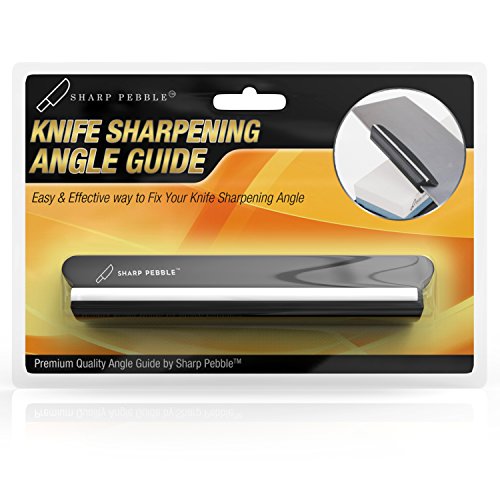
- Simplest clip-on for thin and mid-weight blades: Sharp Pebble Whetstone Knife Sharpening Angle Guide
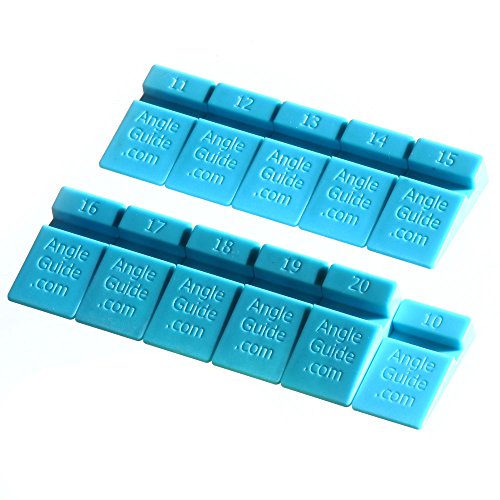
- Low angles for thin fillet blades: Wedgek AGM Angle Wedges
- Guide that attaches to the blade itself: Koja Fixed Angle Whetstone Blade Guide
- Four preset angles for mixed knife drawers: SHARPAL 196N Angle Pyramid Guide
- Learning to hold the angle freehand: SHARPAL 195H Digital Angle Guide
Our top picks


As an Amazon Associate we earn from qualifying purchases at no extra cost to you.
Sharp Pebble Whetstone Knife Sharpening Angle Guide
This is the classic clip-on style of guide, which holds a set angle against the stone so you can slide the blade back and forth without having to judge the angle by eye. The title says it covers 15 to 20 degrees and fits all kinds and sizes of knives, and it promises less wrist strain, which is a real benefit when you are working through a long fillet knife on a short stone.
That 15-20 degree window is what makes it a good first pick for a fish-and-kitchen household. Fifteen degrees suits a thin fillet blade, and 20 degrees suits a heavier chef knife or a utility blade. Check the listing for how the angle is set, because clip-on guides generally give an angle that depends on how tall the blade is and how thick the spine is. A very narrow fillet blade will end up at a slightly different angle than a wide chef knife using the same setting.
Wedgek AGM Angle Wedges
Wedgek makes small wedges that you place under or against the blade, not clip-on guides. The title says this set covers 10 to 20 degrees, which is a low range that suits thin fillet and boning blades best. A wedge does not stay with the knife, so it works as a visual and tactile reference: set the blade against it, feel the angle, then match it as you sharpen.
The trade-off is that wedges teach rather than hold. You still guide the blade by hand, so they suit someone willing to practice for a few sessions. If you want a guide that physically prevents the angle from drifting, one of the clip-on or jig options will be easier. The listing is silent on material and exact angle steps, so check what is included.
Koja Fixed Angle Whetstone Blade Guide
The title describes a guide that attaches to the blade to hold a consistent angle, compatible with most kitchen knives, and notes that it is also called a sharpening jig or angle guide. Because it attaches to the blade rather than the stone, it travels with the knife and keeps its position as you flip from one side to the other.
It does not list a specific angle in the title, so confirm the preset on the listing before you buy; you want one that reaches the 15-17 degree range if you mostly sharpen fillet knives. Also check how it grips a very thin, flexible blade. A fillet knife that bends slightly under the clip will give you an inconsistent angle along its length, so use light pressure and watch the spine as you work.
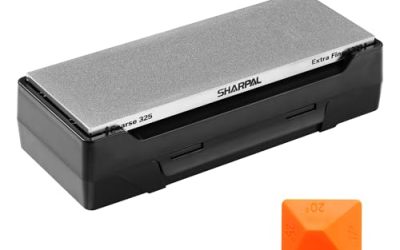
SHARPAL 196N Angle Pyramid Guide
This is the angle cube idea in a pyramid shape. The title lists four universal angles: 14, 17, 20 and 25 degrees, sold as a 2-pack. You rest the knife against the face that matches the angle you want, check where the spine sits, and then match it on the stone. A pyramid is the best way to see how the four common angles compare side by side.
It covers the whole range in one tool: 14 or 17 degrees for fillet knives, 20 degrees for German-style kitchen knives, and 25 degrees for heavier outdoor blades. It is a reference block, not a guide that physically holds the angle, so your hands still need to be steady once you start stroking. The 2-pack means you can keep one in the kitchen drawer and one in the tackle bag.
Naniwa QX-0010 Blade Angle Guide
Naniwa is best known for its sharpening stones, and the title here is brief: a blade angle guide for sharpening stone. That is all the listing tells us, so treat it as a plain, no-frills guide and look at the product images and description for the preset angle and how it attaches to the blade.
It makes sense for someone who already knows which angle they want and has confirmed it matches the guide, ideally in the 15-17 degree range for fillet knives. Without a stated angle range, it is the hardest pick here to recommend blind, which is why it sits lower in the order.
LAVODA SG01 Adjustable Angle Guide
This is a scrolling jig rather than a clip. The title says the angle is adjustable from 0 to 30 degrees and that it works on whetstones and diamond stones, with the promise of no more shaky hands. A scrolling jig lets you dial in any angle in that range, so it covers a 12-degree Japanese-style fillet blade and a 20-degree utility knife without changing tools.
The benefit is the range. The cost is setup time, because you have to set the angle, lock it, and check it each time. For occasional sharpening, a fixed clip-on is quicker. For someone who owns a thin fillet knife, a heavier cleaver and a few pocket knives, an adjustable jig removes a lot of guesswork. Check the listing for how the blade is clamped and what blade widths it can hold.
SHARPAL 195H Digital Angle Guide
This is the odd one out, and deliberately so. The title calls it a freehand digital angle trainer with a motion-filtering algorithm and a real-time readout in 1 degree steps across 0-80 degrees, with a strong magnetic base. You stick it to the flat of the blade (it needs a magnetic, ferrous blade) and watch the number while you sharpen freehand.
It does not hold the angle for you. It tells you what your hands are doing, which is how you build the muscle memory to sharpen without a guide. Because it attaches magnetically, it only works on blades that a magnet will grip, so check this against your knives; some stainless fillet knives are less magnetic than others. It suits someone who wants to learn, not someone who wants an instant fix.
Comparison table
| Product | Key spec from the title | Best for |
|---|---|---|
| Sharp Pebble Angle Guide | 15 to 20 degrees, fits all sizes of knives | First guide for fillet and kitchen knives |
| Wedgek AGM Angle Wedges | 10 to 20 degrees | Low angles on thin blades, learning the angle |
| Koja Fixed Angle Blade Guide | Attaches to blade; angle check listing | Consistent angle on both sides |
| SHARPAL 196N Pyramid | 14, 17, 20, 25 degrees; 2-pack | Comparing angles across a knife drawer |
| Naniwa QX-0010 | Blade angle guide for stones; angle check listing | Plain guide for stone work (check angle) |
| LAVODA SG01 | Adjustable 0 to 30 degrees | Mixed collection of thin and thick blades |
| SHARPAL 195H Digital | 0-80 degrees, 1 degree readout, magnetic base | Training freehand technique |
How to choose a whetstone angle guide
Start with the knife, not the guide. Thin, flexible fillet blades and Japanese-style knives take a low angle, usually 15-17 degrees per side, sometimes as low as 12-15 degrees on a very thin blade. Western kitchen knives such as chef knives and utility knives sit around 17-20 degrees per side. Thick, heavy-duty blades, including hunting knives and cleavers, often want 20-25 degrees so the edge survives bone and hard work. A lower angle cuts better but chips more easily; a higher angle is blunter but holds up longer.
Match the guide type to how you sharpen. There are four kinds on this list:
- Clip-on guides sit on the spine and rest on the stone. They are the easiest to use and the best for beginners.
- Wedges and pyramid blocks are references. They show the angle, but you still hold it yourself.
- Adjustable jigs clamp the blade and set any angle in a range, at the cost of slower setup.
- Digital trainers give a live readout while you sharpen freehand and are for learning.
Understand what a clip-on really sets. A clip-on guide does not know the angle; it only sets the height of the spine above the stone. The angle follows from blade height. A useful rule: the spine height above the stone is roughly the blade height multiplied by the sine of the angle. For a blade 1 inch tall at 15 degrees, that is about 0.26 inch (6-7 mm); at 20 degrees, about 0.34 inch (8-9 mm). A narrow fillet blade needs a lower spine than a wide chef knife to hit the same angle. If a guide says 15 degrees but your blade is much narrower or wider than the one it was designed for, the real angle will differ.
Check it with a marker. Color the edge with a permanent marker, make two or three light strokes, and look at where the ink came off. If the ink is gone evenly across the bevel right to the edge, the angle matches. If it is gone only at the very edge, your angle is too high. If the edge still carries ink and only the upper bevel is cleaned, your angle is too low. Adjust the guide and try again.
Mind the flex. A fillet blade bends. Pressing hard with a clip-on guide can flex the blade and change the contact point, so use light pressure and let the stone do the work. Keep the blade flat across the stone, not at a skewed angle, and watch the whole length of the edge, not just the middle.
Choose a guide that fits your stones. Most clip-ons rest on the stone surface, so they need a stone that is flat and not too thin. If your stone is a small combination block, check that the guide does not hang over the edge. A stable base or holder also helps; see our guide to the best whetstone knife sharpeners for stone and grit advice.
Use and care
- Soak or splash the stone as the manufacturer directs, and make sure it is flat; a dished stone defeats any guide.
- Attach or place the guide, then set the blade on the stone with the edge facing away from you.
- Take 5-10 light strokes, checking the contact point after the first one.
- Count strokes on each side so the bevels stay even, then repeat on a finer grit.
- Remove the guide for the last few light strokes on the finest stone if you like, to let the edge settle naturally.
- Rinse and dry the guide, especially if it has metal parts, and keep it in a drawer, not a wet tackle bag.
Common mistakes
- Using a high-angle setting on a thin fillet blade, which blunts it.
- Pressing too hard so the guide slides or the blade flexes.
- Skipping the marker check and assuming the printed angle is right.
- Keeping the guide on a sharp blade as a crutch, and never learning the angle by feel.
For picking the knife itself, see our best fillet knives and knife sharpeners for kitchen guides.
FAQ
What angle should I use for a fillet knife?
Most thin, flexible fillet blades work well at 15-17 degrees per side. Very thin Japanese-style blades can go lower. If you use the knife on larger fish and hit bone or scales, 17-20 degrees gives a more durable edge.
Do angle guides work on flexible blades?
They do, but light pressure matters. A flexible blade can bend under a guide and change the angle. Keep your strokes gentle, hold the blade flat on the stone, and check the edge with the marker method.
Are angle guides worth it for a beginner?
Yes. The hardest part of whetstone sharpening is holding a steady angle, and a guide takes that out of the equation. Use one until your results are consistent, then try a few strokes without it.
Can one guide cover both fillet knives and chef knives?
An adjustable jig, a wedge set or a pyramid block covers a wide range. A single-angle clip-on covers one angle. If you sharpen both thin and thick blades, pick something that spans roughly 12-25 degrees.
Pick the guide for the knife you sharpen most often, and match its angle to the blade before the first stroke. A steady 15-17 degrees on a fillet knife is worth more than any amount of fancy equipment.
More from Amazon
Programs that pair well with the guide above. Offers and eligibility are set by Amazon and may change.
Free shipping on eligible items, Prime Video and more. Eligible new members can start with a free trial.
Start a Prime free trialA Prime membership for ages 18-24 with a trial period. Eligibility is set by Amazon.
See Prime for Young AdultsAudiobooks and podcasts to listen to on the go. Eligible new members can start with a free trial.
Try Audible freeAd-free music streaming. Eligible new subscribers can start with a free trial.
Try Music Unlimited freeAs an Amazon Associate we earn from qualifying purchases.
Write Your Review
No reviews yet. Be the first to share your experience!