

Key takeaways
- Steel, ceramic or diamond-coated honing rods compared, with length, angle and technique notes for keeping kitchen and fillet knives true.
For most home kitchens, a 10 to 12 inch smooth or finely ridged steel rod is the right pick: it is long enough for a chef knife, it will not wear your edge down, and it lasts for decades. Choose ceramic if you want a slightly finer, more polished edge and you will keep it away from hard floors. Choose diamond-coated only if your knives are already a bit dull, because a diamond rod removes metal, which makes it a light sharpener rather than a true honing tool.
Honing is not sharpening. A honing rod pushes a slightly rolled edge back into line; a stone or a sharpener grinds new edge. If you fillet fish, the difference matters, because thin, flexible fillet blades roll over quickly and recover well with a few light passes on a fine rod. The eight rods below cover the main materials and lengths, with notes on what each listing does and does not tell you.
Quick picks
- All-round steel for a chef knife: Wüsthof Classic 10″ Honing Steel
- Budget-friendly steel in a longer size: Mercer Culinary German Honing Steel, 12 inch
- Aggressive-but-controlled steel for tougher edges: Bob Kramer by Zwilling 12″ Double Cut
- Fine ceramic for Japanese-style or thin blades: Mac Knife Ceramic Honing Rod, 10-1/2-Inch
- Guided honing at a set angle: SHARPAL 111H Ceramic Honing Rod
Our top picks





As an Amazon Associate we earn from qualifying purchases at no extra cost to you.
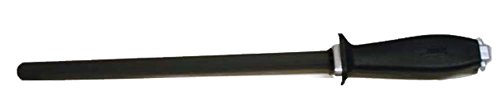
Wüsthof Classic 10″ Honing Steel
The title gives us the maker, the Classic line name and a 10 inch length, and nothing else, so treat it as a straightforward steel rod sized for a standard 8 inch chef knife. A 10 inch rod is the common home-kitchen length: the rod is longer than the blade, which gives you room to sweep the whole edge from heel to tip without running off the end.
It suits cooks who own German-style knives and want a plain, familiar tool they will use a few times a week. The listing does not state the surface (smooth, fine ridges) or the handle material, so check the product page before buying if you care about how aggressive the rod feels. Steel rods like this realign an edge; they will not fix a knife that is truly dull.
Victorinox Honing Steel 10-Inch Round Regular Cut, Dark Wood Handle
This one spells out its design: round cross-section, “regular cut” surface and a dark wood handle, in a 10 inch length. “Regular cut” generally means fine, evenly spaced ridges that realign an edge without chewing much metal, which is what you want for daily touch-ups on stainless knives.
It is a sensible choice for a mixed knife block: chef knife, boning knife, and the occasional fillet knife all behave well on a fine round rod. A wood handle looks good but is less forgiving of being left wet in a sink, so dry it after wiping. The listing does not list the rod’s hardness rating, so check the product page if you own very hard Japanese steel, which can be harder than some honing steels.
Mercer Culinary German Honing Steel, 12 Inch
Mercer’s listing is short: German honing steel, 12 inch. The extra two inches over the standard 10 inch rod matter if you work with long slicers, a 10 inch chef knife or a long fish-slicing knife, because the rod stays longer than the blade with room to spare.
It is a practical, budget-friendly pick for a household that wants a longer rod without paying for a premium brand name. The title does not say whether the surface is smooth or ridged, or what the handle is made of, so confirm both on the listing. A longer rod is also a little less handy in a small drawer, which is the only real downside of 12 inches.
Bob Kramer by Zwilling 12″ Double Cut Honing Steel with Plastic Handle
This is a 12 inch steel with a “double cut” surface and a plastic handle. A double-cut (cross-hatched) pattern is generally more aggressive than a smooth or single-cut rod, so it can bring a rolled edge back more quickly, though it also asks for a lighter hand. Use only light pressure and a few strokes per side.
It suits cooks who hone often, own a mix of harder and softer knives and want a longer rod with a more positive grip than a bare steel shaft. It sits at the premium end of this list. The title does not say how coarse the cut is, and a plastic handle is easy to wipe clean but feels less refined than wood, so read the listing details if grip matters to you.
Mac Knife Ceramic Honing Rod, 10-1/2-Inch
This is the 10-1/2 inch version in silver; the brand lists an 8-1/2 inch size separately. Ceramic is harder than steel and has a fine grit, so it realigns an edge and also takes off a very small amount of metal, giving a slightly more polished finish than a plain steel rod.
That makes it a natural match for thin, hard Japanese-style blades, including slicing knives, where a steel rod can feel rough. The trade-off is brittleness: ceramic can chip or snap if dropped onto tile, so store it in the block or a drawer and hold it tip-down on a cloth, not a hard counter. The title does not give the grit number, so check the listing.
Kyocera Advanced Ceramic 9-inch Ceramic Sharpening Rod
Kyocera’s rod is a 9 inch ceramic with a black handle. The listing describes a ribbed side for restoring dull edges and a smooth side for fine honing, so one tool covers two jobs: use the ribbed face when the edge has lost some bite, and finish on the smooth face.
A 9 inch length is on the short side, so it fits best with paring knives, utility knives, and 6 to 8 inch blades. It is less comfortable with a long slicer, because the rod barely clears the blade length. As with any ceramic rod, keep it off hard floors. The title points at routine steel-knife maintenance, which is the correct use; it is not meant for ceramic knives.
ZWILLING 12-inch Diamond Sharpening Steel
This is a 12 inch steel with a diamond surface, as the title says. A diamond rod cuts metal quickly, so it behaves more like a fine sharpener than a pure realigner. Used with a very light hand it can touch up a slightly dull knife between stone sessions.
It suits cooks who do not want to buy a stone and have knives that are a little past the point where a smooth steel helps. Because it removes steel, use it sparingly, perhaps every few weeks rather than every day, and follow with a smooth rod if you own one. Wipe it clean after use so metal dust does not stay in the surface. The listing does not state the grit, so check it.
SHARPAL 111H Ceramic Honing Rod with Adjustable 14°-25° Angle Guide
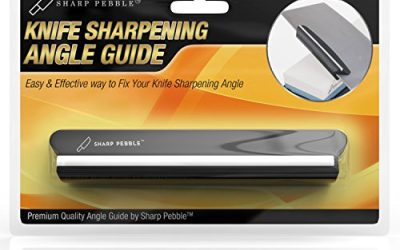
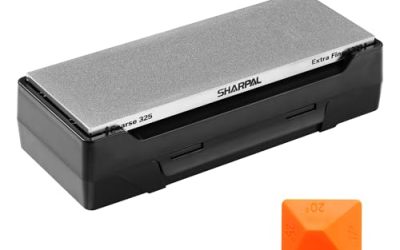
The distinguishing feature here is the built-in adjustable angle guide, 14 to 25 degrees, on a rotating 11.3 inch ceramic rod. A guide takes the guesswork out of holding a knife at a consistent angle, which is the hardest part of honing for beginners and the most common cause of rounded edges.
It suits cooks who sharpen a mix of knives: a thin fillet knife at about 15 degrees, a Western chef knife at 20 degrees and a thicker butcher knife at 22 to 25 degrees, all on one rod. One thing to check is the guide itself: a built-in guide can feel slower than freehand honing once you have the motion down. The title describes the rod as ceramic but gives no grit number.
How the eight compare
| Product | Material and length (from title) | Best for |
|---|---|---|
| Wüsthof Classic 10″ Honing Steel | Steel, 10 in | All-round chef knife upkeep |
| Victorinox Round Regular Cut | Steel, 10 in, regular cut | Daily touch-ups on mixed knives |
| Mercer Culinary German Honing Steel | Steel, 12 in | Longer blades on a budget |
| Bob Kramer by Zwilling Double Cut | Steel, 12 in, double cut | Frequent honing, tougher edges |
| Mac Knife Ceramic Honing Rod | Ceramic, 10-1/2 in | Thin, hard, fine-edged blades |
| Kyocera Ceramic Sharpening Rod | Ceramic, 9 in, ribbed and smooth sides | Small and mid-size knives |
| ZWILLING Diamond Sharpening Steel | Diamond, 12 in | Light sharpening between stone sessions |
| SHARPAL 111H Ceramic Honing Rod | Ceramic, 11.3 in, 14°-25° guide | Beginners who want a set angle |
How to choose
Steel, ceramic or diamond. A smooth or fine-ridged steel rod moves metal around but removes almost none, so it is the safest daily tool. Ceramic is harder and finer: it realigns the edge and gently polishes it, but it can chip if dropped. Diamond-coated rods abrade, which makes them a mild sharpener; use them occasionally on a knife that no longer responds to a steel.
Length. The rod should be longer than the blade, with a couple of inches to spare. Pair a 10 inch rod with an 8 inch chef knife and a 12 inch rod with a 10 inch slicer. A short 9 inch rod is fine for paring, utility and many fillet knives, but not for long blades.
Hone versus sharpen. Honing straightens an edge that has bent in use; sharpening removes steel to create a new edge. If a knife still will not slice a tomato cleanly after a few honing strokes, it needs sharpening on a stone or sharpener. Our guides to whetstone sharpeners and manual knife sharpeners cover that step.
Angle. Match the angle to the knife. Thin fillet blades and many Japanese knives sit around 15 to 17 degrees per side. Most Western chef knives are about 20 degrees per side. Heavier butcher and cleaver-style blades often run 22 to 25 degrees. Check the maker’s spec if you can; if you cannot find it, 15 to 20 degrees is a safe range for kitchen use.
Hardness mismatch. A steel rod should be harder than the knife. Very hard Japanese blades can be harder than some honing steels, which is why ceramic or diamond is the better match for them.
Use and care
- Hold the rod vertically, tip on a folded towel set on a stable counter, or hold it out in front of you with the tip up and away from your hand.
- Place the heel of the blade at the top of the rod, at your chosen angle (15 to 20 degrees per side for most knives).
- Draw the blade down and across the rod in one smooth sweep, finishing at the tip, with light pressure only.
- Alternate sides. Five to eight strokes per side is plenty; more can overwork the edge.
- Wipe the blade and the rod, then test on a tomato or sheet of paper. If it still drags, sharpen the knife on a stone.
Common mistakes: pressing hard, using a changing angle, honing a serrated edge on a flat rod, and hanging a ceramic rod where it can fall. Dry steel rods after washing so the plating does not stain. If you fillet fish regularly, hone the fillet knife before each session and see our best fillet knives for blades worth maintaining.
FAQ
Do I need a honing rod if I already own a sharpener?
Yes, if you use your knives often. A sharpener removes metal and should only be used when needed, while a rod keeps the edge aligned between sharpenings. Together they extend the life of the knife.
Can I use a honing steel on a serrated knife?
Not on a flat round rod; it will not follow the scallops. Serrated blades need a tapered rod or a small diamond tool that fits each scallop, and they rarely need honing anyway.
How often should I hone?
For a knife you use most days, a few strokes before each use is normal. For occasional knives, hone before the task. If the edge feels dull after honing, it needs sharpening, not more strokes.
Is ceramic better than steel?
Neither is better in every case. Ceramic is finer and gives a more polished edge but can break; steel is more forgiving of drops and gentler on the edge. Pick based on the knives you own and how you store the rod.
If you only buy one rod, a plain 10 to 12 inch steel is the safest choice, and a ceramic rod is a good second for thin, hard knives. Pair either with a decent stone and a proper kitchen knife sharpener, and your knives will stay ready for the next batch of fish.
More from Amazon
Programs that pair well with the guide above. Offers and eligibility are set by Amazon and may change.
Free shipping on eligible items, Prime Video and more. Eligible new members can start with a free trial.
Start a Prime free trialA Prime membership for ages 18-24 with a trial period. Eligibility is set by Amazon.
See Prime for Young AdultsAudiobooks and podcasts to listen to on the go. Eligible new members can start with a free trial.
Try Audible freeAd-free music streaming. Eligible new subscribers can start with a free trial.
Try Music Unlimited freeAs an Amazon Associate we earn from qualifying purchases.

Write Your Review
No reviews yet. Be the first to share your experience!