

Key takeaways
- Vegetable-tanned leather: firm and easy to skive, so even basic tools work. This is where beginners start.
- Chrome-tanned or soft leather: stretches under pressure, so a very sharp blade and light, steady strokes matter more.
- Thick, hard leather: may need more than a light skiver, and cheap tools may struggle.
- Exotic or thin leathers: mistakes show quickly, so practice on a scrap of similar thickness.
Beginners who want a forgiving way to thin leather should start with a pull-style hand skiver such as the Tandy Super Skiver, while craftspeople who have mastered edge control and want a tool for decades should move to a fixed-blade skiving knife from makers such as C.S. Osborne or Vergez Blanchard and keep it properly sharpened. The key trade-off is control against skill: safety-style skivers limit how deep you cut, whereas open knives give precision and a keen edge but need practice and sharpening.
Our top picks



As an Amazon Associate we earn from qualifying purchases at no extra cost to you.
What Skiving Does and Why the Tool Matters
Skiving is the process of thinning leather, usually at edges, folds and overlaps, so seams lie flat and folded edges do not become bulky. A well-skived wallet pocket, strap end or fold turns a lumpy join into a clean one. The task needs a keen blade held at a consistent angle, which is why the tool choice affects the result more than almost any other purchase in a basic leather kit.
Skiving tools fall into three groups: pull-style hand skivers with a replaceable blade and guard, fixed-blade skiving knives with a long bevel, and round or head knives that some craftspeople use for the same task. Machines exist for production work, but this guide covers hand tools.
At a Glance: Skiving Tool Types
| Tool | Type | Best for | Reported features | Limits |
|---|---|---|---|---|
| Tandy Super Skiver | Pull-style safety skiver | Beginners and everyday thinning | Guides describe it as easy to control, safe to use, supplied with spare blades, and shaped to avoid cutting too deep | Less precise on tight curves; blades are consumables |
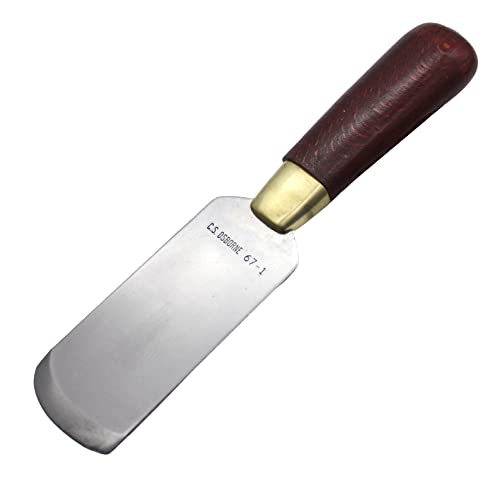
| C.S. Osborne skiving knife | Fixed-blade knife | Upgrading skilled hobbyists | Liberty Leather Goods cites it as a dedicated skiving knife that can work edges from all angles | Some sources say newer production may not match older steel |
| Vergez Blanchard skiving knife | Fixed-blade knife | Precise work for experienced users | Mentioned alongside C.S. Osborne as a high-end maker | Premium tier; same steel caveat in some guides |
| Generic budget skiving knives | Mixed | Occasional use | Listings range widely in quality; one buyer reports a cheap skiver works mainly on veg-tan or harder leather | Quality inconsistent; edges often need work |
| Round (head) knife | Curved fixed blade | Skilled craftspeople who also cut leather | Used for cutting and skiving with the same tool | Steep learning curve; needs stropping |
Tandy Super Skiver: The Beginner Standard
The International Leather Club and Favored Leather both point to the Tandy Super Skiver as a beginner-friendly hand skiver. One reviewer says it works well for most day-to-day projects, is easy to control and keeps its edge, while another notes it ships with extra blades and describes it as safe to use because its shape helps prevent cutting too deeply. That depth-limiting design is the reason it suits first projects, such as card holders and simple belts.
The trade-off is that a guarded skiver is less versatile on tight curves and awkward edges, and you will replace blades rather than hone them. For most hobbyists those are acceptable costs.
Fixed-Blade Skiving Knives: The Next Step
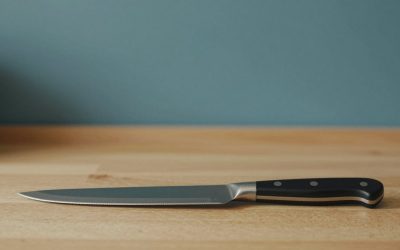
Liberty Leather Goods suggests graduating to a dedicated skiving knife, naming the C.S. Osborne model, because a fixed blade can be used at all angles around an edge and gives a sharp, precise result. The catch is skill: with an open blade you control depth and angle entirely, and a mistake can cut through the leather. Plan to practice on scrap before working on a finished piece.
Two guides add a caution about steel. They say some newer C.S. Osborne and Vergez Blanchard knives may not use the same quality of steel as older production, and one suggests buying an older tool second-hand and maintaining it. These are cautions from guides, not measured findings, so ask the seller about steel and heat treatment before buying and read current owner reports.
Steel and Sharpness
Steel quality governs how often you sharpen and how long the tool lasts. A good blade might need only occasional stropping and last decades; a soft one needs frequent attention. Whatever you buy, plan to learn basic sharpening: a strop with compound for maintaining an edge and a fine stone for restoring it. A dull skiver tears or bruises leather, while a sharp one lifts a clean, even layer.
Matching the Tool to the Leather
- Vegetable-tanned leather: firm and easy to skive, so even basic tools work. This is where beginners start.
- Chrome-tanned or soft leather: stretches under pressure, so a very sharp blade and light, steady strokes matter more.
- Thick, hard leather: may need more than a light skiver, and cheap tools may struggle.
- Exotic or thin leathers: mistakes show quickly, so practice on a scrap of similar thickness.
Budget Tiers
- Budget: generic skiving knives and basic pull skivers; expect to sharpen or replace blades often.
- Mid-range: the Tandy Super Skiver with spare blades and a good strop.
- Premium: C.S. Osborne, Vergez Blanchard and other traditional fixed-blade knives, ideally with documented steel.
Fit, Grip and Technique Notes
- Choose a handle that suits your grip. Left-handed users should confirm the bevel orientation before buying a fixed-blade knife.
- Work on a firm, flat surface such as a poly cutting board or glass-free slab, with the leather flesh side up.
- Skive in light, repeated passes instead of one deep cut, and keep your free hand out of the blade path.
- Mark the skive line and taper gradually toward the edge to avoid weak spots.
- Keep a pack of replacement blades if you choose a guarded skiver.
Safety and Care
- Skiving tools are sharp. Cut away from your body and wear a cut-resistant glove on the non-working hand if you are new.
- Strop frequently, wipe the blade dry after use, and apply a light oil to carbon steel blades to prevent rust.
- Store blades capped or in a sheath and out of reach of children.
- For a deep cut, apply firm pressure and seek medical care.
Pick X If You Want Y
| Pick this | If you want |
|---|---|
| Tandy Super Skiver | An approachable first tool with depth control and spare blades |
| C.S. Osborne skiving knife | A traditional fixed blade for more control, once you can sharpen |
| Vergez Blanchard skiving knife | A high-end fixed blade, with steel questions asked first |
| Older used skiving knife | Possibly better steel at lower cost, if properly restored |
| Generic budget knife | A low-cost trial before deciding whether skiving is for you |
Other Options
- Round knife: versatile for both cutting and skiving, but demands stropping skill.
- Edge beveler and paring tools: useful companions for finishing edges.
- Bench-top skiving machines: worth considering only for production volume.
Sharpening Basics for Skiving Blades
Keeping a skiving knife sharp is the real running cost of the tool. For a fixed blade, most leatherworkers keep a strop loaded with fine polishing compound beside the bench and touch the edge up every few minutes of use. When stropping no longer restores the edge, a fine stone or a sharpening plate returns the bevel, followed by stropping to remove the burr. Pull-style skivers with replaceable blades skip this routine, because you swap the blade when it dulls, but they still benefit from a clean, flat working surface. Keep the bevel angle consistent, since rocking the blade rounds the edge and makes it slide instead of bite. If sharpening is new to you, practice on an inexpensive knife first and compare your edge by how cleanly it lifts a thin curl of scrap leather.
Common Skiving Mistakes
- Taking one deep pass instead of several light ones, which can slice through the leather or leave a ridge.
- Skiving the grain side by accident; work from the flesh side unless a pattern says otherwise.
- Working on a soft or cluttered surface that lets the leather shift.
- Using a dull blade and compensating with pressure, which bruises and stretches the material.
- Skiving too far from the edge, leaving a visible dip in the finished piece.
Frequently Asked Questions
What is the easiest skiving tool for a beginner?
A pull-style guarded skiver such as the Tandy Super Skiver is widely recommended for beginners. Guides describe it as easy to control and shaped to avoid cutting too deep.
Do I need to sharpen a skiving knife?
Yes. A fixed-blade skiving knife performs best with regular stropping and occasional stone sharpening. A dull edge tears leather and increases the chance of slips.
Are old skiving knives better than new ones?
Some guides say older C.S. Osborne and Vergez Blanchard knives used better steel than certain newer ones, but this is a general caution, not a measured result. If you buy used, inspect the edge and ask about condition.
Can I skive any type of leather?
Most leathers can be skived, but firm vegetable-tanned leather is the easiest. Soft or stretchy leathers need a very sharp blade and light pressure.
Where should I skive on a project?
Typically at edges, folds and overlap areas where two layers meet. Thin gradually toward the edge instead of removing a large amount at once.
Are cheap skiving knives worth buying?
They can serve as a trial, but quality varies and one buyer reports a cheap skiver working mainly on harder leather. Expect to spend time sharpening or replacing blades.
More from Amazon
Programs that pair well with the guide above. Offers and eligibility are set by Amazon and may change.
Free shipping on eligible items, Prime Video and more. Eligible new members can start with a free trial.
Start a Prime free trialA Prime membership for ages 18-24 with a trial period. Eligibility is set by Amazon.
See Prime for Young AdultsAudiobooks and podcasts to listen to on the go. Eligible new members can start with a free trial.
Try Audible freeAd-free music streaming. Eligible new subscribers can start with a free trial.
Try Music Unlimited freeAs an Amazon Associate we earn from qualifying purchases.


Write Your Review
No reviews yet. Be the first to share your experience!