

Key takeaways
- Hand size: Small hands often prefer slimmer handles; larger hands may favour the Shun’s D-shape.
- Left-handed use: Most Japanese paring knives have symmetrical edges, but D-shaped handles can favour right-handed grips, so check the maker’s description.
- Cutting surface: Use wood or soft composite boards. Glass, stone and ceramic dull and chip hard edges.
- Safety: Cut away from your hand, never carry the knife loose in a pocket or bag, and keep the sheath on when travelling.
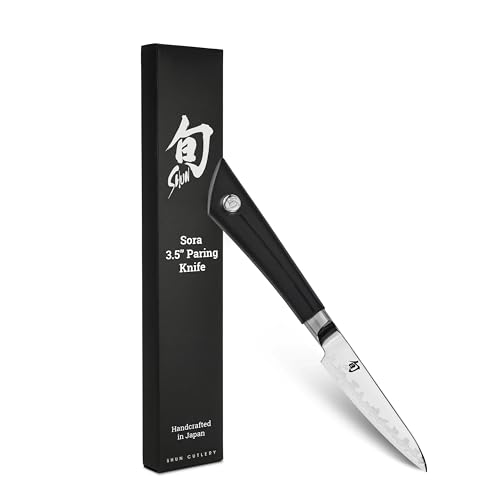
For most cooks, a Tojiro DP in either the 90mm paring or 120mm petty size is the sensible Japanese pick, a Shun Classic 90mm paring suits anyone who wants a polished handle and gift-ready finish, and a MAC or Misono petty suits people who prefer a thin, longer utility blade. If you simply want a tough, forgiving knife and do not care where it was made, a Victorinox or Wüsthof Classic paring knife is the easier choice. Here is how those options compare, what the makers and reviewers say, and where each one has limits.
Our top picks


As an Amazon Associate we earn from qualifying purchases at no extra cost to you.
Japanese Paring and Petty Knives at a Glance
Figures below come from the makers’ descriptions and from the Japanese Knife Lab roundup. Hardness values for Global and Tojiro are the roundup’s statements and may vary by model.
| Knife | Best for | Stated size and steel | Main limit |
|---|---|---|---|
| Tojiro DP Paring | Value-minded buyers who want a hard VG-10 core | 90mm; three-layer VG-10 core | Basic fit and finish; plain handle |
| Tojiro DP Petty | All-purpose small tasks, often named the best small knife for most cooks | 120mm; VG-10 core, riveted yo-style handle | Slightly long for the most delicate in-hand work |
| Shun Classic Paring | Premium feel and comfort, gifts | 90mm; VG-MAX core, Damascus-clad, D-shaped handle | Premium tier; Damascus is cosmetic |
| MAC Petty | Thin, nimble utility work | About 125mm; high-carbon stainless | Leans toward utility rather than pure paring |
| Misono UX10 Petty | Professional-style precision | 120 to 150mm; UX10 stainless | Higher price; 150mm is beyond classic paring size |
| Global paring | Design-led, seamless one-piece look | One-piece stainless; steel reported as softer | Softer steel, handle polarises opinion |
| Victorinox Paring (non-Japanese reference) | Budget, rugged everyday use | 80mm; European stainless | Does not hold an edge as long as hard Japanese cores |
| Wüsthof Classic Paring (non-Japanese reference) | Forgiving, tolerant of casual use | 90mm; German stainless | Less keen out of the box |
Paring Knife or Petty Knife?
A traditional paring knife has a short blade, usually about 80 to 100mm, designed for peeling, trimming and in-hand work such as hulling strawberries or deveining. A Japanese petty is a small utility knife, typically 120 to 150mm, that works more like a mini chef’s knife on a board. The Japanese Knife Lab roundup argues that many cooks are better served by a 120 to 150mm petty than by a true paring knife, because the extra length handles both board and hand tasks. That view is one outlet’s opinion, but it explains why the “Japanese paring knife” category is a blend of both shapes. If you peel apples in your palm, choose a 90mm paring knife. If you mostly cut shallots, herbs and citrus on a board, a petty is more versatile.
What to Look For
Steel and hardness
Japanese knives are usually made from harder steels than German or Swiss ones. Harder steel holds a keen edge longer but can chip if twisted or used on bone, frozen food or hard boards. The Japanese Knife Lab comparison states that Global uses softer steel at about HRC 56 to 58, against about 60 to 61 for Tojiro. For a paring knife, which does delicate slicing, a harder core is pleasant; if you are rough on tools, a softer European blade is more forgiving.
Handle and grip
A paring knife lives close to the hand, so handle comfort matters more than on larger knives. The Shun Classic’s D-shaped handle is repeatedly praised for comfort, while the Tojiro DP handle is described by reviewers as plain compared with wa-style or composite handles. A forum thread comparing the two favoured the Shun for handle feel. Global’s one-piece stainless handle looks distinctive and is easy to clean but divides opinion, so try holding one if you can.
Blade length and shape
Shorter blades give control for peeling and trimming. Longer petty blades slice better against a board. A drop-point or spear-point shape is the common paring pattern; some Japanese lines add a slightly flatter profile that helps with rocking cuts on small items.
Care
Hand wash, dry immediately and store with an edge guard or in a block or magnetic strip. Avoid cutting through bones or hard shells, and avoid twisting the tip in tough items. Hard Japanese steel is more prone to micro-chipping than softer steel, so a ceramic honing rod should be used with a very light touch or skipped in favour of a whetstone.
The Main Picks Explained
Tojiro DP: the value benchmark
The Japanese Knife Lab roundup names the Tojiro DP 120mm petty as the best small knife for most cooks. Tojiro DP knives use a three-layer construction with a VG-10 stainless core and offer the 90mm paring pattern as well. The roundup says they deliver VG-10 cutting performance and edge retention, with weaknesses in basic fit and finish and a handle that feels plain beside premium options. It is a good fit for people who want real Japanese steel without paying premium-brand prices. The 120mm size is slightly long for the most delicate work in hand, so choose the 90mm paring if you peel often.
Shun Classic 90mm: comfort and gift appeal
The roundup lists the Shun Classic paring knife with a VG-MAX core and Damascus cladding, plus a D-shaped handle. It is the premium option. The roundup points out that the Damascus pattern is cosmetic rather than functional, so the performance rests on the core steel and grind. It suits cooks who care about handle comfort and presentation, and it makes a polished gift.
MAC petty: thin and nimble
MAC’s small petty, around 125mm, uses a proprietary high-carbon stainless blend and is known for a thin blade. The roundup rates it slightly below the Tojiro for most buyers and notes that it leans toward utility rather than pure paring work. It suits professionals and keen home cooks who like very light, slicey knives.
Misono UX10 petty: professional precision
The roundup lists the Misono UX10 in 120 to 150mm lengths with a European-made stainless of an unpublished grade. It is aimed at buyers who want a refined professional-feeling tool and are comfortable with the higher price, and who will use it as a petty rather than a classic paring knife.
Global: a design choice
Global’s seamless stainless design is easy to wipe clean and has a distinctive look. The roundup describes the steel as softer than Tojiro’s and the handle as a love-or-hate feature. It is best for buyers who value the aesthetic and do not mind more frequent honing.
Victorinox and Wüsthof Classic: the forgiving benchmarks
Not Japanese, but included in the roundup as sensible alternatives. The Victorinox 80mm uses softer European stainless that is easy to sharpen but will not hold an edge as long as a hard Japanese core. The Wüsthof Classic 90mm uses German stainless that is tolerant of casual use but, as the roundup puts it, not as keen out of the box. Both suit households that want a tough knife without ritual care.
Pick X If… Decision Table
| Pick this | If you… |
|---|---|
| Tojiro DP 90mm paring | want hard VG-10 steel for in-hand work at a modest budget |
| Tojiro DP 120mm petty | want one small knife for both board and hand tasks |
| Shun Classic 90mm | want the most comfortable handle and a premium finish |
| MAC petty | like very thin, light blades and slicing on a board |
| Misono UX10 petty | want a professional-feel utility knife and accept the premium tier |
| Global | prefer a seamless, easy-to-clean modern design |
| Victorinox or Wüsthof Classic | want a tough, forgiving paring knife and are not set on Japanese steel |
Budget Tiers
Budget: Victorinox sits here as a non-Japanese baseline; the Tojiro DP is the entry point for Japanese VG-10 steel and often bridges budget and mid-range.
Mid-range: Tojiro DP, Wüsthof Classic and MAC fall in the middle of the market, depending on size.
Premium: Shun Classic and Misono UX10 are the premium end. Buy these for handle feel, finish and brand appeal rather than a dramatic jump in everyday performance.
Fit and Safety Notes
- Hand size: Small hands often prefer slimmer handles; larger hands may favour the Shun’s D-shape.
- Left-handed use: Most Japanese paring knives have symmetrical edges, but D-shaped handles can favour right-handed grips, so check the maker’s description.
- Cutting surface: Use wood or soft composite boards. Glass, stone and ceramic dull and chip hard edges.
- Safety: Cut away from your hand, never carry the knife loose in a pocket or bag, and keep the sheath on when travelling.
Alternatives
- Short serrated utility knife: Useful for tomatoes and citrus if you dislike sharpening.
- Peelers and bird’s-beak knives: For peeling-heavy tasks, a good peeler or a bird’s-beak paring knife may be handier than a straight blade.
- Larger petty or utility knife: If you already own a chef’s knife, a 150mm utility knife may serve better than a very small paring knife.
Frequently Asked Questions
Is a Japanese paring knife better than a German one?
Japanese knives usually use harder steel and hold a sharp edge longer, but they can chip if mistreated. German or Swiss knives are softer, easier to sharpen and more forgiving. The better choice depends on how carefully you handle your knives.
What size is best for a paring knife?
A classic paring knife is about 80 to 100mm, which suits peeling and in-hand work. A 120 to 150mm petty works better on a board and doubles as a small utility knife. Pick by whether you mostly cut in your hand or on a surface.
Is the Shun Classic worth the extra cost?
Reviewers praise its comfortable D-shaped handle and finish, but note that the Damascus pattern is cosmetic. If handle feel and presentation matter, it is a good premium choice. If you mainly want cutting performance per budget, a Tojiro DP is usually cited as the better value.
Can I put a Japanese paring knife in the dishwasher?
It is best not to. Heat, detergent and knocking against other items can dull and damage edges and handles. Hand wash and dry straight away, following the maker’s care guide.
How do I sharpen a small Japanese knife?
A fine whetstone is the usual tool, used at the angle the maker recommends. Use a light touch on any honing rod, since hard steel can chip. If you are unsure, a professional sharpening service is a safe option.
Do I need both a paring knife and a petty knife?
Not necessarily. Many cooks find one 120mm petty covers most small tasks, while people who peel in the hand often keep a 90mm paring knife as well. Start with the one that matches your most frequent task.
More from Amazon
Programs that pair well with the guide above. Offers and eligibility are set by Amazon and may change.
Free shipping on eligible items, Prime Video and more. Eligible new members can start with a free trial.
Start a Prime free trialA Prime membership for ages 18-24 with a trial period. Eligibility is set by Amazon.
See Prime for Young AdultsAudiobooks and podcasts to listen to on the go. Eligible new members can start with a free trial.
Try Audible freeAd-free music streaming. Eligible new subscribers can start with a free trial.
Try Music Unlimited freeAs an Amazon Associate we earn from qualifying purchases.









Write Your Review
No reviews yet. Be the first to share your experience!