

The best high pressure shower heads are not always the highest-flow models: choose a focused spray pattern, a flow rate your plumbing can support, and silicone or rubber nozzles that can be wiped clean without tools.
Our top picks
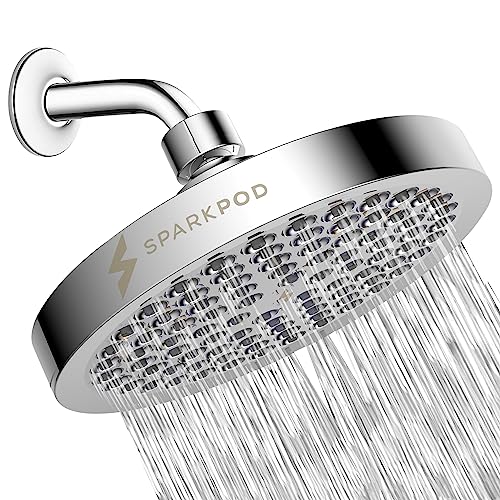 SparkPod Rain Shower Head
- Ships set to a water-saving 1.8 GPM
- The 6 inch round face drops a wide,…
- 90 flexible rubber jets wipe clear of hard…
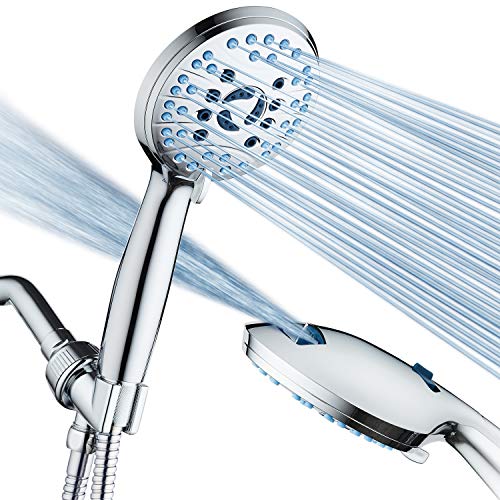 AquaCare 8-mode High Pressure Handheld Shower Head
- MORE WATER PRESSURE, LESS CLEANING - Revolutionary AquaCare…
- Studies show that ordinary shower heads are often…
- Tired of that disgusting soap scum and dried…
 High Pressure Shower Head
- High Pressure Shower Head with 5 Different Shower…
- Superior Material and Exclusive Water Pressurized Design: This…
- Widely Compatible with Different Bathroom Styles: Modern product…
| Product | Key specs | |
|---|---|---|
| SparkPod Rain Shower Head | Ships set to a water-saving 1.8 GPM The 6 inch round face drops a wide,… 90 flexible rubber jets wipe clear of hard… | Check price |
| AquaCare 8-mode High Pressure Handheld Shower Head | MORE WATER PRESSURE, LESS CLEANING - Revolutionary AquaCare… Studies show that ordinary shower heads are often… Tired of that disgusting soap scum and dried… | Check price |
| High Pressure Shower Head | High Pressure Shower Head with 5 Different Shower… Superior Material and Exclusive Water Pressurized Design: This… Widely Compatible with Different Bathroom Styles: Modern product… | Check price |
 Rain Shower Head with Handheld Showerhead | Upgrade technology ensure amazing showering experience, compare with… Larger coverage shower heads with handheld spray combo,… Rainforest experience in home, our high pressure shower… | Check price |
As an Amazon Associate we earn from qualifying purchases at no extra cost to you.
What “high pressure” means in a shower head
A shower head cannot create pressure that is absent from the plumbing. Instead, it can make the same incoming water feel stronger by narrowing the outlet openings, concentrating the spray, reducing internal restrictions, or using air-injection and pulse patterns. If a shower is weak at every fixture, the likely causes include low household pressure, a partially closed valve, clogged pipework, a dirty inlet screen, or a flow restrictor—not the shower head alone.
For a single shower, the most useful specifications are:
- Flow rate: Measured in gallons per minute (GPM) in the United States. A 1.5–1.75 GPM head can feel forceful while using less water; a 2.0–2.5 GPM model usually provides more volume but needs adequate supply.
- Spray pattern: A concentrated center jet feels strongest, while wide rain, massage, and pause settings trade some perceived force for coverage or comfort.
- Minimum operating pressure: This indicates whether the head performs acceptably on a low-pressure system. Check the manufacturer’s pressure range rather than assuming that “high pressure” means it works everywhere.
- Inlet and connection: Most fixed shower heads use a standard 1/2-inch NPT connection, but the arm, wall fitting, and handheld hose arrangement still need to match.
Best high pressure shower heads by situation
Best for genuinely low water pressure
Choose a low-flow, pressure-compensating head with a narrow or adjustable spray rather than a large rain head. A 1.5–1.75 GPM design typically gives a more concentrated stream and places less demand on the supply. Look for a stated minimum operating pressure around 20–30 PSI, though performance may still be limited below that range.
A pressure-compensating regulator can help keep flow more consistent across changing supply pressure, but it cannot overcome a failing pump, a blocked filter, or an undersized pipe. If cold and hot water are both weak, investigate the plumbing before buying a second shower head.
Best for a strong, traditional spray
Select a compact fixed head with an approximately 4–6 inch face, a 1.75–2.0 GPM flow rate, and a “full,” “intense,” or “power” setting. A smaller face concentrates the available water over a tighter area, creating a stronger sensation than a 10–12 inch rain head at the same flow rate.
Speakman’s Anystream range is an example of the adjustable-spray format, while High Sierra makes compact low-flow designs that use a concentrated stream rather than many fine droplets. Specific settings and flow versions vary, so confirm the label for the model and region you are considering.
Best for two people or a larger shower enclosure
A dual head combines a fixed head with a handheld wand. It provides better reach and makes rinsing hair or cleaning the shower easier, but using both outlets simultaneously divides the available flow. Choose a model with a pause button or diverter that allows one outlet to run at full strength.
For this setup, a 2.0 GPM maximum flow is often a practical ceiling in homes with modest pressure. A 2.5 GPM dual outlet can be satisfying on a strong supply but disappointing when the plumbing cannot maintain the required volume.
Best for a broad, softer spray
Choose a larger rain-style head only if your supply delivers enough volume. A 10-inch head with a 2.0–2.5 GPM rating spreads water over a wide area, so it may feel gentler even though it uses more water. Air-injection designs can make droplets feel fuller at lower flow, but they are not a substitute for pressure.
Head-to-head specification guide
| Shower head type | Typical face size | Typical flow | Best supply condition | Strongest advantage | Main compromise |
|---|---|---|---|---|---|
| Compact focused fixed head | 3–5 inches | 1.5–2.0 GPM | Low to medium pressure | Strong perceived spray | Smaller coverage area |
| Adjustable multi-spray head | 4–6 inches | 1.75–2.5 GPM | Medium pressure | Choice of jet, rain, and massage | Moving parts can collect scale |
| Large rain head | 8–12 inches | 1.75–2.5 GPM | Medium to high pressure | Wide, even coverage | Usually feels less forceful |
| Handheld wand | 3–5 inches | 1.5–2.5 GPM | Low to high pressure | Reach and targeted rinsing | Hose and bracket need space |
| Dual fixed and handheld | 4–10 inches combined | 2.0–2.5 GPM total | Medium to high pressure | Flexibility for two spray positions | Flow is divided when both run |
Spray patterns worth paying for
- Focused jet: Best when the priority is a powerful-feeling stream or quick rinsing. It can feel sharp on the skin and cover only a small area.
- Full spray: The best everyday compromise for most households. Closely spaced nozzles spread water without making the spray excessively diffuse.
- Massage or pulsating spray: Uses alternating outlets to create a rhythmic stream. It may feel stronger at the same flow rate, but more internal channels mean more places for mineral scale to accumulate.
- Rain or drenching spray: Provides broad coverage and larger droplets. It is usually a poor choice when the primary problem is weak pressure.
- Pause or trickle mode: Reduces flow while shampooing or soaping. It may not stop water completely, because some plumbing systems need a small flow to avoid pressure surges.
Nozzle materials and cleaning
Flexible silicone nozzles are usually the easiest to maintain. Light mineral deposits can often be removed by rubbing the nozzle surface with a finger or soft cloth. Rubber nozzles offer similar convenience, although rubber can stiffen or deteriorate sooner with heat, cleaning chemicals, and age.
Hard plastic or metal spray plates can look durable, but mineral scale may block small openings more firmly. Metal construction does not guarantee better spray performance; the internal restrictor, screen, seals, and nozzle geometry matter more. A brass or stainless-steel connection is useful for resisting thread damage, while the face itself can still be polymer.
Clean the inlet screen and spray plate every one to three months in hard-water areas. Remove the head, rinse the screen, and use a soft brush for loose deposits. If the manufacturer permits descaling, soak removable parts in diluted white vinegar, then rinse thoroughly. Do not force metal pins into every nozzle: they can enlarge the openings, damage silicone, or push debris deeper into the head.
Installation: a five-minute job with two common traps
- Unscrew the old head by hand, using an adjustable wrench only on the metal flats. Protect the finish with a cloth.
- Remove old tape and clean the shower arm threads. Check that the arm is not loose inside the wall.
- Inspect the new head’s washer and inlet screen. Install the washer supplied by the manufacturer; adding extra washers can restrict flow or prevent the threads from engaging.
- Apply two or three clockwise wraps of PTFE thread tape to exposed male threads if the instructions call for it. Keep tape away from the opening so fragments do not enter the screen.
- Hand-tighten, then add only a small wrench turn if needed. Run the shower and check for leaks before tightening further.
The most common mistakes are leaving the old washer inside the arm, installing tape in the wrong direction, overtightening a plastic housing, and removing a flow restrictor to chase more force. Removing the restrictor can increase water use, cause unstable spray behavior, and violate local plumbing requirements. In the United States, WaterSense-labeled shower heads generally use no more than 2.0 GPM, while non-labeled products may be available at higher rates depending on local rules.
Worked flow-rate calculation
Suppose two people each take a 10-minute shower. Replacing a 2.5 GPM head with a 1.75 GPM head reduces water use from 50 gallons per day to 35 gallons: (2.5 − 1.75) × 20 = 15 gallons saved. Over 30 days, that is 450 gallons, before accounting for hot-water energy savings. The lower-flow head is the better choice if its spray remains comfortable and the supply can maintain its rated performance.
Ownership realities before you buy
The parts that usually wear first are the inlet screen, rubber washer, diverter seal, and flexible hose—not the outer face. Hard water can make a good head appear defective when the real problem is a blocked screen. Keep the original head until the replacement proves reliable, and check whether replacement washers or hoses use standard sizes.
For most buyers, the safest choice is a 4–6 inch adjustable head with silicone nozzles, a 1.75–2.0 GPM rating, a standard 1/2-inch connection, and a clearly stated operating-pressure range. Choose a compact focused model for weak supply, a dual head for reach and flexibility, and a large rain head only when broad coverage matters more than maximum spray force.
More from Amazon
Programs that pair well with the guide above. Offers and eligibility are set by Amazon and may change.
Free shipping on eligible items, Prime Video and more. Eligible new members can start with a free trial.
Start a Prime free trialA Prime membership for ages 18-24 with a trial period. Eligibility is set by Amazon.
See Prime for Young AdultsAudiobooks and podcasts to listen to on the go. Eligible new members can start with a free trial.
Try Audible freeAd-free music streaming. Eligible new subscribers can start with a free trial.
Try Music Unlimited freeAs an Amazon Associate we earn from qualifying purchases.










Write Your Review
No reviews yet. Be the first to share your experience!