

Key takeaways
- Size. Choose a board big enough to move food without crowding it. A larger board is safer, and many cooks prefer one that fits their counter without overhanging.
- Thickness. Thicker boards resist warping and sit solidly. Thin boards are lighter but move more and may warp.
- Juice groove. Useful for carving meat, less so for vegetables. A groove reduces usable area.
- Feet or grip. A board that slides is a cutting hazard. Use a damp towel under the board if it lacks feet.
- Weight. Heavy end-grain boards stay put but are harder to move and clean.
Hard maple is the best all-round wood for a cutting board, walnut is the pick for someone who wants a darker, knife-friendly board, and cherry suits lighter-duty boards and serving platters. Beyond species, construction matters nearly as much: end-grain boards are gentler on knife edges and hide cuts better than edge-grain boards. This guide compares the main woods, what the sources say about hardness, and how to match a board to how you cook.
Our top picks


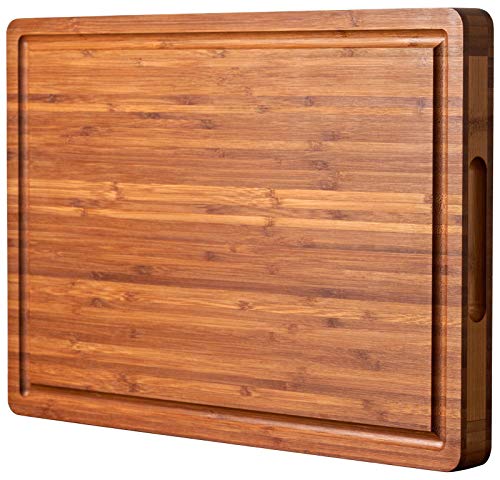
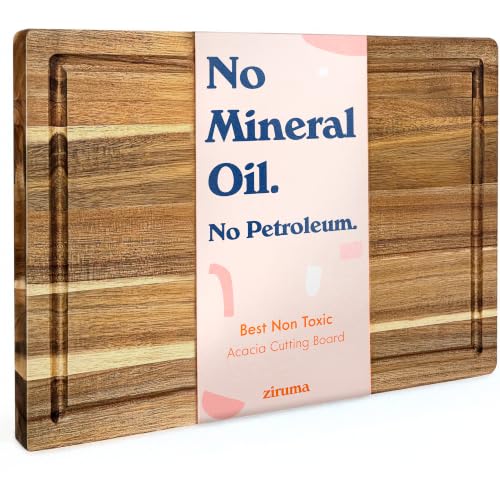
As an Amazon Associate we earn from qualifying purchases at no extra cost to you.
At a Glance: Cutting Board Woods Compared
| Wood | Janka hardness (lbf, approximate) | Best for | Limits |
|---|---|---|---|
| Hard maple | about 1450 | Daily chopping, all-round kitchen board | Light color shows stains |
| Walnut | about 1010 | Knife-friendly board, dark look hides stains | Softer than maple; costs more |
| Cherry | about 950 to 995 | Light-duty prep, serving, charcuterie | Softest of the three; one source advises against it for primary daily chopping |
| Oak | similar hardness range | Not recommended | Open pores can trap bacteria, per one guide |
| Teak, acacia, bamboo | varies | Often skipped by wood guides | One guide advises avoiding them for cutting boards |
Hardness figures come from published Janka tables cited by the guides; sources give slightly different values for cherry, ranging from about 950 to 995.
The Hardness Sweet Spot
Wood guides, including those from Misen, Bevel and Bond, and Blade Advisor, converge on one idea: a cutting board wood should be hard enough to resist deep scarring but soft enough that the knife edge is not damaged. The range they cite is roughly 900 to 1,500 on the Janka scale. Below that, the surface dents and splinters. Above it, the board dulls knives faster. Maple, walnut and cherry all fall in that window.
The FDA Food Code, as cited in one of the guides, names hard maple or an equivalently hard, close-grained wood for cutting boards in food service. Close-grained means small pores, which are harder for moisture and food particles to enter. That is why open-pored woods like oak are usually discouraged.
Hard Maple
Maple is the default for a reason. It is hard enough to resist knife scars and dents but not so hard that it ruins a good blade. The pale color looks clean, though it also shows stains from beets, berries or coffee. Maple is widely available, so boards from many makers use it, and it tends to be cost-effective. For a first board or a kitchen workhorse, guides consistently point here. Look for hard or sugar maple, not soft maple, since the latter is less dense.
Walnut
Walnut is softer than maple but still within the recommended range. Guides describe it as very knife-friendly, noting that it may extend time between sharpenings. Its dark color hides stains, which appeals to people who cook with turmeric or tomato. The trade-off is a higher cost and a surface that scratches somewhat more visibly in a lighter tone as the board ages. Walnut makes sense for a cook who values knife edges and wants a striking board.
Cherry
Cherry is the softest of the common trio. One source says it is not recommended as a primary daily chopping board and suits light-duty boards, serving platters or charcuterie. Another says it offers excellent knife-friendliness with adequate durability for home kitchens. Cherry darkens with time and light exposure, giving a warm reddish hue. If your cooking is mostly slicing bread, cheese and herbs, cherry will do. If you break down chickens or chop dense vegetables daily, maple or walnut is more robust.
Woods to Avoid
Oak is hard enough, but its open pores can trap moisture and bacteria, according to one guide. Teak, acacia and bamboo are also advised against in that same guide. Resinous softwoods such as pine are poor choices because they dent easily and can impart flavor. Exotic woods may contain oils or natural compounds that irritate some people, so check with the maker before using an unusual species for food.
End Grain vs Edge Grain vs Face Grain
Construction changes how a board behaves. An edge-grain board shows the long fibers on the surface, so the knife cuts across them and leaves grooves over time. An end-grain board shows the ends of the fibers, so the blade slips between them and they spring back, which hides cuts and is gentler on edges. Guides debate how much this matters. One argues that end-grain construction outranks species, so an end-grain walnut board beats an edge-grain maple board. Another counters that build quality matters more than a premium species name, and a flat edge-grain maple board with tight joints can outlast a poorly glued end-grain block.
End-grain boards are heavier, thicker and costlier, and they need more frequent oiling because the open ends absorb moisture. Edge-grain boards are lighter, more affordable and easier to store. Face-grain boards are the cheapest and show wood patterns, but they wear fastest.
Size, Thickness and Practical Fit
- Size. Choose a board big enough to move food without crowding it. A larger board is safer, and many cooks prefer one that fits their counter without overhanging.
- Thickness. Thicker boards resist warping and sit solidly. Thin boards are lighter but move more and may warp.
- Juice groove. Useful for carving meat, less so for vegetables. A groove reduces usable area.
- Feet or grip. A board that slides is a cutting hazard. Use a damp towel under the board if it lacks feet.
- Weight. Heavy end-grain boards stay put but are harder to move and clean.
Care for Wood Boards
Wash with mild soap and warm water, wipe dry and stand the board on its edge so air reaches both sides. Do not soak it or use a dishwasher, which causes warping and cracking. Oil the board periodically with food-safe mineral oil, and follow the maker’s care sheet for any wax or conditioner. Sanitize after raw meat by washing thoroughly; some makers suggest a diluted white vinegar wipe. Use separate boards for raw meat and ready-to-eat foods if you can, and replace boards that develop deep cracks or persistent odors. For food-safety concerns, follow local public health guidance.
Buying Notes: Glue, Finish and Origin
Look at how a board is assembled. Strips should be joined with a food-safe adhesive, and the maker’s listing should say so; reputable sellers state the glue type and the finish. Seams should be tight and flush, with no gaps where moisture and food can collect. A factory finish of mineral oil or a beeswax blend is common, and the maker’s care sheet tells you what to reapply. Check that the wood species is named, because a vague “hardwood” label gives no information about hardness. Boards made from reclaimed or mixed lumber can look attractive, but you should confirm the maker treats them for food contact. If you are buying for someone with a tree-nut allergy, note that walnut dust or residue is a possible concern, and a doctor can advise on sensitivity.
Wood vs Plastic and Other Materials
Plastic boards go in the dishwasher and are easy to color-code for raw meat. Wood boards are kinder to knives and look good but need hand care. Composite boards such as paper-resin sit between them. Many cooks use both: a wood board for vegetables, bread and cheese, and a plastic board for raw meat. Glass, marble and stone boards are hard on knives and are best used for serving rather than cutting.
Pick X If… Decision Table
| Pick this | If you… |
|---|---|
| Hard maple edge-grain | want a durable, affordable all-round board |
| End-grain maple | want to protect fine knife edges and hide cuts |
| Walnut | want a knife-friendly, dark board that hides stains |
| Cherry | mostly serve cheese, bread and light prep |
| Plastic board alongside | handle raw meat and want dishwasher cleaning |
| Thick large board | carve roasts or prep big meals |
Budget Tiers
- Budget: face-grain or thin edge-grain maple boards.
- Mid-range: thick edge-grain maple or walnut with feet and a groove.
- Premium: end-grain maple or walnut from a woodworker or a specialist maker.
Alternatives
If wood is not right for you, consider rubber or composite boards, which are often used in professional kitchens and can be knife-friendly. A rack of color-coded plastic boards covers raw and cooked foods. For serving, a cherry or walnut board stays on the table rather than under the knife.
Frequently Asked Questions
Is maple or walnut better for a cutting board?
Maple is the common all-round choice, offering strong resistance to scarring and a lower cost. Walnut is softer and gentler on edges, with a dark look. Either is fine; choose based on appearance and budget.
Is cherry good for a cutting board?
It works for light-duty use, and one source says it is knife-friendly with adequate durability for home kitchens. Another advises against using it as a primary daily chopping board.
Does end grain really matter?
Guides agree it is gentler on knives and hides cuts, but they disagree on how much it outranks species. A well-built edge-grain board can outlast a poorly made end-grain one.
Why avoid oak or bamboo?
One guide says oak has open pores that can trap bacteria and advises skipping teak, acacia and bamboo. Bamboo is also very hard, which can dull edges.
How often should I oil a wood board?
Follow the maker’s care sheet. Oil when the surface looks dry or pale after washing, with food-safe mineral oil. End-grain boards typically need it more often.
Can I put a wood board in the dishwasher?
No. Heat and soaking can cause warping and cracks. Hand wash, dry promptly and stand it on its edge.
More from Amazon
Programs that pair well with the guide above. Offers and eligibility are set by Amazon and may change.
Free shipping on eligible items, Prime Video and more. Eligible new members can start with a free trial.
Start a Prime free trialA Prime membership for ages 18-24 with a trial period. Eligibility is set by Amazon.
See Prime for Young AdultsAudiobooks and podcasts to listen to on the go. Eligible new members can start with a free trial.
Try Audible freeAd-free music streaming. Eligible new subscribers can start with a free trial.
Try Music Unlimited freeAs an Amazon Associate we earn from qualifying purchases.










Write Your Review
No reviews yet. Be the first to share your experience!