

The best whetstone knife sharpeners depend on your knife steel, sharpening experience, available space, and whether you need a refined edge for a delicate fillet knife or a tougher working edge for a cleaver.
Our top picks
 Sharp Pebble Whetstone Knife Sharpener
- NO SKILL, NO GUESSWORK Most people avoid whetstones…
- STAYS FLAT 3X LONGER THAN CHEAP STONES Bargain…
- Dual-grit whetstone, bamboo base, angle guide, instruction manual,…
 Intelitopia Complete Knife Sharpening Stone Set
- 【Complete Knife Sharpening Stone Kit】You don't need to…
- 【Dual Sided Whetstone】Our wet stone is made of…
- 【Multipurpose】Our professional-grade knife sharpener kit is highly durable…
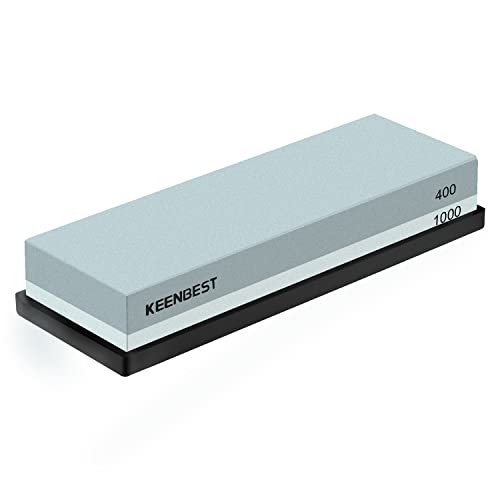 KEENBEST 400 1000 Premium Material Whetstone Sharpening
- No oil needed, just put the stone into…
- One stone, unlimited professional knives
- Made with superior silicon carbide, the 400 grit…
As an Amazon Associate we earn from qualifying purchases at no extra cost to you.
Quick picks by situation
- Best all-round choice: A two-sided 1,000/6,000-grit waterstone, such as the King Deluxe combination stone, gives most home cooks a practical sharpening range at a modest cost.
- Best for frequent sharpening and easy storage: Shapton Pro stones, especially a 1,000-grit stone paired with a 5,000 or 8,000 grit, are splash-and-go, compact, and resistant to soaking damage.
- Best premium progression: Naniwa Professional stones provide consistent grading and a smooth finish, with 800, 1,000, 3,000, and 5,000 grit options that suit kitchen and seafood knives.
- Best value for occasional users: A synthetic combination stone in the 400/1,000 or 1,000/6,000 range is usually more useful than an inexpensive multi-stone kit containing several poorly graded stones.
- Best for a very thin fillet knife: Use a 1,000- to 2,000-grit stone for sharpening, followed by 3,000 to 5,000 grit if you want a smoother edge. Avoid aggressive pressure and very coarse finishing stones.
Whetstone comparison: the numbers that matter
Grit numbers are not perfectly comparable between every manufacturer, so a “1,000” stone from one brand may feel faster or finer than a 1,000 from another. The following figures describe common specifications and practical roles rather than laboratory-equivalent abrasiveness.
| Stone type or example | Typical grit options | Approximate size | Soaking | Best use |
|---|---|---|---|---|
| King Deluxe combination stone | 800/6,000 or 1,000/6,000 | About 205 × 66 × 34 mm | Usually 10–15 minutes | Budget-friendly general kitchen sharpening |
| Shapton Pro ceramic stone | 320, 1,000, 2,000, 5,000, 8,000 and others | About 210 × 70 × 15 mm | Splash-and-go; do not store submerged | Fast setup, regular maintenance, limited storage |
| Naniwa Professional ceramic stone | 400, 800, 1,000, 3,000, 5,000, 8,000 and others | About 210 × 70 × 20 mm | Splash-and-go; brief wetting is sufficient | Controlled progression and polished kitchen edges |
| Suehiro Cerax synthetic stone | 320, 700, 1,000, 3,000, 6,000 and others | Often about 206 × 73 × 23 mm | Generally 5–10 minutes | Fast cutting with a forgiving sharpening feel |
| Coarse repair stone | 220–400 | Usually 180–210 mm long | Varies by material | Repairing chips or reprofiling damaged edges |
Dimensions and soaking instructions vary by exact model, so check the manufacturer’s label before use. A stone around 200 mm long gives enough travel for most chef’s knives and fillet knives; smaller stones can work, but they make it easier to rock the blade or sharpen unevenly.
Choose the grit combination before choosing the brand
400/1,000 grit: repairs and neglected knives
This combination is useful when a knife is visibly blunt, has small chips, or needs a new bevel. The 400 side removes metal quickly, while the 1,000 side establishes the everyday edge. It is a good choice for a working knife, but the coarse side should not be used routinely on a thin fillet blade because repeated metal removal shortens the knife’s useful life.
1,000/6,000 grit: the classic general-purpose pairing
A 1,000-grit side is the main sharpening surface for ordinary maintenance. The 6,000 side refines the scratches and can leave a smooth, polished edge. This is the most versatile two-sided setup for cooks who want one stone rather than a progression of separate stones.
For seafood preparation, the 6,000 side can produce a very clean-feeling edge, but it is not mandatory. A fillet knife used on a board, skin, and occasional bone often benefits from a slightly toothier 1,000- to 3,000-grit finish that bites into slippery flesh instead of becoming excessively polished.
1,000/3,000 grit: efficient maintenance
This pairing is a strong choice for fishers and home cooks who sharpen regularly. The 3,000 side removes the coarse scratches from the 1,000 side without the extra time and cost of a high-polish finishing stone. It also reduces the risk of making a delicate knife edge too thin and fragile through excessive polishing and stropping.
Separate 1,000, 3,000, and 5,000 stones: controlled refinement
Separate stones are easier to replace individually and usually provide more usable surface area than a narrow combination stone. They also avoid the problem of a combination stone wearing unevenly because one side is used much more often. This setup suits anyone sharpening several knives each week.
Waterstones, ceramic stones, and diamond plates
Traditional synthetic waterstones use abrasive particles in a relatively soft binder. They cut quickly and provide useful feedback, but they wear into a hollow more quickly. King and Suehiro Cerax are familiar examples. Their soaking requirements make them less convenient, but the water also helps carry away swarf, the mixture of removed steel and abrasive.
Hard ceramic stones, including Shapton Pro and Naniwa Professional ranges, need little preparation and stay flatter for longer than many softer stones. They are convenient in a small kitchen or boat shed because they can be wetted immediately before use. They still need drying after sharpening; splash-and-go does not mean safe to leave permanently in water.
Diamond plates use diamond abrasive bonded to a metal surface. They are useful for flattening waterstones and repairing very hard steels, and they do not need soaking. However, a coarse diamond plate can leave deep scratches and may remove metal aggressively. It is usually better as a companion tool than as the only sharpener for a delicate fillet knife.
Decision matrix for buyers
| Your situation | Recommended setup | Why |
|---|---|---|
| First stone, occasional sharpening, limited budget | 1,000/6,000 synthetic combination stone | Covers maintenance and refinement without several purchases |
| Weekly sharpening, little storage space | Shapton Pro 1,000 plus 5,000 | Thin, quick to wet, and easy to store separately |
| Several kitchen knives and a fish fillet knife | 1,000 plus 3,000 or 5,000 stones | Allows a toothier or smoother finish according to the knife’s job |
| Chipped or heavily damaged edge | 320–400 repair stone, then 1,000 | Removes damage efficiently before normal sharpening |
| Hard Japanese or powdered-steel knives | Hard ceramic progression, such as 1,000/3,000/5,000 | Maintains a flat, consistent surface and cuts hard steel effectively |
| Minimal cleanup and no soaking container | Splash-and-go ceramic stone | Requires water on the surface rather than a prolonged soak |
How to sharpen a fillet knife without damaging it
- Secure the stone. Place it on a non-slip base or a damp folded towel. A moving stone encourages inconsistent angles and accidental slips.
- Prepare the surface. Soak a traditional waterstone for the period specified by its maker, or wet a splash-and-go stone until the surface is evenly covered.
- Start around 1,000 grit. Hold the fillet knife at approximately 10–15 degrees per side. Flexible blades may need support from your fingers, but keep those fingers behind the edge.
- Use light, controlled pressure. Make strokes that follow the knife’s curve, lifting the handle slightly as you approach the tip. Heavy pressure can bend the flexible blade and create an uneven bevel.
- Check for a burr. A small, continuous wire edge on the opposite side indicates that the bevel has reached the apex. Sharpening only until a burr forms is preferable to making many unnecessary passes.
- Refine on 3,000–5,000 grit. Use lighter strokes and alternate sides frequently. Finish with several nearly pressure-free passes.
- Rinse and dry the knife. Remove abrasive residue immediately, especially from carbon-steel knives, which can spot or rust if left wet.
As a practical example, if a 200 mm stone costs $35 and lasts 18 months with sharpening once every two weeks, it provides about 39 sessions. That is roughly $0.90 per session before accounting for a flattening stone and eventual replacement. A cheaper stone that dishes quickly may cost less initially but more per usable sharpening if it must be replaced or flattened frequently.
Flattening, cleaning, and ownership costs
Waterstones wear fastest where the knife contacts them most. A hollowed stone can make it difficult to maintain a consistent bevel, particularly near the heel and tip. Check flatness by drawing pencil lines across the surface and rubbing it against a flattening plate or coarse diamond plate until the lines disappear. Many soft stones need flattening after a few sharpening sessions; harder ceramic stones may go much longer.
- Never store a waterstone submerged unless its instructions specifically allow it.
- Allow the stone to dry fully in a ventilated place, away from direct high heat that can cause cracking.
- Do not use dish soap or oil unless the manufacturer says it is suitable.
- Keep coarse and fine stones separate from loose grit, which can contaminate the finer surface.
- Replace a stone when deep cracks, shedding abrasive, or an unmanageable hollow remains after flattening.
Final recommendation
For most households, the best whetstone knife sharpeners are not the ones with the greatest number of grit labels. A reliable 1,000/6,000 combination stone is the sensible starting point, while a 1,000/3,000 setup is especially practical for seafood and flexible fillet knives. Choose Shapton Pro or Naniwa Professional when quick preparation, hard ceramic construction, and predictable grading matter more than the lowest price. Whichever stone you buy, budget for a flattening method and learn light, consistent technique: those two factors usually affect the final edge more than moving from one premium brand to another.
More from Amazon
Programs that pair well with the guide above. Offers and eligibility are set by Amazon and may change.
Free shipping on eligible items, Prime Video and more. Eligible new members can start with a free trial.
Start a Prime free trialA Prime membership for ages 18-24 with a trial period. Eligibility is set by Amazon.
See Prime for Young AdultsAudiobooks and podcasts to listen to on the go. Eligible new members can start with a free trial.
Try Audible freeAd-free music streaming. Eligible new subscribers can start with a free trial.
Try Music Unlimited freeAs an Amazon Associate we earn from qualifying purchases.
Write Your Review
No reviews yet. Be the first to share your experience!