

Key takeaways
- Corrosion-resistant 9-10 inch fillet knives for snapper, cobia and other big saltwater fish, plus steel, rinsing and drying tips.
For saltwater work, pick a 9-10 inch fillet knife with a stainless blade that is either coated or made from a steel with plenty of chromium, and plan to rinse and dry it every single time. Salt is what ruins fillet knives, not the fish. A knife with the right steel and a five-minute rinse habit will outlast a better-looking one that gets tossed back in its sheath wet.
The picks below are all single fixed-blade knives of roughly 9 inches or longer, because that is the size that handles snapper, redfish, cobia, amberjack and the thicker side of a tuna loin without sawing. Details come from the product titles and from general knife and steel knowledge, so check each listing for the current specs before you buy.
Quick picks
- Biggest fish, longest blade: Gerber Controller 10 In. Saltwater Fillet Knife
- Coated blade with real flex for boat-ramp use: Cuda 9″ Fillet Flex
- Longest stated blade after the Gerber, with a rubber grip: Buck 225 Silver Creek
- Thin, flexible blade in a known steel: KastKing Speed Demon Pro 9″
- Premium steel for people who sharpen well: ANTOWIN 9″ SG2
Our top picks


As an Amazon Associate we earn from qualifying purchases at no extra cost to you.
Gerber Controller 10 In. Saltwater Fillet Knife
The title calls this a ten-inch blade for big saltwater fish, made of corrosion-resistant steel, with a sheath that has an integrated sharpener. That is the longest blade in this group, and the length is the point: one long stroke along the backbone of a large snapper or bonito leaves a cleaner fillet surface than several short cuts. The built-in sharpener is handy for a quick touch-up between fish, though it will never replace a stone for a properly dull edge. The title does not name the steel, so look at the listing for the exact grade and the stated flex. A ten-inch blade is also more than you need for panfish, and it can feel unwieldy on a small cutting board. Choose it if the typical catch is over five pounds.
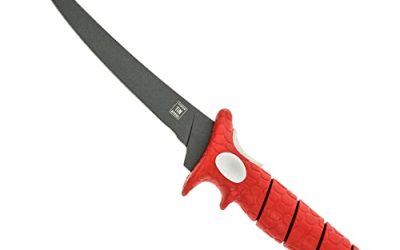
Cuda 9″ Fillet Flex
Cuda describes a titanium-bonded, corrosion-resistant stainless steel blade with a precision-ground flex edge and a non-slip scale-pattern grip, made for both freshwater and saltwater. The titanium bond is a surface coating, and like any coating it protects the blade faces better than the edge itself, which still needs rinsing and drying. The flex edge suits fish with a defined rib cage, where you want the blade to follow the bones instead of cutting through them. The scale-pattern grip is a practical feature when your hands are wet and slimy. The title says nothing about the base steel grade or whether a sheath comes with the 9-inch model, so confirm that on the listing, because a good sheath is part of keeping salt off the blade between trips.
Kershaw 9″ Clearwater Fish Fillet Knife
The title lists a 9-inch blade, a trailing-point tip and an ABS sheath, and says it is made for large salt and fresh water fish. A trailing point sweeps upward at the tip, which gives you a long belly for smooth slicing along the rib cage and a slightly less aggressive tip for working near the fish’s innards. The title does not mention the steel grade or any coating, so this is the knife to look up on the listing before deciding. It suits anglers who want a plain, long fillet knife without a sharpener or a kit of extras. If you fillet more than one fish a trip, a simple knife like this is easy to dry and keep track of.
Buck 225 Silver Creek Fixed Fillet Knife
This one is listed with a 9-5/8 inch titanium-coated flexible blade, a TPE rubber anti-slip grip and a weight of 5.3 oz, sold for saltwater and freshwater use. That blade length falls between a standard 9-inch fillet knife and the 10-inch Gerber, which is useful for fish in the 5-15 pound range. The rubber grip stays comfortable and secure when wet. The honest question is the steel: the title does not name it, so read the product details. The coating helps resist corrosion and release flesh, but nicks or scratches in it are the usual starting point for spots of rust, so rinse the blade well around the grip and spine.
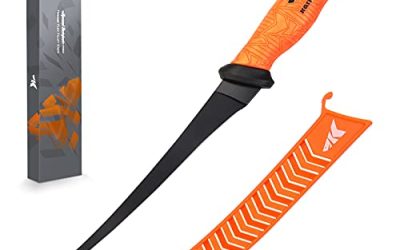
KastKing Speed Demon Pro 9″ Flex Fillet Knife
The title gives a 9-inch ultra-thin, flexible blade in G4116 German stainless steel, with a non-slip grip, a protective sheath and a fresh-and-saltwater rating. G4116 is the usual shorthand for the German 1.4116 stainless grade, a fairly soft steel with a decent chromium content that takes an edge quickly and is easy to touch up. That makes it forgiving for people who sharpen on a basic stone or pull-through sharpener. The trade-off is that very thin, flexible blades are best for delicate work and medium fish; they can feel whippy against thick backbones on larger saltwater species. If you fillet mostly snapper, trout-sized fish and similar, this one is a sensible, budget-friendly pick.
ANTOWIN 9″ Fillet Knife with Japanese SG2 Steel
This knife is listed with a pro-grade Japanese SG2 stainless steel blade, a SharkGrip Pro ergonomic handle and a premium nylon sheath, marketed for saltwater fishing. SG2 is a powder-metallurgy steel that is generally harder than the common 420 or 1.4116 steels, which usually means it holds an edge longer but is harder to sharpen and less tolerant of twisting or prying. It also demands a decent stone and some practice. If you want an edge that survives a whole day of filleting on a charter, it may be worth the extra care. The title does not mention flex, so check how flexible the blade is before assuming it behaves like a traditional fillet knife. It is the premium option in this list.
SORD 9″ Flexible Fillet Knife
The title describes a 9-inch flexible fillet knife for saltwater and freshwater fishing with a G10 handle, full tang construction and a Kydex sheath. G10 is a fiberglass laminate that does not absorb water and holds its texture when wet, which is a good fit for salt spray and fish slime. A Kydex sheath is rigid and locks the blade in place, and it dries quickly after a rinse. The title does not state the steel grade or any coating, so confirm that on the listing; a flexible blade with an unnamed steel is the one question mark here. This knife suits anglers who want a modern, low-maintenance handle and sheath setup and are comfortable doing the rinse-and-dry routine themselves.
At a glance
| Product | Key spec from the title | Best for |
|---|---|---|
| Gerber Controller 10 In. | 10 inch blade, corrosion-resistant steel, sheath with sharpener | Large saltwater fish |
| Cuda 9″ Fillet Flex | 9 inch, titanium-bonded stainless, flex edge | Boat use, medium fish |
| Kershaw 9″ Clearwater | 9 inch, trailing point, ABS sheath | A plain long blade |
| Buck 225 Silver Creek | 9-5/8 inch titanium-coated flexible blade, 5.3 oz | Fish in the mid-size range |
| KastKing Speed Demon Pro 9″ | 9 inch, G4116 German stainless, ultra-thin flexible | Easy sharpening, delicate fillets |
| ANTOWIN 9″ SG2 | 9 inch, Japanese SG2 stainless, nylon sheath | Long edge life |
| SORD 9″ Flexible | 9 inch, G10 handle, full tang, Kydex sheath (steel: check listing) | Low-maintenance handle |
How to choose a saltwater fillet knife
Match blade length to the fish
A rough guide: 6-7 inches for fish under two pounds, 7-8 inches for fish in the two to five pound range, and 9-10 inches for anything bigger. A blade that is too short forces you to saw the fillet off in sections. A blade that is too long is awkward on small fish and harder to control near the tail. If your catch is mixed, a 9-inch knife is the safest single choice, and the best fillet knives roundup covers more sizes.
Steel and corrosion resistance
Steel only counts as stainless with roughly 12-13 percent chromium or more, and salt still attacks it, especially where the surface is scratched or sits wet. A few grades you will see in titles:
- 420 and 420HC: very corrosion-resistant, soft, easy to sharpen, loses its edge faster.
- 1.4116 (often written G4116 or German 4116): about 14-15 percent chromium, takes a keen edge, easy to maintain; common on fillet knives.
- 440A and 440C: more carbon, better edge holding; 440C is the hardest of the family but needs more care in salt.
- 8Cr13MoV and AUS-8: common budget-friendly steels with a decent balance.
- SG2 and other powder steels: very high edge retention, harder to sharpen, usually premium priced.
- Plain carbon steel: sharp and easy to hone but rusts in hours in salt air. Avoid it for boat use.
Coatings like titanium bonding or PTFE help flesh release and add a barrier on the blade flats. They wear first at the edge, so do not treat a coated blade as rustproof.
Flex versus stiffness
A flexible blade follows the backbone and ribs and gives the thinnest skin and bone cuts, which is ideal for snapper, trout and flatfish. For bigger fish with thick bones, a stiffer blade is less likely to whip sideways and gives better control through the shoulder. Many saltwater knives sit in the middle: medium flex, 9 inches.
Handle, tang and sheath
Choose a handle that stays grippy when wet, such as rubber, textured polymer or G10. Full-tang knives are stronger when you lean on the blade. The sheath matters more in salt than most people expect: a sheath with drain holes or one that dries easily keeps moisture away from the blade. A built-in sharpener is a convenience, not a replacement for a stone.
Edge angle
Thin fillet blades work best at roughly 15-17 degrees per side. A stone in the 1000-3000 grit range puts a clean edge on most steels, and a fine ceramic rod or leather strop is enough for touch-ups. See the guides to whetstone sharpeners and manual knife sharpeners if you want a setup for this.
Use and care in salt water
- Rinse the knife in fresh water as soon as you finish filleting. Dried salt and blood are what start pits.
- Wash with mild dish soap and a soft sponge. Skip bleach and chlorinated cleaners, which attack stainless steel.
- Dry the blade, the handle joint and the spine with a towel. Pay attention to the area where the blade meets the handle, where water collects.
- Dry the sheath, too. Shake out water and let it air-dry before the knife goes back in.
- Wipe a thin film of food-safe mineral oil on the blade if it will sit in a tackle bag for weeks.
- Hone lightly before each trip and sharpen on a stone when the edge stops biting.
Common mistakes: leaving the knife in a bucket of seawater, storing it wet in a sealed sheath, running it through a dishwasher, prying with the tip, and cutting on a hard surface like a rock or the gunwale. A clamp board saves your edge and your fingers; see fish fillet boards with clamps.
FAQ
Is stainless steel rustproof in salt water?
No. Stainless steel resists rust because of a thin chromium oxide layer, and salt can break that layer down, especially if the knife stays wet. Rinse, dry and store the knife properly and a stainless blade should stay clean for years.
What length fillet knife is best for big saltwater fish?
Nine to ten inches suits most fish over five pounds. Choose the longer blade for tuna loins, amberjack and large cobia, and the shorter for snapper, redfish and mixed catches.
Should a saltwater fillet knife be flexible?
For most fillet work, yes, a medium to high flex helps the blade follow the bones. For large, thick fish, a stiffer blade gives more control. Pick based on the size of fish you clean most.
Can I use a freshwater fillet knife in salt water?
You can, if it is stainless steel and you rinse it right away. Carbon steel knives are risky because they can rust within hours on a boat. A coating helps but does not replace rinsing and drying.
Pick the length for your usual catch, make sure the steel is stainless or well coated, and make the rinse-and-dry step part of cleaning every fish. Browse the wider fillet knife list if you also need a smaller knife for panfish.
More from Amazon
Programs that pair well with the guide above. Offers and eligibility are set by Amazon and may change.
Free shipping on eligible items, Prime Video and more. Eligible new members can start with a free trial.
Start a Prime free trialA Prime membership for ages 18-24 with a trial period. Eligibility is set by Amazon.
See Prime for Young AdultsAudiobooks and podcasts to listen to on the go. Eligible new members can start with a free trial.
Try Audible freeAd-free music streaming. Eligible new subscribers can start with a free trial.
Try Music Unlimited freeAs an Amazon Associate we earn from qualifying purchases.

Write Your Review
No reviews yet. Be the first to share your experience!