

The best stemless wine glasses for most homes are durable, dishwasher-safe tumblers holding about 13–21 ounces, with a broad enough bowl for red wine but a stable base and moderately thin rim for comfortable everyday use.
Our top picks
 JoyJolt Spirits Stemless Wine Glasses for Red
- Impress your friends with these modern style JoyJolt…
- This JoyJolt Spirits shatter-resistant wine glasses (not plastic)…
- You no longer need to worry about the…
 FAWLES Stemless Wine Glasses Set of 12
- Each of our wine glass set contains 12…
- Each of our wine glass is made from…
- Compared with traditional stemmed wine glasses, our stemless…
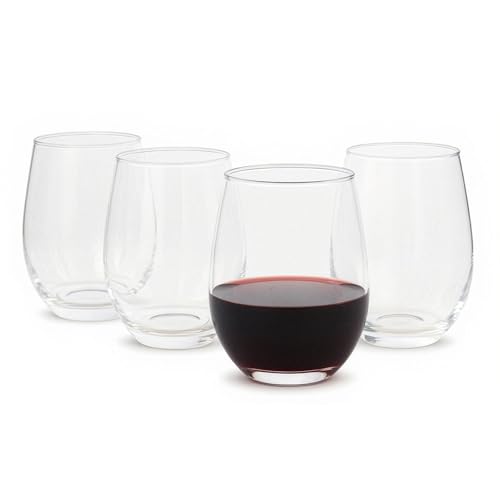 Amazon Basics Stemless Red Wine Glasses Set
- Set of 4 stemless wine glasses, each with…
- Made of smooth, clear glass for lasting durability…
- Classic design suitable for everyday dining, special occasions,…
| Product | Key specs | |
|---|---|---|
| JoyJolt Spirits Stemless Wine Glasses for Red | Impress your friends with these modern style JoyJolt… This JoyJolt Spirits shatter-resistant wine glasses (not plastic)… You no longer need to worry about the… | Check price |
| FAWLES Stemless Wine Glasses Set of 12 | Each of our wine glass set contains 12… Each of our wine glass is made from… Compared with traditional stemmed wine glasses, our stemless… | Check price |
| Amazon Basics Stemless Red Wine Glasses Set | Set of 4 stemless wine glasses, each with… Made of smooth, clear glass for lasting durability… Classic design suitable for everyday dining, special occasions,… | Check price |
 OJA Wine Glasses Set | Timeless and Elegant Design: The OJA stemless wine… Comfortable to Hold: The 15oz wine glasses is… Sturdy Base Ensures Stability: The stemless wine glasses… | Check price |
As an Amazon Associate we earn from qualifying purchases at no extra cost to you.
Best stemless wine glasses at a glance
| Pick | Best for | Approx. capacity | Material or construction | Dishwasher safety | Main trade-off |
|---|---|---|---|---|---|
| Schott Zwiesel Tritan Fortissimo stemless | Frequent use and red wine | About 23–25 oz | Lead-free crystal with Tritan strengthening technology | Yes, according to the range’s care guidance | Large bowl takes up more cupboard space |
| Riedel O Cabernet/Merlot | Red-wine drinkers who want a generous bowl | About 21 oz | Machine-made lead crystal | Yes, with careful loading | Less compact and more vulnerable to rim knocks than thick everyday tumblers |
| Riedel O Viognier/Chardonnay | White wine and smaller servings | About 13 oz | Machine-made lead crystal | Yes, with care | Limited headspace for aromatic reds |
| Spiegelau Authentis Casual | Balanced red-and-white sets | About 13–21 oz, depending on bowl | Lead-free crystal | Yes | Shapes vary by version, so check the exact set |
| Thick-walled glass tumbler | Budget buying, outdoor use and casual entertaining | About 12–16 oz | Tempered or soda-lime glass | Usually yes | Heavier rim and less aroma concentration |
How the bowl shape changes the drinking experience
Red wine: choose width and headspace
A red-wine stemless glass should have a bowl that is wider than its opening and enough capacity to hold a moderate pour below the widest point. A 20–25-ounce bowl gives Cabernet Sauvignon, Merlot, Syrah and similar wines room to collect aromas. It also lets you swirl without immediately reaching the rim.
Capacity is not a recommendation to fill the glass. A useful home serving is roughly 5 ounces, leaving substantial headspace in a 21-ounce bowl. Very wide bowls are pleasant for aroma-driven reds but are easier to knock over and occupy more shelf space. If you rarely drink full-bodied red wine, a 16–18-ounce all-purpose tumbler is more practical.
White wine: narrower is usually better
White-wine stemless glasses generally work best at about 12–15 ounces. The smaller bowl helps a chilled wine retain temperature and concentrates delicate aromas near the opening. Sauvignon Blanc, Riesling, Pinot Grigio and unoaked Chardonnay do not need the cavernous bowl designed for a powerful red.
A narrow bowl also supports smaller pours, which matters because white wine can warm quickly when held in the hand. The compromise is that a 13-ounce glass feels cramped for aromatic reds and gives less room for swirling.
Sparkling wine: prioritize a tall, narrow profile
Stemless glasses are not the strongest choice for sparkling wine. A broad tumbler gives bubbles more surface area to escape, while a narrow flute or tulip glass preserves visible effervescence for longer. If you want one stemless glass for occasional sparkling wine, select a 10–14-ounce tulip-shaped tumbler rather than a wide red-wine bowl.
A narrow sparkling tumbler is also easier to grip around the lower half without warming the wine as quickly. Avoid filling it to the rim: leaving about 1–2 inches of space reduces spills and leaves room for the initial foam.
Rim thickness, durability and everyday handling
The rim is where comfort and longevity often conflict. Thin crystal rims feel precise and direct wine toward the palate, but they are less forgiving when glasses touch in a crowded sink or dishwasher. A medium rim is a better everyday choice for families, frequent entertaining and anyone who stacks dishes after dinner.
- Thin rim: approximately 1 mm or less; elegant and lightweight, but more prone to chips.
- Medium rim: approximately 1–1.5 mm; a useful balance for regular indoor use.
- Thick rim: approximately 1.5–2 mm or more; robust and inexpensive, though less refined on the lips.
Lead-free crystal is not automatically unbreakable. Its advantages are usually clarity, lightness and a refined rim. Strengthened crystal, such as Schott Zwiesel’s Tritan construction, is designed for better resistance to breakage and clouding than ordinary delicate crystal, but it can still chip if knocked against a tap or plate.
Decision matrix: which glass fits your situation?
| Your situation | Best specification | Most suitable type | Why |
|---|---|---|---|
| Wine several nights a week | 16–21 oz, medium-thin rim, dishwasher-safe | Strengthened crystal all-purpose tumbler | Enough bowl space without excessive delicacy |
| Mostly Cabernet, Syrah or red blends | 20–25 oz, broad bowl | Large red-wine stemless crystal | Provides headspace and room to swirl |
| Mostly chilled white wine | 12–15 oz, narrower bowl | White-wine stemless tumbler | Helps control serving size and temperature loss |
| Small kitchen or limited cupboard space | 13–16 oz, stackable or compact base | All-purpose glass tumbler | Uses less shelf area than oversized red-wine bowls |
| Outdoor meals or inexperienced users | 12–16 oz, thick wall, wide base | Tempered soda-lime glass | More stable and less costly to replace |
| Frequent sparkling wine | 10–14 oz, tall tulip profile | Stemless sparkling tumbler, or a conventional tulip glass | Better bubble retention than a wide red-wine bowl |
Head-to-head: crystal versus ordinary glass
Lead-free crystal
Crystal usually offers a thinner rim, clearer appearance and lower weight for a similar capacity. It is the better fit for someone who pays attention to aroma, texture and the feel of the rim. Riedel O and Spiegelau Authentis Casual are examples of machine-made crystal stemless ranges, while Schott Zwiesel’s Tritan lines focus on strengthened crystal construction.
The ownership cost is higher, and a chipped rim should not be ignored. A chip can become sharper with washing and makes the glass less pleasant to use. Crystal glasses should not be pushed tightly together in a cupboard or left loose where they can strike one another.
Soda-lime or tempered glass
Ordinary glass is usually heavier and has a more noticeable rim, but it can be the smarter purchase for patios, busy kitchens and large gatherings. A broad base and thick wall reduce tipping and make individual breakage less frustrating. It is also easier to replace as a complete set.
Do not confuse thermal shock resistance with impact proofing. Even a durable glass can crack when hot water is poured into a cold glass. Let glasses move gradually from refrigerator temperatures to warm water.
Dishwasher safety without shortening glass life
“Dishwasher-safe” describes intended use, not unlimited abuse. Heat, detergent residue, contact with other dishes and repeated vibration are the main causes of clouding, chips and breakage.
- Load each glass between the rack prongs rather than over a prong tip.
- Leave space so bowls cannot touch during the wash cycle.
- Use a glassware or lower-temperature cycle when available.
- Avoid placing stemless bowls directly beneath powerful spray jets.
- Remove glasses after the cycle and dry mineral spots with a soft cloth.
For hard-water areas, occasional hand washing may keep clear crystal looking better. Use a small amount of unscented detergent, rinse thoroughly and hold the bowl—not the rim—when drying. Twisting the bowl against a stuck base can create stress fractures.
Stability matters more than many listings reveal
A stemless glass has no stem to grip, so its base and center of gravity determine how confidently it sits on a table. For everyday use, look for a base at least 2.5–3 inches wide, a lower bowl that does not flare sharply, and a weight of roughly 150–250 grams for a medium-capacity glass. Oversized red glasses can be stable on a flat table yet awkward on a narrow tray.
There is also a handling trade-off: holding the bowl warms chilled wine faster than holding a stem. If temperature matters, grip the lower third and pour smaller amounts—about 3–4 ounces for white wine—so the glass can be refreshed before the contents warm.
What to buy for a mixed wine collection
For one versatile set, choose 16–21-ounce stemless glasses with a moderately wide bowl, a medium-thin rim, a flat base and confirmed dishwasher-safe construction. This size accommodates a 5-ounce red pour while remaining manageable for white wine.
For two specialized sets, pair 20–25-ounce red-wine tumblers with 12–15-ounce white-wine tumblers. Add narrow stemless tulip glasses only if sparkling wine is a regular part of your routine. That arrangement costs more and takes more storage, but it solves the shape problem rather than forcing one glass to perform every job.
Final verdict
The best stemless wine glasses are not necessarily the largest or thinnest. Choose strengthened crystal for frequent indoor use, a wide 20–25-ounce bowl for full-bodied reds, a 12–15-ounce narrower bowl for white wine, and a tall tulip profile for sparkling wine. If stability, replacement cost and outdoor durability matter most, a thick-walled tempered-glass tumbler is the more sensible choice than delicate crystal.
More from Amazon
Programs that pair well with the guide above. Offers and eligibility are set by Amazon and may change.
Free shipping on eligible items, Prime Video and more. Eligible new members can start with a free trial.
Start a Prime free trialA Prime membership for ages 18-24 with a trial period. Eligibility is set by Amazon.
See Prime for Young AdultsAudiobooks and podcasts to listen to on the go. Eligible new members can start with a free trial.
Try Audible freeAd-free music streaming. Eligible new subscribers can start with a free trial.
Try Music Unlimited freeAs an Amazon Associate we earn from qualifying purchases.




Write Your Review
No reviews yet. Be the first to share your experience!