

The best directional freeze ice molds for most home users are 2-inch silicone-and-insulated molds: they produce a useful cocktail-sized block, fit many compact freezers, and offer a better balance of clarity, freezing time, and cooler compatibility than oversized molds.
Directional freezing works by forcing water to freeze from one direction, usually from the top down. Air bubbles and dissolved minerals are pushed toward the last-freezing section instead of being trapped throughout the cube. The result is clearer ice, although “clear” depends on the water, freezer temperature, mold design, and handling.
Our top picks
 True Cubes Crystal Clear Ice Cube Maker
- Winner of Best Clear Ice Mold as named…
- Ice So Clear It Disappears - By mimicking…
- The Official Bartenders’ Choice - Make amazing, bar-quality…
 Clear Ice Cube Maker
- Clearer Ice, Better Drinks: Our insulated stainless steel…
- Durability & Sustainability: Our clear ice ball maker…
- Space Saving & Easy Release: Unlike bulky clear…
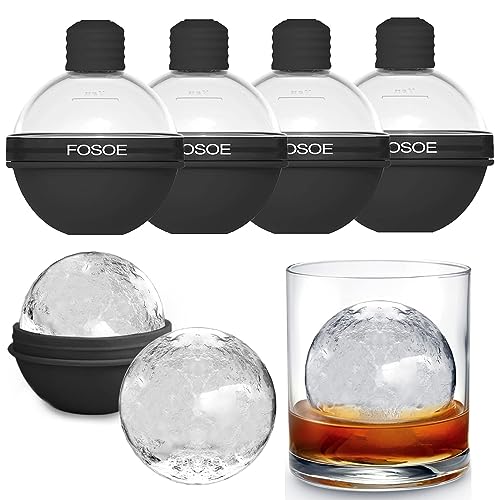 Silicone Ice Ball Molds for Whiskey
- These ice molds creates 2.5” large round ice…
- The assembly design makes the release easier than…
- The sphere ice cube mold can be separated…
| Product | Key specs | |
|---|---|---|
| True Cubes Crystal Clear Ice Cube Maker | Winner of Best Clear Ice Mold as named… Ice So Clear It Disappears - By mimicking… The Official Bartenders’ Choice - Make amazing, bar-quality… | Check price |
| Clear Ice Cube Maker | Clearer Ice, Better Drinks: Our insulated stainless steel… Durability & Sustainability: Our clear ice ball maker… Space Saving & Easy Release: Unlike bulky clear… | Check price |
| Silicone Ice Ball Molds for Whiskey | These ice molds creates 2.5” large round ice… The assembly design makes the release easier than… The sphere ice cube mold can be separated… | Check price |
 Clear Ice Ball Maker | At 6 x 10 x 6 inches, this… Directional freezing forms ice bottom-up, pushing impurities outward… Large 2-inch spheres melt far slower than standard… | Check price |
As an Amazon Associate we earn from qualifying purchases at no extra cost to you.
Quick picks by situation
| Situation | Best mold type | Typical block | Why it fits |
|---|---|---|---|
| First clear-ice setup | Insulated 2-inch silicone cube mold | 50–60 mm cube | Forgiving, widely useful, and easier to release than very large blocks |
| Large drinks or slow dilution | Single large directional mold | 65–75 mm cube | More mass and less exposed surface area per drink |
| Small freezer or compact cooler | Two-cube or one-cube compact mold | 45–50 mm cube | Needs less shelf depth and usually freezes faster |
| Frequent entertaining | Four-cube insulated tray | Four blocks, about 0.5–0.7 kg total | Higher output without committing freezer space to a large block |
| Carrying ice to a boat, campsite, or dock | Removable silicone mold inside a rigid insulated shell | 50–65 mm cube | Less prone to crushing and easier to transport in a small hard cooler |
Best directional freeze ice molds compared
ClearlyFrozen-style 2-inch cube mold: best all-round format
A two-inch directional mold is the sensible starting point for most buyers. ClearlyFrozen is a well-known example of this format, using a flexible silicone cube section with an insulated container. A typical cube in this class measures about 2 inches per side and weighs roughly 110–130 grams when fully frozen.
The size is large enough to melt slowly in a short drink but small enough to fit many rocks glasses. Expect approximately 18–30 hours of freezing time, depending on fill temperature, freezer airflow, and how full the freezer is. The main compromise is output: many compact trays make only two or four cubes at once.
Choose this format if you want clear ice for spirits, iced coffee, or neat seafood-friendly drinks such as a chilled aquavit or gin pour, rather than a large display block for a punch bowl.
True Cubes-style four-cube tray: best for repeated batches
True Cubes is another established name in directional freezing. Its four-cube format is attractive when a single cube mold does not produce enough ice for regular use. Four cubes at approximately 2 inches each require more freezer room vertically and horizontally, but the output is considerably better for hosting.
A full batch typically weighs around 450–550 grams, and freezing commonly takes 18–24 hours. The insulated reservoir can be slower to dry than an open tray, so it suits a user who keeps making clear ice rather than someone who uses the mold once a month.
Its practical advantage is consistency: the cubes are close in size, making it easier to plan how many drinks one batch will serve. Its disadvantage is that the rigid outer housing can be awkward in narrow freezer drawers and small coolers.
Wintersmiths-style large-block mold: best for maximum melt resistance
Wintersmiths offers directional-freezing molds aimed at larger-format ice. A block around 2.5–3 inches across can weigh approximately 250–400 grams. That extra mass means a single block can last through a long pour, tasting session, or shared drink, but it also brings longer freezing times—often 24–40 hours.
Large blocks are not automatically clearer than 2-inch cubes. They give the freezing front more distance to travel, and any interruption or movement during freezing can create a cloudy layer. They also need a glass with a wide opening. If your drinkware or freezer is small, the theoretical melt-rate advantage may not justify the inconvenience.
Pick a large-block mold when slow dilution matters more than batch quantity and you have a stable, flat freezer shelf.
What the numbers mean in daily use
| Format | Approx. ice per piece | Typical batch weight | Usual freeze time | Space and cooler notes |
|---|---|---|---|---|
| 45–50 mm cube | 90–125 g | 180–500 g | 12–24 hours | Best for narrow shelves and compact soft coolers |
| 50–60 mm cube | 110–210 g | 220–840 g | 18–30 hours | Most versatile rocks-glass size |
| 65–75 mm cube | 275–420 g | 275–420 g per mold | 24–40 hours | Needs wide glass and a flat, unobstructed freezer shelf |
These are useful planning figures rather than guarantees. A freezer set near 0°F (-18°C) may produce a different result from one operating at 5°F (-15°C). Warm water, frequent door opening, and a mold placed beside the freezer vent can also change the freezing pattern.
Clarity: mold design matters, but water still matters
Look for a lid or upper reservoir that leaves one deliberate freezing direction, insulation on the sides, and a silicone cavity that can flex without tearing. A completely sealed container is less useful if it traps expansion pressure or makes the finished ice difficult to remove.
Filtered water can reduce visible mineral haze, but boiling water is not a reliable substitute for directional freezing. Boiling may remove some dissolved gases, yet it does not eliminate particles or prevent new air from dissolving as the water cools. Use cold, clean water and avoid moving the mold while it freezes.
Directional molds commonly leave a cloudy “reject” section at the final freezing end. That is normal. Cut or discard this portion rather than expecting every millimeter of the reservoir to become serving-quality ice.
Cooler compatibility and fit
Before buying, measure the freezer shelf and the inside of the cooler—not just the cooler’s advertised capacity. A mold listed as 8 inches long may need another inch of clearance to remove its lid. Also allow room to keep it level; a tilted mold creates an uneven freezing front.
For transport, freeze the blocks completely, remove them from the mold, and place them in a sealed freezer bag or lidded container. A rigid insulated shell protects clear ice better than a flexible tray. In a small cooler, 50 mm cubes are usually a better choice than one 75 mm block because they can be arranged around food and sealed packs.
A simple cost-per-use calculation
Suppose a $25 directional mold produces four usable cubes per batch and lasts 18 months at one batch per week. That is about 78 batches, or 312 cubes. The mold cost is approximately 8 cents per cube before electricity and water. If you use it only once per month, the same mold produces about 72 cubes over 18 months, raising the equipment cost to roughly 35 cents per cube.
This is why capacity should match frequency. A four-cube tray is economical for regular entertaining; a single-cube mold may be the better ownership choice for occasional use and limited freezer space.
Setup and maintenance that protect clarity
-
Wash and dry every part. Residual detergent, food oils, or freezer odors can affect the ice.
-
Fill with cold filtered water. Leave the manufacturer’s expansion space; overfilling can distort the lid or split the silicone.
-
Freeze on a level surface. Do not stack items on the mold or place it where the freezer fan can shake it.
-
Stop before the reject section freezes solid. If the whole reservoir becomes one frozen mass, the cloudy end can be harder to separate.
-
Release gently. Let the silicone warm for a minute or rinse the outside with cool water. Do not twist a rigid shell aggressively.
-
Store the ice sealed. Clear ice absorbs freezer odors, especially near fish, shellfish, onions, or strongly seasoned foods.
Durability and common ownership problems
The silicone cavity usually wears first at thin corners, seams, and pull tabs. Repeated stretching while the ice is still firmly stuck can create small tears. Insulation can also absorb odors if it is stored wet. Rigid plastic shells may crack when dropped while frozen, and lids can warp in a dishwasher unless the manufacturer specifically allows dishwasher cleaning.
Do not use boiling water to force release, place a full mold on an unstable freezer shelf, or expect a mold designed for 2-inch cubes to produce a single large cocktail sphere. For long service, hand-wash the silicone, air-dry the reservoir completely, and replace any part that develops a split or persistent odor.
Bottom line
Choose a 2-inch insulated silicone mold for the best balance of clarity, freezing time, drink compatibility, and cooler practicality. Move to a four-cube tray if you need weekly output, or to a 65–75 mm large-block mold if slow melting matters more than freezer space. The best directional freeze ice molds are not necessarily the biggest or most expensive; they are the ones whose block size, batch capacity, and physical footprint match how often you will actually make and transport clear ice.
More from Amazon
Programs that pair well with the guide above. Offers and eligibility are set by Amazon and may change.
Free shipping on eligible items, Prime Video and more. Eligible new members can start with a free trial.
Start a Prime free trialA Prime membership for ages 18-24 with a trial period. Eligibility is set by Amazon.
See Prime for Young AdultsAudiobooks and podcasts to listen to on the go. Eligible new members can start with a free trial.
Try Audible freeAd-free music streaming. Eligible new subscribers can start with a free trial.
Try Music Unlimited freeAs an Amazon Associate we earn from qualifying purchases.





Write Your Review
No reviews yet. Be the first to share your experience!