

Key takeaways
- Large Capacity
- Convertible
- Garage Ready
The best chest freezers are sized by the food you actually store and the floor space you can spare: choose about 3–5 cubic feet for one or two people, 5–9 cubic feet for a small family, and 10–16 cubic feet for bulk buying, fishing, or large batches of food.
Our top picks
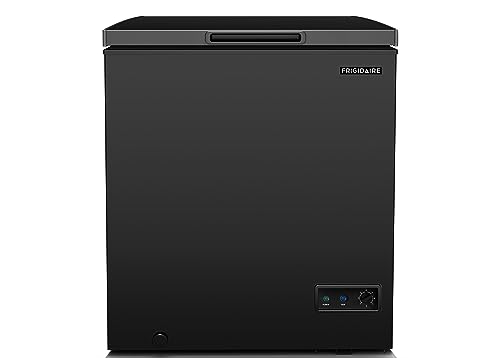 FRIGIDAIRE EFRF5003-BLACK Chest Deep Freezer-Garage-Ready
- Large Storage Capacity - Effortlessly store frozen food…
- Adjustable Thermostat - Set the temperature with ease…
- Effortless Organization - Equipped with a removable vinyl-coated…
 FRIGIDAIRE EFRF7003-BLACK Chest Deep Freezer
- Large Storage Capacity - Effortlessly store frozen food…
- Adjustable Thermostat - Set the temperature with ease…
- Effortless Organization - Equipped with a removable vinyl-coated…
| Product | Key specs | |
|---|---|---|
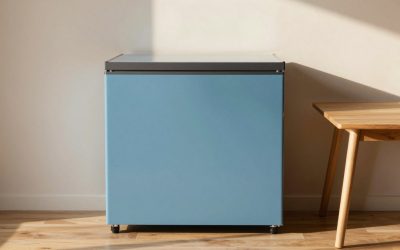
 Midea 3.5 Cu.ft Chest Freezer | Large Capacity Convertible Garage Ready | Check price |
| FRIGIDAIRE EFRF5003-BLACK Chest Deep Freezer-Garage-Ready | Large Storage Capacity - Effortlessly store frozen food… Adjustable Thermostat - Set the temperature with ease… Effortless Organization - Equipped with a removable vinyl-coated… | Check price |
| FRIGIDAIRE EFRF7003-BLACK Chest Deep Freezer | Large Storage Capacity - Effortlessly store frozen food… Adjustable Thermostat - Set the temperature with ease… Effortless Organization - Equipped with a removable vinyl-coated… | Check price |
 7.0 Cu Ft Chest Freezer | Energy Efficient Design - This 7.0 Cu Ft… Quiet Operation - Designed with quiet technology, this… Adjustable Temperature Control - Equipped with a 6-setting… | Check price |
As an Amazon Associate we earn from qualifying purchases at no extra cost to you.
Best chest freezer choices by situation
| Situation | Best choice | Useful capacity | Why it fits | Main compromise |
|---|---|---|---|---|
| Apartment, office, or occasional overflow | Compact chest freezer | 3–5 cu. ft. (85–142 L) | Usually around 20–25 inches wide and easier to place | Limited room for large cuts and awkward-shaped packages |
| Two to four people buying normal weekly groceries | Mid-size chest freezer | 5–9 cu. ft. (142–255 L) | Good balance of capacity, price, and manageable organization | May fill quickly after a bulk meat or seafood purchase |
| Large family or regular bulk buying | Large chest freezer | 10–16 cu. ft. (283–453 L) | Stores substantial quantities at a lower cost per cubic foot | Needs more floor space and takes longer to sort and defrost |
| Fishing, hunting, or preserving a seasonal catch | 12–20 cu. ft. freezer with baskets | 340–566 L | Accommodates boxed fillets, whole packages, and rotating inventory | Heavy when full and more demanding to move or clean |
These are planning ranges rather than guarantees. A chest freezer’s usable space is lower than its advertised volume because baskets, packaging, air circulation, and the sloped compressor housing take up room.
How much capacity do you need?
A practical starting point is roughly 1.5 to 2.5 cubic feet of freezer capacity per person, depending on how often you shop and how much frozen food you keep. Add capacity if you buy whole sides of fish, freeze garden produce, or cook several weeks of meals at once.
For example, suppose a household wants to hold 60 pounds of wrapped seafood and meat, plus frozen vegetables and prepared meals. If densely packed food averages about 25 pounds per cubic foot in real household storage, the food alone may occupy approximately 2.4 cubic feet:
60 pounds ÷ 25 pounds per cubic foot = 2.4 cubic feet
Allowing space for baskets, irregular packages, and access, a 5–7 cubic foot freezer is more realistic than a tightly packed 3-cubic-foot model. Do not size the freezer to the maximum amount it can technically hold; a freezer that cannot be sorted efficiently often leads to forgotten, freezer-burned food.
What separates the best chest freezers?
Baskets and interior organization
At least one removable sliding basket is valuable for small packages, frequently used food, and items that should not disappear underneath heavier bags. Larger models often have two or more baskets, but basket count is not everything: a wide, shallow basket is easier to use than a narrow one filled with stacked packages.
For seafood, divide the interior by category rather than leaving loose packages in one deep pile. Use baskets for ready-to-eat items and shallow bins for smaller bags. Label packages with the food, quantity, and freezing date. Vacuum-sealed fillets can be stacked flat, while irregularly shaped whole fish or shellfish usually need more unoccupied space than their weight suggests.
Temperature controls
A mechanical dial is inexpensive and durable, but its numbered settings are not precise temperature readings. An electronic control or digital display makes adjustment easier, especially in a garage where temperatures change with the seasons.
Whichever control the freezer uses, place a separate freezer thermometer inside. The target is 0°F (-18°C) or colder for long-term frozen storage. Avoid repeatedly changing the setting to compensate for a lid left open, because that increases energy use and can create uneven temperatures.
Energy use
Chest freezers are usually efficient because cold air stays inside when the lid opens. Typical household models may use approximately 200–500 kilowatt-hours per year, with larger units, warm locations, and poor seals pushing consumption higher. Check the yellow EnergyGuide label for the specific model rather than comparing capacity alone.
A simple annual electricity estimate is:
Annual cost = yearly kilowatt-hours × your electricity rate
For example, a freezer rated at 300 kWh per year in a home paying $0.18 per kWh would cost about $54 per year to operate:
300 × $0.18 = $54
A slightly cheaper purchase price may not be the best value if it uses substantially more electricity for a decade. Keep at least a few inches of clearance around the cabinet where the manufacturer specifies, and do not place it beside a radiator, oven, or in direct sun.
Manual defrosting and maintenance
Most chest freezers are manual-defrost appliances. That avoids the regular heating cycles used by frost-free designs, but ice eventually reduces usable space and makes the compressor work harder. Defrost when the ice reaches roughly 1/4 inch thick or when the lid no longer closes properly.
- Move food into insulated coolers before unplugging the freezer.
- Keep the lid closed during the defrosting process to preserve cold air.
- Use towels and a shallow pan to collect meltwater.
- Never chip ice with a knife or screwdriver; a punctured refrigerant line can ruin the appliance.
- Clean the interior with mild detergent and water, then dry it completely.
- Check that the drain plug is closed before restarting.
Defrosting a compact freezer may take an hour or two; a heavily iced large freezer can take much longer. Plan it before a grocery trip rather than after buying a full load of food.
Garage performance: what “garage ready” really means
A garage-ready chest freezer is designed to operate across a wider ambient temperature range than a basic indoor model. That matters in unheated garages, where winter temperatures may become very low and summer temperatures can be considerably higher.
Garage-ready does not mean the freezer can be placed outdoors. Rain, condensation, dust, flooding, and extreme heat can damage electrical parts and shorten compressor life. Confirm the model’s stated ambient operating range before installation. In a hot garage, ventilation and shade matter; in a cold garage, the freezer’s thermostat and compressor may not behave like those in a heated room.
Use a dedicated, properly grounded outlet if required by the manufacturer. Avoid extension cords unless the instructions explicitly permit one with the correct rating. A freezer should also stand level so the lid seals evenly and meltwater drains as designed.
Chest freezer buying matrix
| Priority | Look for | Acceptable compromise | Avoid |
|---|---|---|---|
| Lowest purchase cost | Compact manual-defrost model with a mechanical control | One basket and no interior light | Paying for capacity you cannot fill |
| Easy daily access | Two or more baskets, interior light, strong lid hinges | Slightly less open floor space | Deep models with no way to separate small packages |
| Low running cost | Good EnergyGuide consumption and a tight gasket | Higher upfront price | Choosing solely by advertised cubic feet |
| Unheated garage | Explicit garage-ready rating and published ambient range | More careful placement and seasonal checks | Indoor-only models exposed to temperature extremes |
| Seasonal seafood storage | Wide opening, removable baskets, robust hinges, thermometer | Manual defrosting | Very narrow cabinets that cannot accept flat packages |
Ownership details that affect long-term value
The gasket is one of the first parts to inspect. A dirty, warped, or cracked seal allows warm air in and encourages frost. Close a strip of paper in the lid; if it slides out with almost no resistance at several points, clean the gasket and check lid alignment. Replace a damaged gasket rather than compensating with a colder setting.
Hinges, baskets, drain plugs, and the lid handle also receive more day-to-day wear than the cabinet itself. Do not lean on the lid, overload a basket, or drag a full freezer across the floor. A full 15-cubic-foot model can weigh several hundred pounds once loaded, so choose its permanent location before filling it.
Keep an inventory on the lid or nearby wall. First-in, first-out rotation is particularly useful for fish, because vacuum-sealed packaging can conceal how long an item has been stored. If the freezer loses power, keep the lid closed. A full freezer generally stays cold longer than a partly empty one, but use a thermometer and follow local food-safety guidance before keeping thawed food.
Our practical verdict
For most households, a 5–9 cubic foot chest freezer offers the best balance of footprint, price, and usability. Choose a 3–5 cubic foot unit when space is the overriding concern, and move to 10–16 cubic feet if you regularly buy seafood in bulk or preserve seasonal food. Prioritize a garage-ready rating for an unheated outbuilding, at least one removable basket, a reliable thermometer, and a published energy-use figure. Capacity matters, but a freezer that is easy to organize, safely placed, and regularly maintained will preserve more food with less waste than a larger model filled beyond practical reach.
More from Amazon
Programs that pair well with the guide above. Offers and eligibility are set by Amazon and may change.
Free shipping on eligible items, Prime Video and more. Eligible new members can start with a free trial.
Start a Prime free trialA Prime membership for ages 18-24 with a trial period. Eligibility is set by Amazon.
See Prime for Young AdultsAudiobooks and podcasts to listen to on the go. Eligible new members can start with a free trial.
Try Audible freeAd-free music streaming. Eligible new subscribers can start with a free trial.
Try Music Unlimited freeAs an Amazon Associate we earn from qualifying purchases.

Write Your Review
No reviews yet. Be the first to share your experience!