

Key takeaways
- Eight 9-inch fillet knives for salmon, walleye, pike and catfish, with notes on flex, steel, handles and care.
For salmon, walleye, pike, catfish and other fish longer than about 20 inches, a 9-inch flexible fillet knife is the sweet spot. The blade is long enough to run from the collar to the tail in one or two strokes, yet still thin enough to bend along the backbone and ribs. Go shorter and you saw at big fish; go longer and the tip gets harder to control around the belly cavity.
Not every 9-inch knife is the same tool, though. Some are whisper-thin and bend almost like a ribbon, others are stiffer and built for steaking and heavy skinning. The eight knives below all list a 9-inch blade in the title, and the notes explain which style each one leans toward, so you can match the knife to the fish you actually clean.
Quick picks
- Thin, very flexible blade for walleye, perch and salmon fillets: KastKing Speed Demon Pro 9″ Flex
- Tapered-flex shape with a lanyard hole for boat use: BUBBA 9 Inch Tapered Flex
- Traditional flexible blade for table and kitchen filleting: Dexter-Russell S2333-9PCP
- Built for large salt and freshwater fish: Kershaw 9″ Clearwater
- Knife plus sharpener in one box: Rapala 9″ Fish’n Fillet
Our top picks


As an Amazon Associate we earn from qualifying purchases at no extra cost to you.
KastKing Speed Demon Pro 9″ Flex Fillet Knife
This is the thinnest, most flexible option in the group on paper. The title lists a G4116 German stainless blade, described as ultra-thin and flexible, with a non-slip grip and a protective sheath. G4116 is a common stainless grade for fillet knives: it takes a keen edge, resists rust well and is soft enough to touch up quickly.
A blade this thin is at its best on delicate work, such as taking walleye or salmon fillets off the ribs in one smooth pass and then skinning them. That same thinness is the trade-off: it is not the knife for cutting through backbone or prying at a tough collar. Check the listing for the handle length and sheath style if you carry it on a belt.
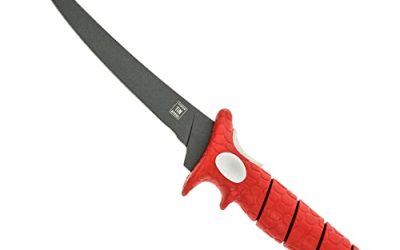
BUBBA 9 Inch Tapered Flex Fillet Knife
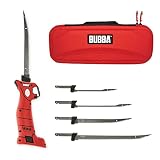
The title describes a tapered flex blade in full-tang, high-carbon stainless steel with a titanium-coated non-stick finish. It also lists a non-slip grip handle, a lanyard hole and a synthetic sheath. The lanyard hole is a small detail that matters on a boat, where a dropped knife often means a lost knife.
The taper means the blade is thicker near the handle and thins toward the tip, which gives you some backbone near the heel for the first cut behind the gills and flexibility at the point for working along the ribs. That makes it a sensible all-rounder for pike, walleye and mid-sized salmon. As with any coated blade, the coating helps release slime and scales but will wear with repeated sharpening, so check how the maker suggests maintaining it.
Dexter-Russell S2333-9PCP 9″ Traditional Flexible Fillet Knife
This one comes from a long-established US knife maker and leans traditional: a flexible high-carbon stainless blade that, per the title, follows bones for clean fillets and is made for fish and seafood prep. Traditional-pattern fillet knives like this are common in fish markets and commercial kitchens, which tells you the shape is built for repeated, steady work.
It suits anglers who clean fish at a table or in the kitchen rather than on a pitching deck, and it is easy to keep sharp on a steel and stones. The title does not mention a sheath, so check the listing for what ships with it and plan on a separate sheath if you travel with it.
Kershaw 9″ Clearwater Fish Fillet Knife
The Clearwater is aimed squarely at larger fish; the title says it is made for large salt and fresh water fish. It lists a 9-inch blade with a trailing point tip and an ABS sheath. A trailing point sweeps the tip upward, which gives you a longer curved belly for slicing and makes it easy to skim along the skin when removing a fillet from the carcass.
That shape is helpful on catfish, pike and salmon, where long, even strokes matter more than precision work at the tip. The title does not describe the flex, so check the listing if you want something very bendy for small fillets. If you also clean panfish, a shorter knife may be easier to use.
CUDA 9″ Fillet Flex Fish Knife
The title mentions a titanium-bonded, corrosion-resistant stainless steel blade with a precision ground flex edge and a non-slip scale-pattern grip. It is marked for both freshwater and saltwater use. Titanium bonding is a surface treatment meant to protect against salt and slime, which is useful if the knife lives in a tackle bag.
The scale-pattern grip is a practical touch: it adds texture so the handle stays put when it is covered in slime and blood. This is a reasonable choice for anglers who fish both fresh and salt and want one 9-inch knife for both. The title does not say what sheath is included, so confirm that on the listing.
SORD 9″ Flexible Fillet Knife
The title lists a flexible blade, a G10 handle, full-tang construction and a Kydex sheath, and it is described for salt and freshwater fishing. G10 is a laminate handle material that tolerates water, cold and grease better than most plastics, and Kydex sheaths hold the blade securely and do not soak up moisture.
That combination points to a knife built for rough, wet use rather than light kitchen duty. It suits someone who wants a more durable handle and a rigid sheath for the boat or truck. G10 can feel hard in the hand compared with soft rubber grips, so if you clean a lot of fish in one sitting, think about whether you prefer the harder or softer feel.
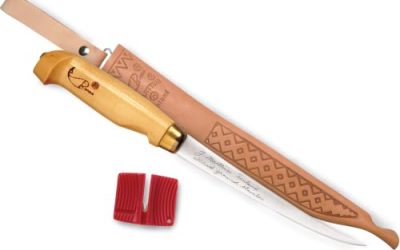
Rapala 9″ Fish’n Fillet Knife
Rapala is a long-familiar name in fillet knives, and this version comes bundled with a single-stage sharpener and a sheath according to the title. For a new angler, that is the practical part: you get a knife and a way to keep it working without buying anything extra.
A single-stage sharpener is a quick fix at the end of a day, not a replacement for stones, because it removes metal fast and can only do so much for a thin edge. Use it lightly to restore the edge between sessions. If you already own a good sharpening setup, you may not need the bundled one.
Hammer Stahl 9-Inch Fillet Knife
This is the most kitchen-leaning knife here: German forged high-carbon steel, an ergonomic quad-tang Pakkawood handle and a gift box, with the blade described for filleting, boning, trimming and slicing. Pakkawood handles are comfortable and attractive, but they are less forgiving of being left wet than plastic or G10.
It suits the home cook who fillets whole salmon, trout or other large fish at the counter, and it doubles as a trimming and slicing knife. A forged blade is often a bit stiffer than a stamped fillet blade, and the title does not say how flexible it is, so check the listing if you want a bendy blade. It is less suited to a wet boat deck.
Comparison table
| Product | Key spec from title | Best for |
|---|---|---|
| KastKing Speed Demon Pro 9″ Flex | G4116 German stainless, ultra-thin flexible blade, sheath | Delicate fillets of walleye and salmon |
| BUBBA 9 Inch Tapered Flex | Full tang, high-carbon stainless, titanium-coated, lanyard hole, sheath | All-round boat and shore use |
| Dexter-Russell S2333-9PCP | Flexible high-carbon stainless; sheath not listed | Table and kitchen filleting |
| Kershaw 9″ Clearwater | 9-inch blade, trailing point tip, ABS sheath | Large salt and freshwater fish |
| CUDA 9″ Fillet Flex | Titanium-bonded stainless, flex edge, scale-pattern grip | Mixed fresh and saltwater use |
| SORD 9″ Flexible | G10 handle, full tang, Kydex sheath | Rough, wet conditions |
| Rapala 9″ Fish’n Fillet | Includes single-stage sharpener and sheath | First fillet knife with upkeep included |
| Hammer Stahl 9-Inch | German forged high-carbon steel, Pakkawood handle, gift box | Home kitchen filleting |
How to choose a 9-inch fillet knife
Match blade length to fish size. A 9-inch blade is comfortable for fish from about 18 to 36 inches: walleye, pike, striped bass, catfish, salmon and similar. Under 14 inches, a 6-7 inch knife gives better control. For fish over 40 inches, many people switch to a stiffer 10-inch knife or a steaking knife.
Choose flex to fit the job. A very flexible blade follows the rib cage and skin, which gives the highest yield on thin-boned fish such as walleye, perch and trout. A stiffer blade is easier to push through the thick shoulder and collar on catfish, large pike and salmon. If you clean a mix, a moderate flex or a tapered blade is the safer bet. Flex also means more care: a thin blade can snap if used as a pry bar.
Know the steel. German-style stainless such as 1.4116 (often written G4116) is a well-established fillet-knife steel: easy to sharpen and rust-resistant, though it will not hold an edge as long as harder knife steels. High-carbon stainless trades a little ease of sharpening for longer edge life. For saltwater, prioritize corrosion resistance and rinse the blade the same day regardless of the label.
Look at the handle and sheath. Fish slime makes any handle slippery, so look for texture, finger grooves or a soft material, and a guard or flared end if you can see one in the photos. A full tang adds strength and balance. For fishing, a sheath with a belt loop or lanyard hole keeps the blade protected and the edge from knocking about in a tackle box.
Sharpening angle. Thin fillet blades usually sharpen well at around 15-17 degrees per side. Most home sharpeners can handle that. If you want to go deeper, see the guides to whetstone knife sharpeners and knife sharpeners for the kitchen.
Use and care
- Work on a stable board with a non-slip base or clamp; a fish that slides is how most cut hands happen. A fillet board with a clamp holds the tail and leaves both hands free.
- Cut behind the gill plate and pectoral fin, then turn the blade flat toward the tail. Keep the edge against the backbone and let the flex do the work.
- Use long, light strokes instead of sawing. The weight of a sharp knife is enough on most fish.
- Skin the fillet by laying it skin-side down, tail end toward you, and sliding the blade between flesh and skin at a shallow angle.
- Rinse and dry the blade right after use, especially after saltwater. Hand wash only; dishwashers dull edges and can pit thin blades.
- Touch up the edge before each session with a few light passes on a fine stone or ceramic rod. Store in the sheath only when dry.
The most common mistakes are using a thin flex blade to cut through bone, leaving a knife wet in its sheath and pressing hard with a dull edge. Each one shortens the life of a good knife.
FAQ
Is a 9-inch fillet knife too big for trout and panfish?
Usually, yes. A 9-inch blade is awkward on a fish that fits in your hand, and a 6-7 inch knife gives better tip control for small fish. Keep the 9-inch for walleye, bass, catfish, pike and salmon.
Should a 9-inch fillet knife be flexible or stiff?
Flexible if you mainly fillet thin-boned fish and want the most meat off the ribs. Stiffer if you fillet large catfish, pike or salmon and want to cut through thick shoulders. A tapered flex blade sits between the two.
Can I use a fillet knife for meat and poultry?
Yes, for trimming, boning and slicing, and some listings say so. Avoid cutting through bone or frozen meat, which can chip or bend a thin blade. For heavier boning work, see the boning knife guide.
How often should I sharpen a fillet knife?
Hone lightly before each cleaning session and do a full sharpening whenever the knife starts to tear rather than slice. For a weekend angler, that is typically a few times a season. Stropping or a fine ceramic rod keeps a thin edge in shape between full sharpenings.
If you want a broader comparison across lengths, see the overview of the best fillet knives. Pick the 9-inch for the fish you actually catch, keep it sharp and dry, and any knife on this list can do the job well.
More from Amazon
Programs that pair well with the guide above. Offers and eligibility are set by Amazon and may change.
Free shipping on eligible items, Prime Video and more. Eligible new members can start with a free trial.
Start a Prime free trialA Prime membership for ages 18-24 with a trial period. Eligibility is set by Amazon.
See Prime for Young AdultsAudiobooks and podcasts to listen to on the go. Eligible new members can start with a free trial.
Try Audible freeAd-free music streaming. Eligible new subscribers can start with a free trial.
Try Music Unlimited freeAs an Amazon Associate we earn from qualifying purchases.

Write Your Review
No reviews yet. Be the first to share your experience!