

Key takeaways
- Burr grinders crush beans between two surfaces set at a fixed gap, which produces a more even particle size. They are the standard in every espresso machine above.
- Blade grinders spin a blade like a propeller. Grind size depends on how long you run them, and the result is uneven. They are cheaper but less consistent.
- Grind settings matter more for espresso than for drip. A wide range of steps, such as the Ninja’s 25, gives room to dial in different beans; machines with only a few steps limit adjustment.
- Hopper size affects freshness. Leaving a full hopper of beans exposed to light and air for weeks gives up some of the freshness benefit, so load only what you will use in a week or so.
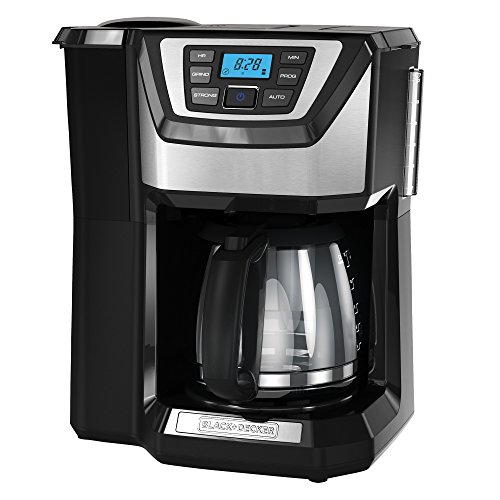
The best coffee maker with a built-in grinder depends on what ends up in your cup: the Breville Grind Control suits people who want a full carafe of drip coffee from fresh beans, the Ninja Luxe Cafe Premier suits households that want espresso, drip and cold brew from one footprint, Breville’s Barista Express or Barista Touch suit home espresso fans, and Cuisinart grind-and-brew machines are the budget route. This guide compares them using maker specifications and reviewer reports, then explains the trade-offs that come with putting a grinder inside a brewer.
Our top picks



As an Amazon Associate we earn from qualifying purchases at no extra cost to you.
Why Choose a Machine That Grinds for You
Coffee begins to lose aroma soon after grinding, so grinding just before brewing is a common way to get a fresher cup. A combined machine removes the separate grinder, saves counter space and lets you schedule a morning brew with whole beans loaded the night before. The cost is that grinder, brewer and electronics share one chassis. If one part fails, the entire machine may be out of action, and one reviewer cited in recent roundups cautions that convenience comes at some expense of long-term reliability.
Decide first whether you want drip coffee or espresso. The two use very different grind sizes and brewing methods, and the machines below tend to specialise in one or the other, with the Ninja as the main hybrid.
Comparison at a Glance
| Machine | Best for | Key stated specs | Limits |
|---|---|---|---|
| Breville Grind Control | Drip coffee drinkers who want a thermal carafe | Stainless steel burr grinder, 12-cup dual-wall thermal carafe, LCD, programmable auto-start, brews into carafe, tall cups or travel mugs per the maker | Drip only; sizeable footprint, about 16.7 by 9.1 by 12.5 inches per the maker |
| Ninja Luxe Cafe Premier ES601 | Households wanting espresso, drip and cold brew | Conical burr grinder with 25 settings, removable 70 oz reservoir, 1,650 W, hopper holding about 12 oz of beans per reviewers | Heavy at roughly 25.7 lb; grinder is tied to the dosing collar; adaptive dosing works differently than the marketing suggests, per CoffeeGeek |
| Breville Barista Express | Learning manual espresso with an integrated grinder | Built-in conical burr grinder, according to review roundups | Needs technique for tamping and milk; steeper learning curve |
| Breville Barista Touch | Espresso with touch-screen workflow and automatic milk | Grinding, extraction and automatic milk texturing in one unit per reviewers | Premium tier and more complex than a drip machine |
| Cuisinart grind-and-brew models | Budget buyers who want one-button drip | Roundups list a single-serve model with a conical burr grinder and a larger model with a blade grinder | Blade grinders cut less evenly than burrs; fewer controls |
Drip Machines With a Grinder
Breville Grind Control
The maker describes an integrated grinder with stainless steel burrs, adjustable grind settings, a 12-cup dual-wall stainless thermal carafe and an LCD showing grind setting, grind time and cup selection. It can brew straight into the carafe, tall cups or a travel mug, and it has a programmable auto-start. The thermal carafe means no hot plate scorching the coffee left in the pot. Review roundups often rank it the top drip-and-grind combination, praising its flexibility between small and large batches.
What to consider: the machine is large and its water and bean paths need regular cleaning. Oils from beans build up on grinder parts, so brush them out as the manual instructs.
Cuisinart grind-and-brew machines
Roundups describe the Cuisinart range as the entry-level option. One model is a single-serve drip machine described with a conical burr grinder, while another larger machine is described as using a blade grinder. Blade grinders chop beans unevenly, which can produce a mix of dust and chunks that over- and under-extract together. If a listing does not specify burrs, assume a blade grinder and set expectations accordingly.
Espresso Machines With a Grinder
Breville Barista Express
Often named the top pick for home espresso in review roundups, the Barista Express pairs a conical burr grinder with a manual espresso machine. You dose, tamp and steam milk yourself. That is part of the appeal for people who want to learn technique, and part of the frustration for those who want a push-button result.
Breville Barista Touch
The Touch adds a touch-screen and automatic milk texturing. Roundups describe it as combining grinding, extraction and milk texturing with fewer skills required than a classic setup. It sits in the premium tier, and reviewers flag its higher cost and complexity as reasons to choose a simpler model if you only drink black coffee.
The Hybrid: Ninja Luxe Cafe Premier
Ninja’s page lists a three-in-one machine that makes espresso, drip-style coffee and cold brew, with an integrated conical burr grinder offering 25 settings from espresso to drip. Reviewers describe a 40 mm stainless conical burr, a removable hopper holding about 12 ounces of beans, a removable 70 ounce water reservoir, a single thermoblock, three espresso temperature options and a dual froth system with presets such as steamed milk, thin froth, thick froth and cold foam. An assisted tamper and accessory storage are included.
CoffeeGeek’s full review adds nuance. It reports the top burr is removable but cannot be micro-adjusted the way Breville grinders can, and that the “weight-based dosing” marketing seems to be an adaptive, time-based system that weighs output after grinding to calibrate the next shot. Sources also disagree on pump pressure, with most pointing to a nine-bar extraction. These are points worth knowing if you are a coffee tinkerer, though many households will care more about the convenience of having three drink types in one machine.
Burr or Blade: What the Grinder Type Means
- Burr grinders crush beans between two surfaces set at a fixed gap, which produces a more even particle size. They are the standard in every espresso machine above.
- Blade grinders spin a blade like a propeller. Grind size depends on how long you run them, and the result is uneven. They are cheaper but less consistent.
- Grind settings matter more for espresso than for drip. A wide range of steps, such as the Ninja’s 25, gives room to dial in different beans; machines with only a few steps limit adjustment.
- Hopper size affects freshness. Leaving a full hopper of beans exposed to light and air for weeks gives up some of the freshness benefit, so load only what you will use in a week or so.
Budget Tiers
Budget: Cuisinart grind-and-brew machines are the usual starting point. Expect basic controls and, depending on the model, a blade or small burr grinder.
Mid-range: The Breville Grind Control for drip lovers and the Ninja Luxe Cafe Premier for variety typically fall here, with the Ninja rated higher than the Breville drip model by price.
Premium: The Barista Touch and other full espresso machines with automatic milk are premium purchases. Their value shows up if you drink espresso based drinks daily.
Cleaning, Counter Space and Water Notes
- Measure the cabinet clearance. These machines are tall, and a hopper on top can mean lifting beans out before you slide the machine under a cupboard.
- Clean the grinder chute and burrs on the schedule in the manual. Ground coffee left in the chute can clump and affect dosing.
- Descale when the manual says to. Hard water affects espresso machines and thermoblocks in particular.
- Use the filter or water-quality guidance from the maker if your tap water is hard or heavily chlorinated.
- Unplug before any cleaning that involves removing parts near electrical components, and follow the maker’s manual for what is dishwasher-safe.
Pick X If… Decision Table
| Pick this | If you… |
|---|---|
| Breville Grind Control | brew a full pot most mornings and want a thermal carafe and timer |
| Ninja Luxe Cafe Premier | want espresso, drip and cold brew from one machine and accept a heavy unit |
| Breville Barista Express | want to learn espresso technique and control the process |
| Breville Barista Touch | want lattes with minimal skill and accept a premium cost |
| Cuisinart grind-and-brew | need a low-cost one-button drip option |
Alternatives
Separate burr grinder plus a good brewer
A standalone burr grinder and a separate drip machine or pour-over setup give you freedom to replace either part independently. This route usually takes more counter space and a few extra steps, but it can improve repairability.
Superautomatic espresso machines
These grind, tamp, brew and sometimes froth at the press of a button. They cost more and are less customisable, but are the most hands-off route for milk drinks.
Pod or capsule machines
If freshly ground beans are not a priority, capsule machines are quick and tidy. You give up the grinding step and usually the bean variety.
Frequently Asked Questions
Are coffee makers with a built-in grinder worth it?
They are worth it if freshness and convenience matter more to you than the ability to replace parts separately. The grinder is protected inside the same unit and can be scheduled with the brew. The downside is that a failure in one part can sideline the whole machine.
Which is better for drip: burr or blade?
Burr grinders give a more uniform grind, which usually means more even extraction. Blade grinders are cheaper but produce mixed particle sizes. If a model lists burrs, that is usually a good sign for flavour.
Can I use pre-ground coffee in these machines?
Some models have a bypass or let you skip the grinder by loading grounds directly. Check the maker’s manual for your exact model, because the method and the ground size needed differ between drip and espresso machines.
Do I need to clean the grinder?
Yes. Coffee oils and fine particles accumulate and can affect flavor and dosing. Makers include brushes or instructions, and the Breville Grind Control ships with a cleaning brush according to the maker.
Is the Ninja Luxe Cafe Premier a real espresso machine?
Ninja markets it as a three-in-one with espresso, and reviewers describe a conical burr grinder, thermoblock heating and a froth system. CoffeeGeek notes some limits in grinder adjustment and dosing behavior. It suits convenience-minded households more than espresso purists.
How long should whole beans stay in the hopper?
Fresher is better, and a week or so of supply is a common rule of thumb among reviewers. Fill the hopper with only what you expect to use and keep the machine out of direct sunlight and away from the stove.
More from Amazon
Programs that pair well with the guide above. Offers and eligibility are set by Amazon and may change.
Free shipping on eligible items, Prime Video and more. Eligible new members can start with a free trial.
Start a Prime free trialA Prime membership for ages 18-24 with a trial period. Eligibility is set by Amazon.
See Prime for Young AdultsAudiobooks and podcasts to listen to on the go. Eligible new members can start with a free trial.
Try Audible freeAd-free music streaming. Eligible new subscribers can start with a free trial.
Try Music Unlimited freeAs an Amazon Associate we earn from qualifying purchases.










Write Your Review
No reviews yet. Be the first to share your experience!