

The best deep freezers depend on how you store food: choose a chest freezer for maximum capacity and low running cost, or an upright freezer for easier organization and frequent access.
Quick picks by situation
| Situation | Best choice | Why | Typical capacity |
|---|---|---|---|
| Lowest purchase and running cost | Manual-defrost chest freezer | Strong insulation, simple mechanics, and little cold-air loss when opened | 5–7 cu. ft. |
| Bulk seafood, meat, or garden produce | Large chest freezer | Best usable volume for the money | 10–16 cu. ft. |
| Frequent cooking and organized storage | Upright freezer | Shelves and door bins make individual packages easier to find | 14–21 cu. ft. |
| Unheated garage or outbuilding | Garage-ready model | Designed and rated for a wider ambient temperature range | 7–17 cu. ft. |
| Apartment, boat, or small utility room | Compact chest freezer | More capacity than a freezer compartment without requiring much floor space | 3.5–5 cu. ft. |
Chest versus upright deep freezers
Chest freezers: best for long-term storage
A chest freezer opens from the top. Cold air tends to remain inside when the lid is opened, so chest models are usually more energy-efficient than comparable uprights. They are also less complicated: a compressor, thermostat, gasket, and manual-defrost interior are the main serviceable parts.
Our top picks
 DEMULLER 79L Chest Freezer with Electronic Panel
- Large 79L Capacity provides ample space to store…
- Energy-Efficient Operation features advanced insulation and a powerful…
- Quick Freeze Technology rapidly lowers temperatures to preserve…
 FRIGIDAIRE EFRF7003-BLACK Chest Deep Freezer
- Large Storage Capacity - Effortlessly store frozen food…
- Adjustable Thermostat - Set the temperature with ease…
- Effortless Organization - Equipped with a removable vinyl-coated…
| Product | Key specs | |
|---|---|---|
| DEMULLER 79L Chest Freezer with Electronic Panel | Large 79L Capacity provides ample space to store… Energy-Efficient Operation features advanced insulation and a powerful… Quick Freeze Technology rapidly lowers temperatures to preserve… | Check price |
 Midea 3.5 Cu.ft Chest Freezer | Large Capacity Convertible Garage Ready | Check price |
| FRIGIDAIRE EFRF7003-BLACK Chest Deep Freezer | Large Storage Capacity - Effortlessly store frozen food… Adjustable Thermostat - Set the temperature with ease… Effortless Organization - Equipped with a removable vinyl-coated… | Check price |
 Igloo 3.5 Cu Ft. Upright Deep Freezer | Spacious Capacity: Our white deep freezer offers 3.5… Quick Freezing System: This chest freezer uses a… Precise Temperature Control: This upright deep freezer has… | Check price |
As an Amazon Associate we earn from qualifying purchases at no extra cost to you.
The trade-off is organization. Food at the bottom can become difficult to reach, especially in a 14- to 16-cubic-foot model. Sliding wire baskets help with smaller packages, but they do not create the same visibility as shelves. For seafood, use labeled bins or reusable crates to separate fillets, whole fish, shellfish, and bait. Keep a simple inventory sheet on the lid or nearby wall.
Chest freezers are usually the better choice when you freeze large quantities at once and open the freezer only a few times each week. They are also a strong choice for anyone prioritizing low purchase cost and long cold retention during a power interruption.
Upright freezers: best for access and organization
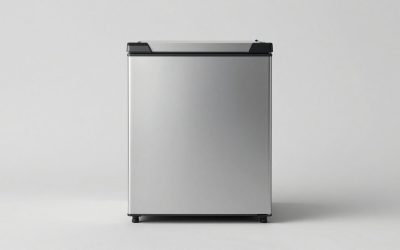
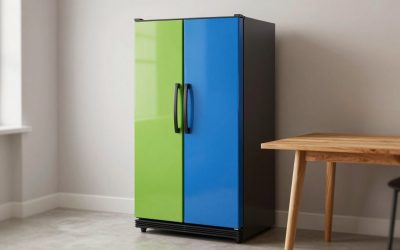
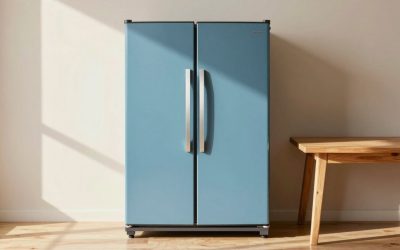
An upright freezer resembles a refrigerator, with a front-opening door and shelves. It uses floor space efficiently and makes rotation easier: older packages can stay at eye level, while newer food goes behind them. This matters if you cook from frozen food often or manage many small seafood portions.
Uprights lose more cold air each time the door opens, and frost-free versions generally use more electricity than manual-defrost chest freezers. Their door gaskets, fans, electronic controls, and automatic-defrost heaters also add more components that can eventually need repair.
Choose an upright when access is worth more than maximum efficiency. A frost-free upright is particularly convenient for households that do not want to schedule periodic defrosting.
Capacity: size for usable food, not the empty box
Freezer capacity is measured in cubic feet, but packages do not fill every corner efficiently. A practical planning estimate is about 30–35 pounds of packaged food per cubic foot, depending on package shape and how much empty space you need for airflow. Fish packed in flat, uniform portions uses space more efficiently than irregular containers.
For example, a 7-cubic-foot chest freezer may hold roughly 210–245 pounds of tightly packed food, but a more convenient real-world load could be closer to 150–200 pounds after leaving room for baskets and air circulation. A 14-cubic-foot model may accommodate approximately 350–490 pounds at maximum packing density, though separating foods into accessible zones reduces that figure.
Measure the route into the room, not just the final location. Record doorway width, stair turns, elevator dimensions, and ceiling clearance. A freezer that fits its intended corner may still be impossible to maneuver through a narrow doorway.
Temperature range and freezing performance
For long-term frozen-food storage, set the freezer to 0°F (-18°C) or colder. A dial marked from “cold” to “colder” is less useful than a model with a digital display or a separate freezer thermometer. Many freezers can operate below 0°F, but the lowest setting may increase electricity use and cause more frost.
Look for an adjustable thermostat, a high-temperature warning, and a power-on indicator. A fast-freeze or “power freeze” setting is useful after adding a large amount of unfrozen food, but it should normally be switched off after the load is solid. Do not rely on a freezer’s advertised freezing speed to compensate for overloading it with warm food.
Energy use and the real cost difference
Check the yellow EnergyGuide label or the manufacturer’s annual kilowatt-hour figure rather than judging efficiency by size alone. Annual consumption varies with model, room temperature, usage, frost level, and the condition of the door seal.
Here is a simple comparison. If a chest freezer uses 220 kWh per year and electricity costs $0.18 per kWh, its estimated annual energy cost is:
220 × $0.18 = $39.60 per year.
An upright using 360 kWh annually at the same electricity rate would cost about $64.80 per year, or roughly $25 more. Over ten years, that difference is about $250 before utility-rate changes. An upright may still be the better purchase if its organization prevents food from being forgotten and discarded.
Efficiency improves when the freezer is kept reasonably full, placed away from direct sun, and given the clearance specified in its manual. Do not push it tightly against a wall or operate it in a very hot garage unless the model is rated for those conditions.
Defrosting, cleaning, and ownership realities
Manual-defrost chest freezers
Frost gradually reduces usable capacity and makes the compressor work harder. Defrost when the ice layer reaches about one-quarter inch. Move food to insulated coolers, unplug the freezer, and leave the lid open. Towels around the base will catch meltwater. Never chip ice with a knife or use an open flame; puncturing the refrigerant tubing can destroy the appliance.
Afterward, clean with mild detergent and water, dry the interior completely, reconnect power, and allow the freezer to return to 0°F before reloading it. A full defrost may take several hours, so plan it around the amount of food you have and the available cooler space.
Frost-free uprights
Automatic defrosting eliminates routine ice removal, but it does not eliminate cleaning. Vacuum dust from the condenser area if the manual permits it, inspect the door gasket, and clean spills quickly. Frost-free systems can dry poorly wrapped food more quickly, so use freezer-grade bags, remove excess air, and label every package with the contents and freezing date.
The parts most likely to create ownership problems are the door gasket, thermostat or electronic control, evaporator fan, and—on frost-free models—the defrost heater or sensor. A damaged gasket is often visible as cracking, gaps, or condensation around the door. Replace it rather than compensating by setting the freezer colder.
Garage readiness and security
A “garage-ready” label matters when the freezer will sit in an unheated or very hot space. Standard models may struggle in winter because their thermostat senses a warm-enough interior and stops the compressor, while summer heat makes the compressor run longer. Check the specified ambient operating range; many garage-ready models are designed for approximately 0°F to 110°F, but the exact range varies.
Leave the manufacturer’s ventilation clearance on every side, protect the unit from rain and standing water, and use a properly grounded outlet. Avoid extension cords unless the manual specifically allows one. If power interruptions are common, a freezer alarm or temperature sensor is more useful than relying on the power light.
For security, choose a model with a keyed lock or compatible lid lock if children, roommates, or shared outbuildings have access. A lock can prevent accidental opening, but it is not a substitute for safe food handling or a temperature alarm.
How to choose the right freezer in five steps
- Estimate your food volume. Multiply your typical frozen inventory by about 1.25 to allow room for baskets and future purchases.
- Measure the route and location. Include door swing, lid clearance, wall clearance, and ventilation space.
- Choose access over efficiency when appropriate. Frequent users generally benefit from an upright; bulk-storage users usually benefit from a chest model.
- Confirm the temperature and climate rating. Require a 0°F target, an adjustable control, and a garage-ready rating for outbuildings.
- Compare annual energy use and warranty coverage. A cheaper appliance can cost more over time if it consumes substantially more power or lacks useful parts support.
Bottom line
The best deep freezers for long-term food storage are usually manual-defrost chest models when capacity, low energy use, and power-outage resilience matter most. Choose a frost-free upright when clear organization and frequent access matter more than the lowest running cost. Whatever the format, prioritize a true 0°F setting, a reliable gasket, suitable room-temperature ratings, and enough capacity to avoid tightly crushing packages together.
More from Amazon
Programs that pair well with the guide above. Offers and eligibility are set by Amazon and may change.
Free shipping on eligible items, Prime Video and more. Eligible new members can start with a free trial.
Start a Prime free trialA Prime membership for ages 18-24 with a trial period. Eligibility is set by Amazon.
See Prime for Young AdultsAudiobooks and podcasts to listen to on the go. Eligible new members can start with a free trial.
Try Audible freeAd-free music streaming. Eligible new subscribers can start with a free trial.
Try Music Unlimited freeAs an Amazon Associate we earn from qualifying purchases.

Write Your Review
No reviews yet. Be the first to share your experience!