

Best Fish Poacher Pan for Whole Fish
The best fish poacher pan for whole fish is a 24–28-inch stainless-steel pan with a removable, full-length rack, a tightly fitting lid, and a flat base that matches your largest burner or hob zone. That combination supports the fish from head to tail, distributes heat more predictably, and lets you lift the cooked fish without it breaking.
For most home cooks, a stainless-steel rectangular poacher with an aluminium-core base is the safest all-round choice. Choose copper or multi-layer construction if exceptionally even heating matters and the higher price is acceptable; choose enamelled steel when low cost and occasional use matter more. The pan should be at least 2 inches longer than the fish and wide enough to leave roughly 1 inch of liquid around it.
Our top picks
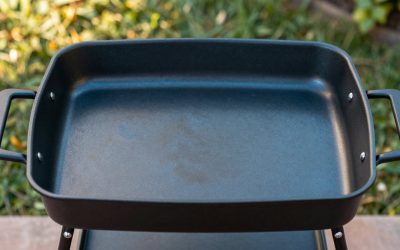
 Outset Cast Iron Fish Grill and Serving
- Preseason without added oil or fats for natural…
- This fish grilling pan is small enough to…
- COOK YOUR CATCH without worry of filets falling…
 Beka Stainless Steel Fish Poacher with Griddle
- Professional quality stainless steel fish poacher
- Perforated rack with helper handle for optimal steaming
- Ergonomically designed stainless steel handle
| Product | Key specs | |
|---|---|---|
 KitchenCraft Clearview S/Steel Fish Poacher with Lid | Check price | |
| Outset Cast Iron Fish Grill and Serving | Preseason without added oil or fats for natural… This fish grilling pan is small enough to… COOK YOUR CATCH without worry of filets falling… | Check price |
| Beka Stainless Steel Fish Poacher with Griddle | Professional quality stainless steel fish poacher Perforated rack with helper handle for optimal steaming Ergonomically designed stainless steel handle | Check price |
 For 18 inch Stainless Steel Fish Poacher | For 18 inch Stainless Steel Fish Poacher 18 inch stainless steel fish poacher ideal for… construction ensures longevity, making it a reliable kitchen… | Check price |
As an Amazon Associate we earn from qualifying purchases at no extra cost to you.
What matters most when choosing a whole-fish poacher
1. Pan length and usable rack length
Measure the fish from the tip of the nose to the end of the tail, then add at least 2 inches. A 20-inch fish therefore needs a rack with approximately 22 inches of usable length. The extra space prevents the head and tail from touching the sloped ends, where they can cook more quickly or become difficult to remove.
Check the rack dimensions rather than relying on the advertised external length. A pan described as 24 inches long may have only 20–21 inches of flat rack space because of its handles and curved ends. A rack that is too short is a bigger problem than a pan that is slightly oversized: unsupported sections of fish can sag, stick, or split when lifted.
2. Material and heat control
- Stainless steel with an aluminium or copper core: The best balance of durability and heat distribution. It resists acidic poaching liquids, tolerates metal utensils better than non-stick coatings, and is usually dishwasher-safe if the manufacturer permits it.
- Multi-layer stainless steel: Heats steadily across the base and is useful on gas, electric, and induction cooktops. It is usually heavier and more expensive.
- Enamelled steel: Affordable, non-reactive, and suitable for gentle poaching. It can develop chips if knocked or stacked carelessly, and thin versions may create hotter areas over a small burner.
- Copper: Excellent responsiveness and control, but it is costly, heavy, and often requires a stainless-steel lining. Confirm induction compatibility before buying.
- Non-stick aluminium: Light and easy to clean, but the coating is the component most likely to wear. It requires silicone or wooden tools and careful storage.
The liquid in a fish poacher normally simmers rather than boils vigorously, so extreme heat output is unnecessary. Even heat matters more than maximum heat. A thick, clad base is preferable to a very thin pan that develops a hot strip directly above the burner.
3. Rack design
A good rack has two long support rails, several closely spaced crossbars, and handles that remain above the liquid. Crossbars spaced about 1–2 inches apart support the body without imprinting deep lines into the flesh. A rack made from widely spaced wires may allow a soft fish to bow between them.
Look for a rack that sits at least 1 inch above the pan floor. This allows liquid to circulate underneath rather than leaving the underside in direct contact with the hot base. Perforations or open wire construction are useful, but the rack should not have sharp, narrow contact points that tear the skin.
Removable handles are convenient for storage, but they should lock securely and remain cool enough to grip with a dry cloth. A rack that flexes noticeably under the weight of a whole fish is a poor choice, even if the pan itself feels sturdy.
4. Stovetop fit
Long poachers expose a common problem: the pan may span two burners while the middle remains cooler than the ends. On a gas hob, use two burners set to low and rotate the pan if necessary. On an electric hob, a long, flat base usually needs two matching elements. On induction, the entire area that receives heat must be induction-compatible; a magnetic base only under a small central disc may leave the ends cold.
Measure the cooking surface before buying. Leave enough room to turn the handles without striking a wall or backsplash, and check that the pan sits flat rather than rocking across two uneven supports. A 26-inch pan can be impractical on a compact hob even when the fish fits inside it.
| Pan format | Typical external length | Usable rack length | Typical capacity | Best suited to |
|---|---|---|---|---|
| Compact | 18–20 in / 46–51 cm | 15–17 in / 38–43 cm | 4–6 qt / 3.8–5.7 L | Small trout, sea bass, and limited storage |
| Standard | 22–24 in / 56–61 cm | 19–21 in / 48–53 cm | 6–9 qt / 5.7–8.5 L | Most home kitchens and fish up to about 20 in |
| Large | 26–28 in / 66–71 cm | 23–25 in / 58–64 cm | 9–13 qt / 8.5–12.3 L | Large salmon, pike, carp, and frequent entertaining |
Best choice by cooking situation
| Your situation | Best pan specification | Why |
|---|---|---|
| Budget-conscious, occasional use | 20–24-inch enamelled or stainless-steel pan | Lower purchase cost without needing premium heat response |
| New to whole-fish cooking | Standard-size pan with a rigid rack and wide handles | More forgiving when transferring the fish and easier to control |
| Induction hob | Fully induction-compatible, thick flat base | Reduces cold ends and prevents unreliable hob detection |
| Small kitchen or limited storage | 18–20-inch pan with removable handles | Fits more cupboards, though fish length is limited |
| Frequent entertaining | 26–28-inch clad stainless-steel pan | Greater rack support and improved durability over repeated use |
Head-to-head: the main pan types
Long rectangular stainless-steel poacher versus roasting pan
A dedicated fish poacher has the advantage because its rack is shaped for lifting a delicate whole fish. A roasting pan can work in an emergency, but a flat roasting rack may leave the tail unsupported, and its taller sides can make it harder to remove the fish without bending it.
Stovetop poacher versus oven roasting
Stovetop poaching gives faster control over the liquid temperature and is practical when the fish is covered with stock, wine, or court-bouillon. Oven roasting is more even when the pan is too long for the hob, but it requires a pan and lid that are both oven-safe at the intended temperature. If oven use is important, check the maximum temperature for the lid handle, rack, and any non-stick coating.
Single long rack versus divided rack
A single rack is best for one intact fish because it prevents a seam or hinge from pressing into the belly. A divided rack is more versatile for fillets or smaller fish, but its joins can catch delicate skin. Choose a divided design only if you expect to use the pan for multiple portions as well as whole fish.
How to size the pan before buying
- Measure the uncooked fish from nose to tail, including the curve of the tail if it cannot be laid straight.
- Add 2 inches for clearance at the ends.
- Check that the rack width exceeds the fish’s widest point by about 2 inches.
- Allow approximately 1 inch of liquid around the fish rather than filling the pan to the rim.
- Confirm that the base sits over one large burner or two compatible low burners.
For example, a 21-inch sea bass needs a rack of at least 23 inches. If the fish is 5 inches wide, a rack around 7 inches wide gives room for liquid circulation without requiring an unnecessarily broad pan. A 24–26-inch exterior pan may be required to provide those rack dimensions.
Ownership realities: cleaning, storage, and failure points
The rack usually wears first, especially at welded joints and thin handle connections. Inspect those points for flexing before each use. In non-stick models, the coating is the main consumable; avoid metal tongs, abrasive powder, and stacking the rack directly against the cooking surface.
Soak the pan in warm water after poaching, then remove proteins from the rack openings with a soft brush. Do not pour cold water into a hot enamelled or stainless-steel pan, as sudden temperature change can warp thin metal or stress enamel. Dry the rack fully before storage to reduce corrosion at joints. If space is tight, select removable handles or a rack that nests inside the pan.
Common mistakes include using too much liquid, boiling aggressively, and lifting the fish with a fork. A poacher should generally hold a quiet simmer: vigorous bubbling can break the skin and drive the fish against the rack. Use the rack handles with both hands, support the fish with a broad spatula if necessary, and let excess liquid drain briefly before transferring it to a serving platter.
Final verdict
For the widest range of whole fish, choose a 24–28-inch stainless-steel fish poacher with a thick clad base, a tightly fitting lid, and a rigid removable rack whose usable length is at least 2 inches longer than your usual fish. Downsize to 18–20 inches if storage or hob space is limited. Spend more on the rack’s rigidity and the base’s flatness before paying for decorative finishes: those two features do the most to keep a whole fish evenly poached and intact.
More from Amazon
Programs that pair well with the guide above. Offers and eligibility are set by Amazon and may change.
Free shipping on eligible items, Prime Video and more. Eligible new members can start with a free trial.
Start a Prime free trialA Prime membership for ages 18-24 with a trial period. Eligibility is set by Amazon.
See Prime for Young AdultsAudiobooks and podcasts to listen to on the go. Eligible new members can start with a free trial.
Try Audible freeAd-free music streaming. Eligible new subscribers can start with a free trial.
Try Music Unlimited freeAs an Amazon Associate we earn from qualifying purchases.


Write Your Review
No reviews yet. Be the first to share your experience!