

The best charlotte mold for French desserts is a 16–18 cm deep metal mold with a removable base, rolled sides, and a non-stick interior that releases biscuits and chilled fillings without forcing a knife around the edge.
For most home bakers, a removable-base steel mold is the most useful choice: it handles classic charlotte russe, fruit charlottes, chocolate mousse desserts, and icebox-style cakes more reliably than a decorative ring or a fixed-bottom cake tin. The right diameter matters just as much as the material, because a charlotte that is too wide becomes short and unstable, while one that is too narrow leaves little room for upright biscuits and filling.
Our top picks
 Pavoni KE087 Charlotte Pavocake Silicone Baking Mold
- Single-cavity mold of a fluted round shape having…
- Size 7.1 inch diameter x 2.6 inch high…
- Volume 1.3 quart (1.2 liters)
| Product | Key specs | |
|---|---|---|
 DE BUYER Professional | 18 cm | Check price |
 Louis Tellier 212620 Charlotte mould | Charlotte mould, 7" dia | Check price |
| Pavoni KE087 Charlotte Pavocake Silicone Baking Mold | Single-cavity mold of a fluted round shape having… Size 7.1 inch diameter x 2.6 inch high… Volume 1.3 quart (1.2 liters) | Check price |
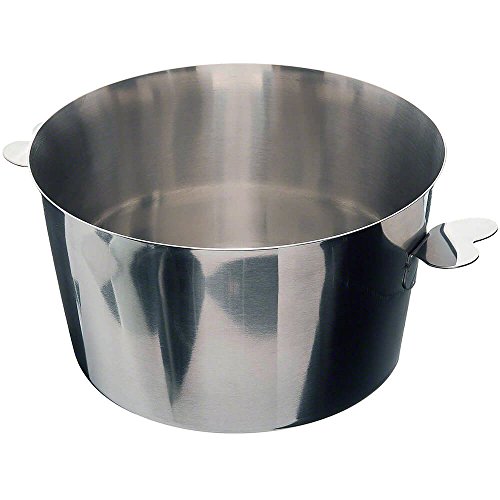 Matfer Bourgeat Stainless Steel Charlotte Mold | Go-to tool for creating and shaping charlotte deserts,… made of high quality stainless steel with a… This mold is available in diameters of 2… | Check price |
As an Amazon Associate we earn from qualifying purchases at no extra cost to you.
Best charlotte mold choices by situation
| Situation | Best specification | Why it suits the job | Typical market range |
|---|---|---|---|
| First charlotte or occasional use | 16 cm diameter, 6–8 cm deep, removable base, coated steel | Affordable, easy to release, and sized for a modest dessert serving 6–8 | $15–$35 |
| Frequent French dessert baking | 18 cm diameter, 8–10 cm deep, heavy-gauge steel or tinned copper | Better shape, more even heating, and enough capacity for layered fillings | $30–$90 |
| Chilled mousse or icebox charlotte | 16–18 cm, removable base, stainless steel or non-stick steel | Strong enough for unmolding while cold and compatible with acetate lining | $20–$60 |
| Large family dessert | 20–22 cm diameter, at least 8 cm deep | Holds approximately 1.8–2.5 litres of filling, but needs firm support when moved | $25–$70 |
| Professional-style precision | Adjustable stainless-steel ring with a separate base or cake board | Flexible sizing and a clean vertical profile, though it requires careful lining | $25–$80 |
Diameter and depth: the measurements that control the result
A 16 cm mold is the safest all-purpose size for home kitchens. Assuming a roughly cylindrical cavity, an 8 cm diameter-radius relationship gives a geometric volume of about 1.6 litres when the mold is 8 cm deep. In practice, the usable volume is lower because ladyfingers occupy the sides and the filling should stop 5–10 mm below the rim.
An 18 cm mold at the same depth holds about 2 litres before accounting for biscuits and headroom. That extra capacity is useful for a thick layer of bavarois or mousse, but it also increases the risk of a soft dessert collapsing when turned out. If your recipe is written for a 16 cm mold, scaling by diameter alone is not enough: with equal depth, the 18 cm version needs approximately 27% more filling because volume follows the square of the radius.
Depth between 7 and 10 cm works best. Shallow molds produce squat desserts with too little support for upright biscuits. Very deep molds can make the center slow to set and create a difficult unmolding angle. Check the interior depth rather than the total exterior height, since rolled rims and feet can make a mold appear deeper than it is.
Removable base versus fixed base
Removable-base molds
A loose or removable base is the strongest feature for delicate charlottes. Once the sides are loosened, you can push the dessert upward or lift the ring away while leaving the biscuit shell supported on a plate. This is especially helpful when the dessert has been refrigerated overnight and the filling is firm but fragile.
Look for a base that overlaps the side wall by several millimetres and has a firm fit. A loose base may allow syrup, mousse, or melted chocolate to escape. A base with a pronounced lip can also catch moisture and make the bottom biscuit soggy. For liquid fillings, line the base with a cake round or acetate-backed parchment rather than relying on the metal joint alone.
Fixed-base molds
Fixed-base tins are usually cheaper and less likely to leak, making them suitable for baked mixtures that are turned out while warm. They are less convenient for chilled charlottes: sliding a knife down the side can tear soaked biscuits, and lifting the dessert out often compresses the filling.
If choosing a fixed base, select one with straight sides and enough clearance to insert a thin offset spatula. It is a reasonable budget option, but it demands more lining and a gentler release technique.
Material comparison: release, heat, and maintenance
| Material | Best for | Release behavior | Heat and care considerations |
|---|---|---|---|
| Non-stick coated steel | Beginners and mixed baked/chilled use | Usually the easiest release when the coating is intact | Commonly oven-safe to about 220–230°C; avoid metal tools, abrasives, and overheating empty |
| Plain stainless steel | Cold-set mousse, bavarois, and professional use | Very clean with acetate or a warm-cloth release; poor without lining | Durable and dishwasher-tolerant in many cases, but may show water spots |
| Tinned copper | Traditional baked French desserts | Good after careful buttering and flouring; not naturally non-stick | Excellent heat response, but tin-lined interiors generally require lower temperatures than bare copper and careful hand washing |
| Anodized aluminum | Evenly baked sponge shells and frequent use | Moderate; parchment or acetate is still useful | Light and thermally responsive; follow the maker’s limits and avoid harsh cleaners |
| Silicone | Soft chilled fillings and easy demolding | Excellent for cold desserts, but sides can flex and distort tall charlottes | Often rated around 230°C, but needs a rigid tray underneath; can retain odors and stains |
For a charlotte that combines sponge or ladyfingers with a chilled filling, coated steel is the best compromise. Stainless steel is more durable if you are prepared to use acetate. Silicone looks attractive for release, but a tall dessert needs a firm plate or ring during filling and refrigeration.
Brands and formats worth considering
Established French bakeware makers such as Gobel, De Buyer, and Matfer Bourgeat offer metal cake and charlotte-style molds in formats suited to professional kitchens. Their ranges vary by country, so compare the actual diameter, depth, base construction, and temperature rating rather than buying by brand name alone.
For a traditional copper appearance, a tinned copper charlotte mold is attractive and thermally responsive, but it is a specialist purchase. It rewards careful preparation and hand cleaning rather than offering effortless release. For occasional home use, a removable-base coated-steel model normally offers better value.
Adjustable stainless-steel charlotte rings are useful if you make several sizes or want to match a particular recipe. They are not automatically leakproof: the base, acetate collar, and support plate must form a tight assembly. A ring is best for experienced bakers who are comfortable lining and chilling the dessert before moving it.
How to get a clean release
- Measure the mold before preparing the filling. Confirm the internal diameter and depth, then calculate whether the recipe needs scaling. This prevents a short layer or an overfilled rim.
- Line the sides with acetate. Cut the strip 1–2 cm taller than the mold and overlap the ends slightly. The smooth plastic separates mousse from metal without scraping the biscuits.
- Use a fitted base liner. A parchment circle or thin cake board prevents the bottom from sticking and makes the dessert easier to transfer.
- Keep biscuits upright and dry at the outer edge. Dip only the inner side briefly in syrup. Over-soaked biscuits swell against the mold and are the most common cause of tearing.
- Chill until the center is firm. A gelatin-set filling generally needs several hours; a softer cream filling may need overnight refrigeration. Do not judge readiness by the surface alone.
- Release with controlled warmth. Remove the ring, peel back acetate, and warm the outside of a metal mold with a towel rather than a hot flame or prolonged hot-water contact.
Ownership realities and common mistakes
The first component likely to fail on a coated mold is the non-stick surface, especially around the rim and removable-base edge. A scratched coating can catch soaked biscuits and is difficult to repair, so use silicone, nylon, or wooden tools. Avoid stacking heavy pans inside it, which can dent the base and create a leak path.
Seals and clips on adjustable rings can also loosen over time. Inspect the joint before filling, and place the assembly on a rimmed tray if the mixture is fluid. For stainless steel, the consumable is usually acetate rather than the mold itself; replacing a scratched or cloudy strip is inexpensive and improves release substantially.
Hand-wash coated steel, copper, and anodized aluminum with mild detergent and dry them immediately. Even when a manufacturer permits dishwasher cleaning, repeated detergent exposure can shorten the life of coatings and dull copper. Never cut the finished dessert while it is still inside a coated mold.
Final recommendation
Choose a 16–18 cm removable-base coated-steel charlotte mold, 8–10 cm deep, if you want one dependable tool for French desserts. Select 16 cm for smaller portions and easier handling; choose 18 cm for a taller family dessert or recipes designed for more than eight servings. If maximum durability matters more than convenience, buy a stainless-steel ring and use acetate. The mold itself matters, but accurate sizing, a dry biscuit shell, and patient chilling are what ultimately determine whether a delicate charlotte releases cleanly.
More from Amazon
Programs that pair well with the guide above. Offers and eligibility are set by Amazon and may change.
Free shipping on eligible items, Prime Video and more. Eligible new members can start with a free trial.
Start a Prime free trialA Prime membership for ages 18-24 with a trial period. Eligibility is set by Amazon.
See Prime for Young AdultsAudiobooks and podcasts to listen to on the go. Eligible new members can start with a free trial.
Try Audible freeAd-free music streaming. Eligible new subscribers can start with a free trial.
Try Music Unlimited freeAs an Amazon Associate we earn from qualifying purchases.










Write Your Review
No reviews yet. Be the first to share your experience!