

The best kitchen island lighting fixtures are usually dimmable pendants or a linear suspension light sized to the island, hung 30–36 inches above the countertop, and fitted with warm-white LED bulbs around 800–1,100 lumens per seating position.
Our top picks
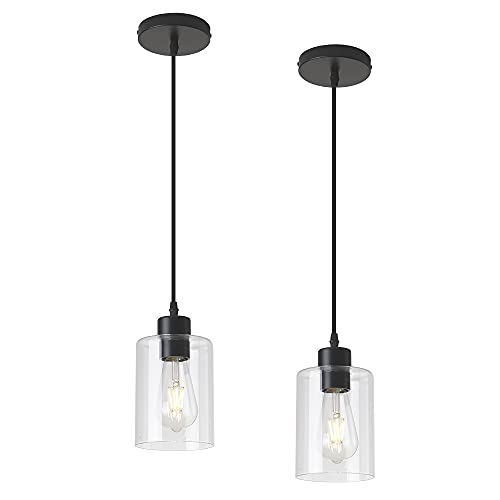 KLSS Modern Black Farmhouse Clear Glass Cylinder
- Note sold by KLSS is original design◆DIMMABLE AND…
- ◆PENDANTS PERFECT FOR YOUR SPACE - The matte…
- ◆FITS YOUR CEILINGS - Comes with adjustable cable…
 Amico 4-Light Dining Room Light Fixture
- Stylish & Durable:Elevate your dining room with our…
- 10-minute Installation: Assembling this dining room chandelier over…
- Tailored to Your Space: Achieve the perfect fit…
| Product | Key specs | |
|---|---|---|
| KLSS Modern Black Farmhouse Clear Glass Cylinder | Note sold by KLSS is original design◆DIMMABLE AND… ◆PENDANTS PERFECT FOR YOUR SPACE - The matte… ◆FITS YOUR CEILINGS - Comes with adjustable cable… | Check price |
| Amico 4-Light Dining Room Light Fixture | Stylish & Durable:Elevate your dining room with our… 10-minute Installation: Assembling this dining room chandelier over… Tailored to Your Space: Achieve the perfect fit… | Check price |
 35.4" Kitchen Island Lighting Fixture | Check price | |
 ROCUNSI Black 3-Light Kitchen Island Lighting | [Island Lights with E26 Base] These pendant light… [Height Adjustment] You can freely adjust the height… [Lighting for Kitchen Island] Industrial farmhouse pendant lights… | Check price |
As an Amazon Associate we earn from qualifying purchases at no extra cost to you.
Choose the fixture by island size first
Island length determines how many light sources you need; island width and surrounding walkways determine how large the fixture can be without making the kitchen feel crowded. A light that looks attractive in a showroom can be too narrow to illuminate food preparation areas or too wide for a compact island.
| Island size | Recommended fixture | Typical fixture width or spacing | Target total brightness |
|---|---|---|---|
| 4–5 ft long | One medium pendant or two small pendants | 12–18 in pendant; 24–30 in between two pendants | 1,500–2,200 lumens |
| 6–7 ft long | Two pendants or a short linear fixture | 14–20 in pendants; 30–36 in linear fixture | 2,000–3,000 lumens |
| 8–9 ft long | Three pendants or a medium linear suspension | 24–30 in between pendant centers; 36–48 in linear fixture | 2,700–4,000 lumens |
| 10 ft or longer | Three or four pendants, or a long linear fixture | 24–36 in between pendant centers; 48–72 in linear fixture | 3,500–5,000 lumens |
As a practical rule, leave at least 6 inches between the outside edge of a pendant and the island edge. For a narrow island, choose a narrow drum, cone, globe, or cylinder shade rather than a wide dome. For a deep island used for chopping and serving, a broader shade or linear fixture spreads light more evenly.
Best kitchen island lighting fixtures by situation
Best for a small island: one substantial pendant
A single pendant 16–22 inches wide works well above a 4–5 foot island, provided the ceiling is centered over the work surface. Choose an opaque or semi-opaque shade if you want concentrated task light, or a frosted globe if you need softer light around a breakfast counter.
One fixture also simplifies installation and cleaning. The compromise is less even coverage at the ends of a long island, so it is best for compact islands rather than oversized worktops.
Best for a standard family kitchen: two pendants
Two pendants are the most flexible choice for a 6–8 foot island. Use matching fixtures with shades approximately 12–18 inches wide, and position their centers about 30–36 inches apart. Keep both fixtures the same height; uneven suspension lengths can make the arrangement look accidental unless staggered lighting is a deliberate design choice.
Two smaller pendants usually distribute light better than one oversized pendant. They also allow a failed bulb or driver to be replaced independently, which reduces disruption during maintenance.
Best for a large island: a linear suspension fixture
A linear fixture is often the cleanest solution above an 8–10 foot island. Select a unit roughly one-half to two-thirds the island’s length. For example, a 60-inch linear fixture suits an island around 8–9 feet long, while a 72-inch fixture can work above a 10-foot island if there is enough clearance from nearby cabinets.
Linear lights are particularly useful when the island is a serious preparation area. Multiple internal LED modules can give more continuous coverage than widely spaced pendants, reducing bright spots directly beneath each bulb and darker areas between them.
Best for low ceilings: a flush mount or low-profile linear light
If the ceiling is 8 feet high, a long-hanging pendant may leave too little clearance above the counter. A low-profile LED fixture, semi-flush mount, or compact linear light keeps the visual volume under control while still providing broad illumination.
For an 8-foot ceiling, avoid fixtures with a large decorative body unless the island is unusually wide. A slim fixture 4–8 inches deep often provides a better balance between head clearance and useful light.
Hanging height: the measurement that matters most
For most kitchens, position the bottom of the fixture 30–36 inches above the countertop. Measure from the finished counter surface, not from the floor. At this height, the light is close enough for task illumination but high enough to preserve sightlines across the kitchen.
- 30–32 inches: useful for a high ceiling or a small, compact shade.
- 33–36 inches: the safest general range for most islands.
- 37–40 inches: suitable when the fixture is visually bulky, the island is used mainly for dining, or a clear view across the room is important.
Do not use the distance from the floor as your only guide. A 9-foot ceiling does not automatically require a lower fixture; it mainly gives you more flexibility with cord or rod length. Check the sightline from the main cooking and seating positions before finalizing the height.
Brightness, bulb type, and color temperature
Look for lumens rather than wattage. Wattage describes energy use; lumens describe visible light. A useful starting point is 800–1,100 lumens for each pendant above an island, or the equivalent total output from a linear fixture.
That figure may need adjustment. Dark countertops absorb more light, while glossy white surfaces reflect it. A fixture with an opaque downward shade concentrates light on the worktop. A clear glass shade produces more sparkle but can create glare unless the bulb is frosted or filament brightness is moderate.
| Lighting specification | Recommended choice | Why it matters |
|---|---|---|
| Brightness | 800–1,100 lumens per pendant | Provides useful island task lighting without relying entirely on ceiling lights |
| Color temperature | 2700–3000K | Warm enough for dining while retaining clear food-preparation visibility |
| Color rendering | CRI 90 or higher | Helps ingredients, surfaces, and cooked food appear more natural |
| Dimming | Compatible LED dimmer and dimmable driver | Allows bright task light and lower evening illumination from the same fixture |
| Bulb type | Integrated LED or replaceable LED bulb | Integrated LEDs are slim; replaceable bulbs are easier to service |
Integrated LED fixtures are often thinner and more energy efficient, but their LED module or driver may eventually need specialist replacement. Fixtures using standard replaceable bulbs are less streamlined but easier to keep in service. If long-term repairability matters, check whether the driver, socket, and replacement parts are accessible before buying.
Finish and shade choices for a working kitchen
Matte black creates strong contrast and suits modern, industrial, and transitional kitchens, but dust and grease can be visible on broad dark surfaces. Brushed brass and bronze add warmth and tend to hide small fingerprints better than polished metal. Chrome and polished nickel reflect more light and coordinate easily with stainless-steel appliances, though they show water spots.
Glass shades are easy to inspect but need frequent cleaning, especially above a range or fryer-style cooking area. Fabric shades are usually a poor choice directly over an island used for heavy cooking because they retain airborne grease. Metal, glass, and washable polymer shades are more practical.
A quick decision matrix
| Your priority | Best fixture direction | Important specification |
|---|---|---|
| Lowest initial cost | Two simple pendants using replaceable LED bulbs | Standard socket, included canopy, dimmable bulbs |
| Minimal cleaning | Low-profile metal or smooth glass linear fixture | Few seams, washable surface, enclosed or easy-clean shades |
| Best food-preparation visibility | Opaque-bottom pendants or linear task fixture | CRI 90+, 3000K, even downward distribution |
| Low ceiling | Slim semi-flush or low-profile linear fixture | Fixture depth under about 8 inches |
| Flexible entertaining | Dimmable glass pendants or a dimmable linear fixture | Wide dimming range without flicker |
Worked sizing example
Suppose your island is 84 inches long and 42 inches deep. Two 16-inch pendants can fit comfortably: place their centers approximately 28–32 inches apart, with the overall arrangement centered on the island. Each pendant should provide about 900 lumens, giving a total of 1,800 lumens.
If the island has a dark stone surface and is the main chopping area, increase the total toward 2,200–2,400 lumens or supplement it with recessed ceiling lights. If it is mainly used for breakfast, 1,600–1,800 lumens with a dimmer may be more comfortable.
Installation and ownership details that are easy to overlook
- Use a dimmer rated for the fixture’s LED driver; an incompatible dimmer can cause buzzing, flicker, or a limited dimming range.
- Confirm the electrical box is rated to support the fixture’s weight. Long linear fixtures may require additional support.
- Photograph or label the original cord or rod length before shortening it, especially if you may move house.
- Clean glass and metal shades with a soft, slightly damp cloth after switching off and cooling the fixture. Avoid spraying cleaner into sockets, seams, or LED housings.
- Inspect exposed bulbs and shade fasteners periodically. Heat, vibration, and repeated cleaning can loosen retaining rings before the electrical parts fail.
The most common mistake is choosing a fixture for its appearance before checking its light output and dimensions. Measure the island, confirm the ceiling height, calculate the required lumens, and then select the finish and shade style. That order produces better results than trying to make an oversized decorative light compensate for poor coverage.
More from Amazon
Programs that pair well with the guide above. Offers and eligibility are set by Amazon and may change.
Free shipping on eligible items, Prime Video and more. Eligible new members can start with a free trial.
Start a Prime free trialA Prime membership for ages 18-24 with a trial period. Eligibility is set by Amazon.
See Prime for Young AdultsAudiobooks and podcasts to listen to on the go. Eligible new members can start with a free trial.
Try Audible freeAd-free music streaming. Eligible new subscribers can start with a free trial.
Try Music Unlimited freeAs an Amazon Associate we earn from qualifying purchases.










Write Your Review
No reviews yet. Be the first to share your experience!