

Key takeaways
- Short, flexible 6 to 7 inch fillet knives for trout, crappie and bluegill, with blade length, flex and sharpening advice.
For trout and panfish, pick a short, flexible blade of about 6 to 7 inches. Fish in the 6 to 14 inch range have thin bodies and delicate rib cages, and a long stiff blade is clumsy at that scale. A shorter flex blade lets you bend along the backbone, work around the ribs of a crappie or bluegill and finish a fillet in a few strokes without hacking at the meat.
Seven inches is the safe ceiling for a one-knife setup, since it still handles a stringer of 16 to 18 inch trout. Six inches is nicer for pure panfish work. Below are eight knives that fit that size range, from fishing-brand models with sheaths to kitchen knives that do the same job at home.
Quick picks
- Built around trout and panfish: Rapala Fish ‘n Fillet Knife 6 Inch
- Thin, very flexible 6-inch option: danco 6-Inch Ultra Flex Fillet Knife
- Crappie-focused short blade: Smith’s Mr. Crappie 6in Fillet Knife
- Extra reach for bigger trout: BUBBA 7 Inch Tapered Flex Fillet Knife
- Kitchen-drawer option with no sheath to carry: Mercer Culinary Millennia 7-Inch Flexible Fillet Knife
Our top picks



As an Amazon Associate we earn from qualifying purchases at no extra cost to you.
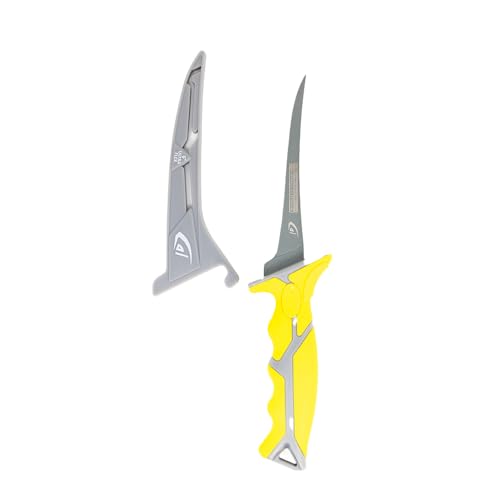
Rapala Fish ‘n Fillet Knife 6 Inch
The listing for this 6-inch stainless steel knife names bass, walleye, trout, pike and panfish, and it comes with a sheath and a comfort grip. That makes it the most on-topic pick for this article: the size is right for fish that rarely top a foot, and the listing says it is meant for them. A 6-inch blade gives you enough length for a clean pass from the collar to the tail on a 10 to 12 inch trout without feeling oversized for a hand-sized bluegill.
It suits anglers who want a straightforward fishing knife to keep in the tackle bag. The listing does not state the steel type or the exact degree of flex, so check the product page if you want a blade that bends a lot. Expect a general-purpose flex rather than a razor-thin one.
danco 6-Inch Ultra Flex Fillet Knife
The title calls out Swedish steel, a hand-sharpened Swedish stainless blade, a non-stick coating, a padded non-slip grip, a sheath and a lanyard hole. The “ultra flex” label points to a thin blade that bends easily, which is what you want when following the curve of a crappie rib cage or lifting a fillet off a small trout in one piece.
A non-stick coating helps the blade slide through slimy skin and keeps scales and mucus from clinging, though any coating wears with time and with sharpening. The padded grip should help when your hands are wet. The thin blade rewards a light touch, so it suits careful fillet work more than prying or cutting through heavy bone. Check the listing for how the sheath attaches if you plan to carry it on a belt.
Smith’s Mr. Crappie 6in Fillet Knife
The title is short: brand, the Mr. Crappie line, a 6-inch size and the model number 51165. The Mr. Crappie name signals that the line is aimed at panfish anglers, and a 6-inch fillet knife is a sensible size for crappie, perch and bluegill. For small slabs, a compact blade is easier to control around the pectoral fin and the rib cage than a 9-inch model.
Because the title gives so little detail, treat the product page as the source for steel type, handle material and whether a sheath is included. If you want a knife purely for panfish and prefer a name tied to that job, this fits. If you want guaranteed specs in the title, one of the other picks gives you more to go on.
Dexter Outdoors Dextreme Single Edge 6″ Flexible Fillet Knife
This one is described as a 6-inch flexible single-edge fillet knife with a stainless blade, sized for fish and detail work, with a protective sheath for a boat or tackle bag. Single edge simply means one sharpened side, like a normal kitchen knife, with a plain spine on the other. That spine gives you a safe place to rest a finger or the heel of your hand when working small fish.
It fits anglers who want a plain flexible blade from a company known for commercial cutlery, without extras. The title does not list the steel grade or the handle material, so check the listing for those. There is also a dual-edge Dextreme version in the 7-inch size, so make sure you are on the single-edge page if that is what you want.
BUBBA 7 Inch Tapered Flex Fillet Fishing Knife
Here the length goes up to 7 inches, and the title lists a tapered flex blade, a full tang stainless steel non-stick blade, a non-slip grip handle, a lanyard hole and a synthetic sheath. A full tang means the steel runs the full length of the handle, which adds strength and balance. The taper means the blade narrows toward the tip, which helps with the thin, fiddly cuts around the belly and the ribs.
It is a good fit if you fish for both panfish and larger trout, or occasionally a walleye or bass, and want one knife to cover all of them. The extra inch adds reach without stepping into the long 9-inch range that is awkward on small fish. The listing does not give the steel grade, so check it if edge retention matters to you.
KastKing Speed Demon Pro Fillet Knife, 7” Flex
This 7-inch model is described with G4116 German stainless steel, an ultra-thin flexible blade, a non-slip grip, a protective sheath, and a build meant for fresh and saltwater use. G4116 is a German stainless grade also used in kitchen cutlery. It is generally easy to sharpen and takes a fine edge, which suits thin fillet blades.
An ultra-thin blade is exactly what trout skin and panfish ribs reward: it glides, and it slips under the meat with little drag. The trade-off with any very thin blade is that it can bend or chip if you twist it against bone, so treat it as a slicing tool. KastKing also lists a 9-inch version, so choose the 7-inch page for this size.
Swiss+Tech 6″ Fillet Knife with Floating Foam Handle
The title describes a 6-inch fillet knife for fish with a floating foam handle and a protective sheath, and says it is made for filleting and boning. The floating handle is the standout feature for anglers who clean fish at a dock, from a kayak or on a boat. A knife dropped overboard stays within reach instead of sinking.
It suits shoreline and small-boat trips where the cleaning happens near the water. A foam handle is also soft and grips well when wet, though foam can hold odors and should be rinsed well. The title does not state the steel type or the stiffness of the blade, so check the listing if you want to know how much it flexes.
Mercer Culinary Millennia 7-Inch Flexible Fillet Knife (M22807)
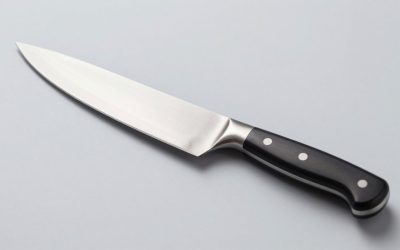
This is a kitchen knife, not a fishing knife, and the title lists only the model, a black handle, a 7-inch length and a flexible blade. It does not mention a sheath, so it is a better fit for cleaning fish at the kitchen counter than for riding in a tackle box. For home cooks who bring home a few trout or a bag of bluegill, a flexible 7-inch kitchen fillet knife does the same slicing job.
It makes sense when you want a plain, easy-to-replace blade and will clean fish indoors on a cutting board. Wash and dry it by hand after each use. Check the listing for steel and handle details, and plan to store it in a knife block or a sleeve rather than loose in a bag.
Comparison at a glance
| Product | Key spec from the title | Best for |
|---|---|---|
| Rapala Fish ‘n Fillet Knife 6 Inch | 6 inch, stainless steel, sheath; lists trout and panfish | All-round small-fish fishing knife |
| danco 6-Inch Ultra Flex | 6 inch, Swedish steel, non-stick coating, sheath | Maximum flex for panfish ribs |
| Smith’s Mr. Crappie 6in | 6 inch, model 51165; other specs: check listing | Crappie and other panfish |
| Dexter Outdoors Dextreme Single Edge 6″ | 6 inch, flexible single edge, stainless, sheath | Plain flexible blade for small fish |
| BUBBA 7 Inch Tapered Flex | 7 inch, full tang, tapered flex, sheath | Mixed catches including bigger trout |
| KastKing Speed Demon Pro 7” | 7 inch, G4116 German stainless, ultra-thin flex, sheath | Fine slicing on trout |
| Swiss+Tech 6″ | 6 inch, floating foam handle, sheath | Dock, kayak and boat cleaning |
| Mercer Culinary Millennia 7-Inch | 7 inch, flexible blade; sheath not listed | Cleaning fish at the kitchen counter |
How to choose a fillet knife for trout and panfish
Blade length. A useful rule is a blade a bit longer than the fish is thick, not as long as the fish itself. For bluegill, perch and crappie up to about 10 inches, a 6-inch blade is easy to steer. For stocked trout in the 10 to 14 inch range, 6 inches still works. Once you start cleaning 16 inch or longer trout, a 7-inch blade saves you extra passes. Go beyond 8 inches only if the same knife is also used for bass, walleye or salmon, and then see our guide to the best fillet knives for longer blades.
Flex. A flexible blade follows the backbone and lifts off the rib cage with little meat left behind. Panfish have a rib cage you need to cut around, so more flex helps. A stiffer blade gives more control for skinning and for cutting through the collar bone. If you mostly clean small fish, lean flexible.
Thin and narrow. Look for a narrow blade, not a wide one. A narrow blade is easier to turn around the head and tail and does less damage to small fillets.
Steel. Softer stainless grades such as 420 are easy to touch up and resist corrosion, but they lose an edge sooner. Harder grades such as 440C hold an edge longer but take more work on the stone. For fish knives that see water, salt and slime, corrosion resistance matters as much as hardness. Coatings help with release but wear off at the edge once you sharpen.
Handle. You will be gripping a wet, slimy fish, so look for a textured or rubberized grip and a handle that does not soak up water. A lanyard hole is useful in a boat. A floating handle is a bonus near deep water.
Sheath. If the knife travels in a tackle bag or on your belt, you want a sheath that covers the whole blade. A fixed kitchen knife without a sheath is fine if it stays at home.
Use and care: keeping a thin blade sharp
Thin fillet blades are sharpened at a fine angle, commonly 15 to 17 degrees per side. A whetstone in the 1000 grit range restores a dull edge and a finer stone, around 3000 to 6000 grit, polishes it. Sharpening takes a few minutes if you keep up with it. For a deeper dive on stones, see the best whetstone knife sharpeners. Pull-through sharpeners can chew up thin flexible blades, so use them only if the listing says the knife is compatible.
- Chill the fish first. Cold fish firms up and fillets cleaner. Keep the catch on ice until you are ready to cut.
- Work on a stable board. A board with a clamp or a non-slip surface keeps small fish from sliding. See the best fish fillet boards with clamps for options.
- Cut behind the gill plate and down to the backbone, then turn the blade flat and run it along the spine toward the tail, letting the flex keep the edge against the bone.
- For panfish, lift the fillet over the rib cage and slice the ribs away from the meat in one thin strip. For trout, leave the skin on if you plan to pan-fry, or slide the knife between skin and flesh to remove it.
- Rinse the knife in fresh water straight away, especially after saltwater use, then dry it fully before putting it in the sheath. A wet sheath traps moisture against the blade.
Common mistakes: twisting the tip against bone, which bends thin blades; cutting on a hard countertop or plate, which dulls the edge; leaving the knife wet in the sheath; and putting any fillet knife in the dishwasher.
FAQ
Is a 6-inch or 7-inch fillet knife better for panfish?
For bluegill, perch and crappie, 6 inches is easier to control and does less damage to small fillets. A 7-inch blade makes more sense if you also clean larger trout or other fish.
Do I need an electric knife for trout and panfish?
Usually not. Electric knives shine when you are processing a large pile of fish, and the blades are longer and heavier than ideal for small fish. A sharp manual flex knife gives you more feel on thin fillets.
Can I use a kitchen fillet knife instead of a fishing knife?
Yes, as long as the blade is flexible and the right size. A kitchen fillet knife works well at home. A fishing knife usually adds a sheath, a lanyard hole and a grip designed for wet hands, which matter outdoors.
How often should I sharpen it?
Touch up the edge when it starts to skid on the skin instead of biting. A few passes on a fine stone before each outing usually keep a thin blade in shape, with a full sharpening once or twice a season depending on use.
Pick the length for the fish you actually catch: 6 inches for panfish and small trout, 7 inches if bigger trout are in the mix. Check the listing for steel, flex and sheath details before you buy, and keep the edge fine with a stone so the blade does the work.
More from Amazon
Programs that pair well with the guide above. Offers and eligibility are set by Amazon and may change.
Free shipping on eligible items, Prime Video and more. Eligible new members can start with a free trial.
Start a Prime free trialA Prime membership for ages 18-24 with a trial period. Eligibility is set by Amazon.
See Prime for Young AdultsAudiobooks and podcasts to listen to on the go. Eligible new members can start with a free trial.
Try Audible freeAd-free music streaming. Eligible new subscribers can start with a free trial.
Try Music Unlimited freeAs an Amazon Associate we earn from qualifying purchases.

Write Your Review
No reviews yet. Be the first to share your experience!