

Key takeaways
- Burners wear first. Expect to replace burner tubes every 5 to 10 years on a budget grill, longer on stainless models.
- Clean the grate hot. Scrape right after preheating and oil it with a high-smoke-point oil. Fish skin sticks to cold, dirty grates.
- Do not flip early. Fillets release naturally when a crust forms; if it tears, it needs another minute.
- Check for leaks. Brush soapy water on hose connections each spring; bubbles mean a leak.
- Cover against salt air. Coastal humidity corrodes cheap steel quickly.
The best gas grill for most fish and seafood cooks in 2026 is a four-burner Weber Spirit E-425 class grill, because it gives enough even heat for whole fish, fillets on a grill mat and shrimp skewers without a steep price. If you want a hotter sear zone and heavier construction, step up to the Weber Genesis line; if you only want to cook a few fillets at a time, a compact Weber Q 1200 or a Char-Broil Performance 475 covers the other ends of the market.
Our top picks


As an Amazon Associate we earn from qualifying purchases at no extra cost to you.
Quick comparison of the best gas grills
| Pick | Best for | Burners / output | Primary cooking area | Price range |
|---|---|---|---|---|
| Weber Spirit E-425 | Best overall | 4 burners | about 428 sq in | Mid-range |
| Weber Genesis E-335 | Best upgrade, sear zone | 3 burners plus Sear Zone (about 13,000 BTU) | about 513 sq in with warming rack | Upper mid-range |
| Char-Broil Performance 475 | Best budget | 4 burners, 36,000 BTU | 475 sq in | Budget |
| Weber Q 1200 | Best compact and portable | 1 burner, about 8,500 BTU | about 189 sq in | Budget |
| Napoleon Prestige series | Best for heavy use | Multiple stainless burners plus side burner on many models | Varies by size | Premium |
Specs above follow the manufacturers’ published sheets and common retailer listings; always confirm the exact model number before buying, because Weber and Napoleon sell several configurations under each family name.
Best overall: Weber Spirit E-425
The Spirit E-425 is the grill most people should look at first. Four burners give you the flexibility seafood demands: two burners high for searing scallops or steaks, two low for a salmon fillet that needs gentle indirect heat. Its roughly 428 square inches of primary cooking area comfortably holds a 3 to 4 pound whole fish laid diagonally, or about eight fillets side by side on a fish mat.
Ownership is where Weber earns its premium. Replacement burners, grates, igniters and flavorizer bars are widely stocked, so a ten-year-old grill is still serviceable. The main trade-off is that the Spirit lacks a dedicated high-output sear burner, so crusting a tuna steak takes patience and a very well preheated grate.
Best upgrade: Weber Genesis E-335
The Genesis family adds heavier construction, a larger cooking surface and, on the E-335 style, a dedicated Sear Zone rated around 13,000 BTU according to Weber’s specification pages. That matters for seafood more than for burgers: a quick, hard sear on sea scallops, swordfish steaks or shrimp locks in moisture, while the surrounding burners can hold a cooler zone for delicate fillets.
The trade-off is cost and size. It needs more patio space and more propane, and the extra features only pay off if you grill year-round. Most casual cooks will be just as happy with the Spirit.
Best budget: Char-Broil Performance 475
The Performance 475 offers four burners rated at 36,000 BTU total across 475 square inches, which is a generous surface for the money. It will cook salmon, shrimp skewers and grilled fish tacos perfectly well.
Durability is the compromise. Reviewers consistently note thinner steel in the firebox and cart compared with Weber or Napoleon, so expect to replace burners or grates sooner and to cover the grill when not in use. Treat it as a good starter grill rather than a twenty-year purchase.
Best compact: Weber Q 1200
With a single burner of about 8,500 BTU and a cast aluminum lid and body that holds heat well, the Q 1200 is a favorite for balconies, tailgates and dock-side fish cooks. It uses small disposable propane cylinders, although an adapter hose lets you connect a standard 20 pound tank.
The limit is capacity. You can grill roughly four fillets or one 2 pound whole fish at a time, and there is no zone control beyond a single burner dial. For a family of four, you will cook in batches.
Best for heavy use: Napoleon Prestige series
Napoleon’s Prestige models use stainless burners and heavier stainless components, and many include infrared rear or side burners. They are a good fit for people who grill several times a week and want stainless parts that resist the salt air of a coastal home. The trade-off is simply price and weight.
How to choose a gas grill for fish and seafood
Match burner count to the way you cook
Seafood needs two heat zones. A two-burner grill can do it, but four burners (or three plus a sear zone) make it easy to sear on one side and finish on the other. Single-burner grills work only for small batches.
Check BTU per square inch, not total BTU alone
A useful worked example: the Char-Broil Performance 475 lists 36,000 BTU over 475 square inches, which is about 76 BTU per square inch. The Weber Q 1200 lists about 8,500 BTU over about 189 square inches, which is roughly 45 BTU per square inch, but its tight, lidded aluminum body retains heat efficiently. Grill makers often cite a range of around 80 to 100 BTU per square inch for open, steel-bodied grills as a rough guide, so a number far below that suggests slow preheating on a windy day.
Look at grate material
Porcelain-coated cast iron holds heat for searing but needs oiling and can chip. Stainless rod grates are easier to clean but sear less. Whichever you choose, fish sticks on bare grates, so plan to use a fish basket, a perforated grill mat or a cedar plank for fillets.
Think about wind and placement
Fish and shrimp cook fast, and a gust can drop temperatures on a thin-walled grill. A heavier lid and a firebox that closes around the burners helps. Place the grill at least 10 feet from siding and never under an overhang.
Grilling temperatures and times for common seafood
| Seafood | Grate temperature | Heat zone | Approximate time |
|---|---|---|---|
| Salmon fillet, 1 inch thick | 400 to 450 F | Direct, skin side down | 8 to 10 minutes total |
| Whole snapper or bass, 2 to 3 lb | 350 to 400 F | Indirect, lid closed | 20 to 30 minutes |
| Large shrimp skewers | 450 to 500 F | Direct | 2 to 3 minutes per side |
| Tuna or swordfish steak, 1 inch | 500 F and up | Direct, sear zone | 2 to 4 minutes per side |
| Sea scallops | 450 to 500 F | Direct | 2 minutes per side |
The old rule of roughly 10 minutes per inch of thickness is a starting point. The USDA recommends cooking fish to an internal temperature of 145 F, so a probe thermometer is the surest way to avoid dry fillets.
Ownership realities and common mistakes
- Burners wear first. Expect to replace burner tubes every 5 to 10 years on a budget grill, longer on stainless models.
- Clean the grate hot. Scrape right after preheating and oil it with a high-smoke-point oil. Fish skin sticks to cold, dirty grates.
- Do not flip early. Fillets release naturally when a crust forms; if it tears, it needs another minute.
- Check for leaks. Brush soapy water on hose connections each spring; bubbles mean a leak.
- Cover against salt air. Coastal humidity corrodes cheap steel quickly.
Propane runtime: a worked example
A standard 20 pound propane cylinder holds about 4.7 gallons, or roughly 430,000 BTU of energy. If a four-burner grill like the Char-Broil Performance 475 runs flat out at 36,000 BTU per hour, the tank lasts about 12 hours. In real cooking you rarely run every burner on high, so a typical weeknight session of 45 minutes with two burners at medium (around 9,000 BTU per hour combined at low-medium settings is common) uses a small fraction of that. Practically, most households get 15 to 25 fish dinners per tank. Keep a spare cylinder or a gauge so you are not caught short mid-cook.
Accessories that matter more than extra burners
- Fish basket or hinged grill basket: flips a whole fish in one motion, which removes the most common cause of torn skin.
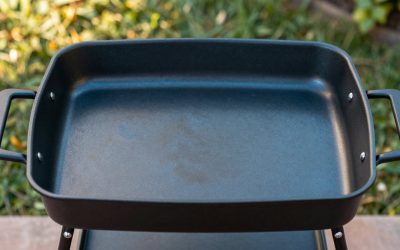
- Perforated grill mat or stainless grill tray: protects shrimp and flaked fish from falling through the grate.
- Instant-read thermometer: a few seconds of reading prevents overcooking, which is the biggest mistake with seafood.
- Cedar or alder planks: soak for an hour, then use over indirect heat for salmon; the plank adds light smoke and protects the flesh.
- Long fish spatula: a thin, flexible head slides under skin without tearing it.
Cleaning after a seafood cook
Fish oils and marinades with sugar or soy leave residue that smokes the next time you light the grill. Burn off for 10 minutes on high with the lid closed, brush the grates while hot, and empty the grease tray after every few sessions. Wipe the lid interior occasionally, because flaking buildup can look like paint peeling. A quick routine keeps flavors clean, so a delicate halibut does not taste like last weekend’s burgers.
Which grill fits which cook
| Your situation | Choose |
|---|---|
| Family of four, grill weekly, mid budget | Weber Spirit E-425 |
| Love searing tuna and scallops, grill year-round | Weber Genesis E-335 |
| First grill, tight budget | Char-Broil Performance 475 |
| Balcony, dock or camping, one or two people | Weber Q 1200 |
| Coastal home, heavy use, long-term purchase | Napoleon Prestige series |
Frequently Asked Questions
What size gas grill do I need for fish?
For a family of four, aim for at least 400 square inches of primary cooking area. That fits a whole 3 pound fish or eight fillets with room left for vegetables. Couples can manage with a compact grill of around 200 square inches.
Should I grill fish with the lid open or closed?
Close the lid for whole fish and thick fillets so heat surrounds the food and cooks it through. Leave it open for thin fillets, shrimp and scallops that cook in a few minutes and need watching.
How do I stop fish from sticking to the grate?
Preheat for 10 to 15 minutes, scrape the grate clean, oil the grate and the fish lightly, and do not move the fish until it releases. A perforated grill mat or fish basket removes the problem entirely for delicate fillets.
Is propane or natural gas better for seafood?
Both cook seafood equally well. Propane is portable and burns slightly hotter per cubic foot, while natural gas suits a fixed patio setup with a line to your house. Check that the grill model is configured, or convertible, for the fuel you choose.
How long does a gas grill last?
A budget grill often lasts 3 to 7 years with a cover and regular cleaning. A well-maintained Weber or Napoleon can last 10 to 15 years, since the parts that wear out are replaceable.
What is the safest internal temperature for grilled fish?
The USDA recommends 145 F, at which the flesh turns opaque and flakes with a fork. Many cooks pull fatty fish such as salmon a few degrees earlier and let carryover heat finish the job.
More from Amazon
Programs that pair well with the guide above. Offers and eligibility are set by Amazon and may change.
Free shipping on eligible items, Prime Video and more. Eligible new members can start with a free trial.
Start a Prime free trialA Prime membership for ages 18-24 with a trial period. Eligibility is set by Amazon.
See Prime for Young AdultsAudiobooks and podcasts to listen to on the go. Eligible new members can start with a free trial.
Try Audible freeAd-free music streaming. Eligible new subscribers can start with a free trial.
Try Music Unlimited freeAs an Amazon Associate we earn from qualifying purchases.


Write Your Review
No reviews yet. Be the first to share your experience!