

The best titanium watches for most buyers are a hardened Citizen Super Titanium diver for value, a Tudor Pelagos 39 for an everyday mechanical watch, and a Rolex Yacht-Master 42 RLX for maximum weight reduction and luxury finishing.
Titanium is attractive because it is roughly 40% lighter than steel while retaining comparable strength, but “titanium” is not a single specification. The grade, surface treatment, bracelet design, crystal, movement, and water-resistance rating determine whether a watch is merely light or also durable enough for years of hard use.
Our top picks
 CITIZEN Men's Eco-Drive Brycen 41mm Super Titanium
- Take action and show your inner drive with…
- Featuring a silver-tone Super Titanium case with a…
- On the sunray blue dial, highly legible timekeeping…
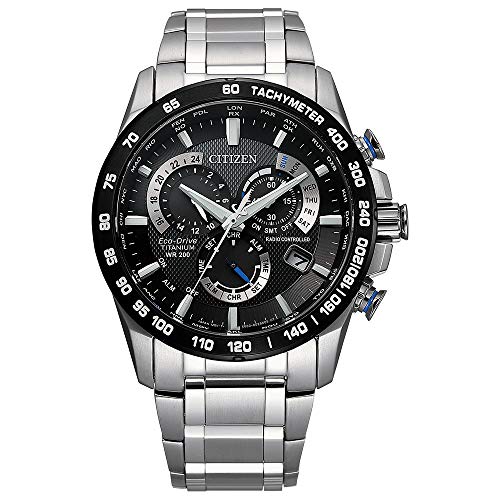 CITIZEN Men's Eco-Drive PCAT 42mm Super Titanium
- With bold design and superior accuracy, Citizen Atomic…
- An Eco-Friendly Evolution: Citizen launches first Titanium Watch…
- Benefits of Super Titanium: Lightweight for Better Comfort,…
 CITIZEN Men's Eco-Drive Promaster Dive 3 44mm
- Iconic Promaster watches with advanced functions designed to…
- An Eco-Friendly Evolution: Citizen launches first Titanium Watch…
- Benefits of Super Titanium: Lightweight for Better Comfort,…
| Product | Key specs | |
|---|---|---|
| CITIZEN Men's Eco-Drive Brycen 41mm Super Titanium | Take action and show your inner drive with… Featuring a silver-tone Super Titanium case with a… On the sunray blue dial, highly legible timekeeping… | Check price |
| CITIZEN Men's Eco-Drive PCAT 42mm Super Titanium | With bold design and superior accuracy, Citizen Atomic… An Eco-Friendly Evolution: Citizen launches first Titanium Watch… Benefits of Super Titanium: Lightweight for Better Comfort,… | Check price |
| CITIZEN Men's Eco-Drive Promaster Dive 3 44mm | Iconic Promaster watches with advanced functions designed to… An Eco-Friendly Evolution: Citizen launches first Titanium Watch… Benefits of Super Titanium: Lightweight for Better Comfort,… | Check price |
 CITIZEN Men's Eco-Drive Garrison 42mm Super Titanium | Men's luxury timepieces with technical advancements and a… 3 Hand, Day / Date Silver-Tone Super Titanium | Check price |
As an Amazon Associate we earn from qualifying purchases at no extra cost to you.
Best titanium watches by situation
| Watch | Best for | Case / bracelet details | Approx. weight | Water resistance | Movement |
|---|---|---|---|---|---|
| Citizen Promaster Dive Super Titanium BN0220-16E | Value and daily wear | Super Titanium case; polyurethane strap; about 45 mm case | About 100 g with strap | 200 m | Solar quartz |
| Tudor Pelagos 39 | One mechanical watch for most occasions | Titanium case and bracelet; 39 mm case | About 106 g with bracelet | 200 m | Automatic, approximately 70-hour reserve |
| Tudor Pelagos FXD | Fixed-lug military-style use | Titanium case; fabric strap; 42 mm case | About 100 g with strap | 200 m | Automatic, approximately 70-hour reserve |
| Rolex Yacht-Master 42 RLX Titanium | Premium lightness with luxury finishing | Grade 5 titanium case; titanium bracelet; 42 mm case | About 100 g with bracelet | 100 m | Automatic, approximately 70-hour reserve |
| Omega Seamaster Planet Ocean Ultra Deep Titanium | Extreme-depth engineering | Grade 5 titanium case; rubber or titanium bracelet versions; about 45.5 mm | Varies substantially by strap and bracelet | 6,000 m | Automatic, approximately 60-hour reserve |
| Garmin fēnix 8 Titanium | Training, navigation, and smartwatch functions | Titanium bezel; fiber-reinforced polymer body on many versions | Roughly 60–100 g depending on size and strap | 100 m | Rechargeable electronic smartwatch module |
Weights are approximate because manufacturers may quote the watch without a strap, while bracelets, buckles, spring bars, and display versions change the result. Case diameter also does not tell the whole fit story: lug length and thickness often matter more on a smaller wrist.
How titanium grades change the ownership experience
Grade 2 titanium
Grade 2 is commercially pure titanium and is common in tool watches because it is corrosion-resistant, relatively light, and easier to machine than harder alloys. It is not especially scratch-resistant in its untreated form. A Grade 2 case can develop visible rub marks from desk edges, door frames, and metal hardware even when its structure remains perfectly sound.
That softer appearance is not necessarily a defect. Many utilitarian watches use untreated or lightly treated titanium so scratches can be refinished or blended later. Choose Grade 2 when low weight, corrosion resistance, and practical pricing matter more than keeping a flawless finish.
Grade 5 titanium
Grade 5, commonly identified as Ti-6Al-4V, contains aluminum and vanadium and offers higher strength than commercially pure titanium. It is widely used in premium watches and aerospace components. Grade 5 is still not automatically scratch-proof: the untreated surface can mark, and polished sections reveal wear more readily than a bead-blasted surface.
Grade 5 is a sound choice when you want a thin, rigid case or a premium bracelet with less flex. It does not, by itself, guarantee better finishing, greater water resistance, or a longer-lived movement.
Proprietary surface-hardened titanium
Citizen’s Super Titanium is a useful example of a manufacturer treating the surface rather than simply changing the underlying alloy. Its Duratect treatments are designed to increase surface hardness and reduce visible scratching. Exact hardness varies by model and treatment, so compare the stated specification for the particular reference rather than assuming every Citizen titanium watch has the same protection.
Surface hardening is valuable on a daily watch, but it creates a servicing consideration: aggressive polishing can remove or disrupt the treated layer. Ask an authorized service center whether a damaged component should be replaced rather than polished.
Case and bracelet weight: why the lightest watch is not always the best watch
A titanium case on a rubber strap can feel dramatically lighter than a steel bracelet watch, but a titanium bracelet adds links, end pieces, a clasp, and adjustment hardware. It may still be light, but the difference can be smaller than the case material suggests. A steel clasp on a titanium watch also adds weight and can alter the balance.
Lightness changes comfort in two ways. First, the watch is less tiring during long desk sessions, travel, or outdoor activity. Second, it produces less momentum when your arm moves. That can make a large diver feel more wearable, although a 45 mm case can still overhang a narrow wrist.
For a rough fit check, measure your wrist circumference and compare it with the watch’s lug-to-lug length. A 42 mm watch with a 50 mm lug-to-lug span may wear larger than a compact 44 mm watch with short, curved lugs. If your wrist is about 160 mm or smaller, a lug-to-lug length near 47–49 mm is usually easier to manage than a straight 52 mm span.
Scratch resistance, coatings, and what actually gets damaged
- Case surfaces: Bead-blasted titanium hides small marks better than polished titanium, while polished surfaces make edges and hairlines more visible.
- Hard coatings: DLC and similar carbon-based coatings can resist everyday abrasion, but a deep impact can expose the lighter metal underneath. The contrast makes chips conspicuous.
- Crystal: Sapphire generally resists scratches better than mineral crystal, but it can chip or crack under a sharp impact. Acrylic scratches easily but can often be polished.
- Bezel inserts: Ceramic resists scratches well but may fracture from a hard blow. Aluminum marks more readily but is inexpensive to replace.
- Bracelets: Titanium links can show rubbing at their edges. Rinse salt and grit away because abrasive particles between links can wear the finish faster than normal contact.
Do not use metal polish, abrasive pads, or a household polishing compound on a coated or surface-hardened case. A soft microfiber cloth and fresh water are safer. If a diver has been in salt water, rinse the case, bezel, clasp, and strap with clean water and dry them before storing the watch.
Water resistance: choose a useful margin, not the biggest number
A 100 m rating is generally suitable for swimming and surface water activities when the crown is secured and the watch is in good condition. A 200 m diver gives more practical margin for repeated swimming, snorkeling, and recreational diving. A 6,000 m rating is an engineering achievement, but it does not make a large Ultra Deep automatically better for a pool, beach, or daily commute.
Water resistance is not permanent. Gaskets age, crowns can be damaged, and a case-back seal may be disturbed during battery or movement service. Have a frequently submerged watch pressure-tested at appropriate service intervals, and never operate the crown or pushers underwater unless the manufacturer specifically permits it.
Movement choice: quartz, solar, automatic, or smartwatch
Solar quartz
Solar quartz is the strongest practical choice for a low-maintenance titanium watch. It is accurate, resistant to ordinary shocks, and avoids regular battery changes. A fully charged solar watch can often run for months in darkness, depending on the caliber. Its rechargeable cell will eventually require replacement, commonly after many years rather than every few years.
Automatic mechanical
Automatic watches offer a traditional seconds hand and a repairable mechanical system, but they are more sensitive to magnetism, impacts, and service neglect than quartz. Mechanical service is usually more expensive than a battery or capacitor replacement. A 60- to 70-hour power reserve is useful if you rotate watches, since the watch can remain running through a weekend.
Smartwatch
A titanium smartwatch can provide navigation, notifications, health and training features, but its useful life is tied to software support and battery capacity. The titanium bezel may survive years of use while the battery gradually holds less charge. Consider charging frequency as carefully as case material.
Best picks at different budgets
| Budget and priority | Best direction | Why | Main compromise |
|---|---|---|---|
| About $300–$800; low maintenance | Solar titanium diver | Strong water resistance, low servicing burden, and light daily wear | Quartz display and less elaborate finishing |
| About $4,000–$6,000; one mechanical watch | Tudor Pelagos 39 | Wearable size, titanium bracelet, 200 m resistance, and long reserve | Matte titanium will still acquire marks |
| About $4,000–$6,000; strap-focused tool watch | Tudor Pelagos FXD | Light case, fixed lugs, and a secure military-style format | Fixed lugs are less convenient for ordinary bracelets |
| Luxury budget; minimum bracelet weight | Rolex Yacht-Master 42 RLX Titanium | Grade 5 case and bracelet with exceptionally low quoted weight | 100 m resistance and a high purchase price |
| Roughly $1,000–$2,000; outdoor functions | Titanium Garmin fēnix 8 | Navigation, activity tools, and configurable digital features | Charging and eventual battery aging |
Market prices vary by country, strap, availability, and configuration. A titanium bracelet often costs more than a rubber or fabric strap, but it can be worthwhile if you prefer a balanced fit and do not want to replace worn rubber later.
Long-term durability and common mistakes
The parts most likely to wear first are gaskets, strap keepers, rubber straps, clasp surfaces, bezel action components, and rechargeable cells. The titanium case itself is usually not the limiting component. Mechanical watches also need periodic regulation and servicing; solar watches need a healthy rechargeable cell; smartwatches eventually need battery service or replacement.
- Do not judge water resistance from the case material alone; inspect the crown design and service history.
- Do not polish scratches out of coated titanium without confirming that the coating can be restored.
- Do not store a wet watch in a sealed case, especially after salt-water exposure.
- Do not assume a lightweight watch can withstand unlimited impacts; titanium may protect the case while the crystal, bezel, or movement takes the damage.
- Keep solar watches where they receive ordinary ambient light, but avoid prolonged high heat behind glass or on a dashboard.
Final verdict
Choose the Citizen Promaster Dive Super Titanium when value, 200 m water resistance, and minimal maintenance matter most. Choose the Tudor Pelagos 39 for the best all-around mechanical balance of size, weight, durability, and serviceability. Choose the Rolex Yacht-Master 42 RLX when bracelet weight and premium finishing take priority over maximum dive depth. For specialist use, the Pelagos FXD favors fixed-strap security, the Omega Ultra Deep favors extreme-depth capability, and the Garmin fēnix 8 favors digital outdoor functions rather than traditional watchmaking.
More from Amazon
Programs that pair well with the guide above. Offers and eligibility are set by Amazon and may change.
Free shipping on eligible items, Prime Video and more. Eligible new members can start with a free trial.
Start a Prime free trialA Prime membership for ages 18-24 with a trial period. Eligibility is set by Amazon.
See Prime for Young AdultsAudiobooks and podcasts to listen to on the go. Eligible new members can start with a free trial.
Try Audible freeAd-free music streaming. Eligible new subscribers can start with a free trial.
Try Music Unlimited freeAs an Amazon Associate we earn from qualifying purchases.






Write Your Review
No reviews yet. Be the first to share your experience!