

Key takeaways
- Learn how to fillet a salmon step by step: the gear to prep, six clear cuts, pin bone removal, common mistakes and when to let your fishmonger do it.
To fillet a salmon, start with a cold, dry fish, make a cut behind the gills down to the backbone, then slide a flexible knife along the spine in long strokes, first on one side, then the other. After that you trim the belly, pull the pin bones and portion the fillets. The whole job takes a first-timer roughly 20 to 30 minutes. This guide covers the gear, six numbered cuts, the mistakes that waste meat, and the point where handing the fish to a fishmonger is the smarter move.
What you need before you start
Good filleting depends more on preparation than on technique. Gather everything before the fish leaves the refrigerator, because salmon warms quickly in a busy kitchen and warm flesh is soft and harder to cut cleanly.
- A flexible fillet knife, about 6 to 9 inches, kept properly sharp.
- A large cutting board with a damp cloth or non-slip mat underneath it, so the board cannot slide.
- A pair of kitchen shears for fins, and clean fish tweezers or needle-nose pliers for pin bones.
- Paper towels, a bowl of ice or a chilled tray for finished fillets, and a bin for the carcass.
- A second, empty tray for waste so the work area stays tidy.
Keep the fish in the refrigerator or on ice until the moment you start. Wash your hands and sanitize the board before and after, and wipe up water around the station, because wet floors and slippery handles are where most knife accidents begin.
Choosing the right fish
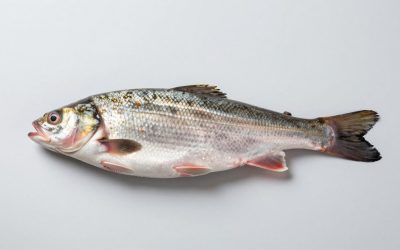
The easiest salmon to fillet is a fresh, firm whole fish with clear, slightly bulging eyes, bright red gills and flesh that springs back when pressed. A whole fish often sells as “round” (uncut) or “dressed” (gutted). Dressed is simpler for beginners because the belly cavity is already cleaned. If the fish is round, ask the counter to gut it for you.
Size matters for comfort. A fish somewhere around 5 to 8 pounds fits a standard home board and sink, whereas very large fish are awkward to turn. If you plan to eat any portion raw, such as in sushi or cured dishes, look for fish sold specifically for raw use and follow your local food safety guidance on freezing, because wild fish in particular can carry parasites. Cooked dishes remove that concern.
Step-by-step: filleting a whole salmon
Work with the fish on its side, tail pointing toward you if you are right-handed (flip the orientation if you are left-handed). Use long, smooth strokes rather than sawing, and keep your free hand flat and away from the blade’s path.
- Trim the fins. Snip the pectoral, pelvic and dorsal fins with shears. This removes the sharp points that jab your wrist.
- Cut behind the gills. Angle the knife just behind the gill plate and pectoral fin and cut down until you feel the backbone. Do not saw through it.
- Cut along the back. Turn the blade flat toward the tail and slice from the head along the top of the spine, letting the knife ride on the backbone. Several long strokes work better than one forced one.
- Lift the top fillet. Once you reach the rib cage, slide the blade over the rib bones, keeping the edge angled slightly down into them. Continue to the tail and lift the fillet away.
- Flip and repeat. Turn the fish over, place the head away from you, and repeat the same cuts on the second side.
- Trim the belly. Slice the thin rib-bone section off each fillet in a shallow curve. Save these strips for soups or the grill if you like.
If you feel the blade catching hard, stop and reposition. Forcing it through bone is how fillets get ragged and hands get hurt.
Removing pin bones and skin
Salmon fillets contain a line of fine, flexible pin bones that the knife does not remove. Lay the fillet skin side down on the board, ideally over an upturned bowl so the bone tips lift slightly. Run a fingertip along the centerline and pull each bone at a shallow angle using tweezers. Wipe the tweezers between pulls so you can see what you have removed.
Whether to take the skin off depends on the recipe. For pan-searing or grilling, keep it: crisp skin holds the fillet together and protects the flesh from heat. For poaching, curing or gentle baking, many cooks remove it. To skin a fillet, place it skin side down with the tail end toward you, make a small cut between flesh and skin at the tail, hold the skin firmly with a paper towel and slide the blade forward at a very low angle while keeping the skin flat. A little salt on the fingers improves grip.
What can go wrong
Most beginner problems come from a handful of causes, and each has a simple fix.
- Ragged flesh: usually a dull knife or too much downward pressure. Sharpen or hone first and let the blade glide.
- Too much meat left on the carcass: the knife rode too far from the bone. Keep the blade in light contact with the spine and ribs. Scrape leftovers with a spoon for fish cakes.
- Fillet tears at the belly: the belly flesh is thin. Cut it more shallowly and support the fillet with your free hand as you lift it.
- Slipping: a wet board or wet fish. Dry the fish with paper towels and anchor the board.
- Warm, soft flesh: the fish sat out too long. Work in batches and chill a tray of ice for finished pieces.
As a safety habit, never try to catch a falling knife, and cut away from your body. Keep a clean, dry cloth nearby and a bandage within reach.
Worked example: how much will you get?
Yields vary with the fish, the knife work and how closely you trim, so treat these numbers as planning estimates rather than promises. A whole round salmon often returns somewhere around 45 to 60 percent of its weight as usable fillet, with the rest lost to head, bones, guts, fins and belly trim. Dressed fish lose less, because the guts are already gone.
Assume a dressed fish of 8 pounds and a yield of about 55 percent. That gives roughly 4.4 pounds, or 70 ounces, of fillet. At 6 ounces per portion that is around 11 portions, and trimming for even thickness might bring it down to 9 or 10. Use the same arithmetic with your own fish weight to see whether a whole fish beats ready-cut fillets.
Storing and cooking the fillets
Pat the fillets dry, wrap them loosely or place them in a covered container, and keep them on the coldest refrigerator shelf, ideally nested over ice. Plan to cook or freeze within a day or two. If freezing, wrap tightly to limit air contact, label with the date, and thaw overnight in the refrigerator.
For cooked salmon, U.S. food safety guidance commonly recommends an internal temperature of 145 degrees Fahrenheit, checked with a probe thermometer in the thickest part. Many cooks pull it slightly earlier and let carryover heat finish the job, but follow the guidance that applies to you, particularly if you are serving children, older adults, or anyone pregnant or immunocompromised.
When to stop and ask a fishmonger
Filleting is a learnable skill, but it is fine to hand the job over. Consider asking the counter to do it when the fish is very large, when you have no sharp knife, when you plan to serve guests in an hour and have never done it, or when you simply feel unsure about the cuts. Most fish counters will fillet, pin-bone and skin a fish at no extra charge or for a small fee, and many will also give you the head and bones for stock.
Related guides
- How Long Does Vacuum Sealed Fish Last In The Freezer
- Victorinox Vs Dexter-Russell Fillet Knife
- Seafood Crackers And Crab Tool Sets
Frequently asked questions
Do I need to scale a salmon before filleting it?
Not always. Farmed and wild salmon both have small scales, and if you plan to remove the skin, scaling is optional because the skin goes in the bin. If you want to keep the skin for crisping, scale the fish first by running the back of a knife from tail to head under cold running water, then pat the surface completely dry so it does not slip on the board.
Which knife works best for filleting salmon?
A flexible fillet knife with a thin blade of roughly 6 to 9 inches is the usual choice, because it bends along the backbone and rib cage. A long, sharp slicing knife can handle the final portioning. Whatever you pick, sharpness matters more than price, since a dull blade needs more pressure and is the more common cause of slips and ragged flesh.
How do I find and remove the pin bones?
Lay the fillet skin side down and run a fingertip lightly along the centerline from head end to tail end. You will feel a row of small, stiff tips poking up. Grip each one with clean fish tweezers or needle-nose pliers set aside for kitchen use, and pull at a shallow angle in the direction the bone points. Check again when you finish.
How long can fresh fillets stay in the refrigerator?
Raw fish is perishable, and guidance from food safety agencies generally suggests cooking or freezing it within one to two days of purchase. Keep fillets on the coldest shelf, covered, and ideally on ice in a tray. If the flesh smells sharply fishy or feels slimy once you open the packaging, discard it rather than risk illness.
Can I fillet a salmon that is still partly frozen?
It is better to thaw it fully first, ideally overnight in the refrigerator in a sealed container. Partly frozen flesh is stiff, so the knife can skip off bone and tends to tear the surface. A fish that is firm but fully thawed and well chilled gives the cleanest cuts. Never thaw salmon at room temperature or in warm water.
More from Amazon
Programs that pair well with the guide above. Offers and eligibility are set by Amazon and may change.
Free shipping on eligible items, Prime Video and more. Eligible new members can start with a free trial.
Start a Prime free trialA Prime membership for ages 18-24 with a trial period. Eligibility is set by Amazon.
See Prime for Young AdultsAudiobooks and podcasts to listen to on the go. Eligible new members can start with a free trial.
Try Audible freeAd-free music streaming. Eligible new subscribers can start with a free trial.
Try Music Unlimited freeAs an Amazon Associate we earn from qualifying purchases.





Write Your Review
No reviews yet. Be the first to share your experience!