

Key takeaways
- Set up outdoors only on level ground, well away from structures, decks and overhanging branches.
- Never overfill the pot. Food displaces oil; overfilling is the most common cause of boil-over fires.
- Thaw and dry food completely. Ice and water cause violent splatter.
- Keep a fire extinguisher rated for grease fires nearby and never use water on an oil fire.
- Oil life: strain after each use and store in a sealed container. Fish oil flavors transfer, so many cooks keep one batch just for seafood and replace it after three or four fries.
- What wears first: hoses, regulators and thin aluminum pans. Inspect hoses each season for cracks.
The best fish fryer for most home cooks in 2026 is a propane outdoor cooker with a wide, shallow pot and two baskets, such as the King Kooker 24-inch outdoor cooker package for value or the Bayou Classic 4-gallon stainless fryer if you want a sturdier, longer-lasting build. If you fry only a few fillets at a time and prefer to stay indoors, a small electric option such as the Presto FryDaddy or a large electric skillet is the safer, simpler choice.
Our top picks


As an Amazon Associate we earn from qualifying purchases at no extra cost to you.
Quick comparison of the best fish fryers
| Pick | Best for | Type and capacity | Key features | Price range |
|---|---|---|---|---|
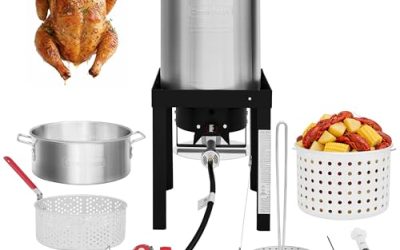
| King Kooker 24-inch Outdoor Cooker package | Best value | Propane, 15-quart aluminum fry pan | Cast burner, 24-inch stand, two punched baskets, hose, thermometer | Budget to mid-range |
| Bayou Classic 4-gallon stainless fryer (700-701) | Best overall build | Propane, 4-gallon stainless pot | V-shaped bottom, dual baskets, all stainless | Premium |
| Bayou Classic fish cooker set | Best for beginners | Propane, fry pot with basket | Simple stand and burner kit | Budget |
| King Kooker 16-inch cooker | Best small batches | Propane, compact pan | Fits a family of four | Budget |
| Presto 16-inch electric skillet | Best indoor pan-fry | Electric, 16-inch pan with glass lid | Adjustable thermostat, easy cleanup | Budget |
| Presto FryDaddy | Best small electric fryer | Electric, about 4 cups of oil | Built-in basket, lid, oil storage | Budget |
Details follow the manufacturers’ published specifications and typical retailer listings. Check the exact package contents, because outdoor cooker kits vary in whether they include a regulator, thermometer and second basket.
Best value: King Kooker 24-inch Outdoor Cooker package
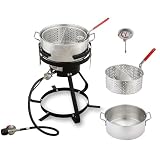
This package is the classic southern fish fry setup. It pairs a 24-inch stand and cast burner with a 15-quart aluminum fry pan, two punched aluminum baskets, a propane hose and a thermometer. The broad pan lets you fry fillets and hush puppies in the same oil, and the two baskets mean you can lift one batch while the next goes in.
The main trade-off is that the aluminum pan is thin and can dent or warp if mishandled, and the burner has no wind guard on some versions, so a breezy day can slow recovery. For the price, though, it is the setup most weekend fry cooks should start with.
Best overall build: Bayou Classic 4-gallon stainless fryer
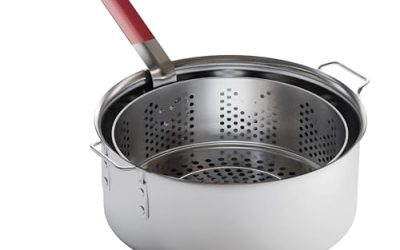
The Bayou Classic 700-701 is a heavier, more purposeful cooker. Its stainless pot has a V-shaped bottom, so crumbs and sediment fall away from the hottest oil near the burner instead of burning and darkening the batch. That extends the life of the oil, which matters if you fry fish regularly. Dual baskets, a stainless build and strong burner output make it the pick for people who host large fish fries.
The downsides are cost and noise: the burner is loud, and the unit takes up more storage space than a basic kit.
Best for beginners: Bayou Classic fish cooker set
This is a straightforward stand, burner and fry pot combination for people who just want to try frying outdoors without committing to a large cooker. It is quick to assemble and a sensible way to learn oil temperature control. The limit is capacity, so frying for a crowd means working in several rounds.
Best small batches: King Kooker 16-inch cooker
For a family of four, a 16-inch cooker is enough: a pound or two of fillets per batch, plus fries on the side. It stores easily and uses less oil, which lowers the cost of every fry. If you often cook for eight or more, move up to the 24-inch package.
Best indoor options: Presto electric skillet and FryDaddy
If you do not have an outdoor space or want to avoid propane, the Presto 16-inch electric skillet with glass cover handles shallow pan-frying of catfish, perch and breaded cod. The Presto FryDaddy holds only about four cups of oil, so it suits two to three small fillets or a handful of shrimp. Neither replaces an outdoor fry pot for a big party, but both heat consistently and clean up quickly.
How to choose a fish fryer
Capacity and batch size
Plan for roughly 1 to 1.5 pounds of fish per batch to keep the oil temperature from crashing. For a 15-quart pan, fill to about the halfway line, which is 6 to 8 quarts of oil; the pan should never be more than about two thirds full once the food goes in. A worked example: 6 pounds of fillets at 1.5 pounds per batch is four batches, and at about 3 to 4 minutes each plus recovery time you can finish in under 30 minutes.
Propane versus electric
Propane burners reach frying temperature fast and recover quickly when cold fish goes in, which is what gives a crisp crust. Electric fryers are safer for beginners and fit under a range hood, but small heating elements recover slowly, so they need smaller batches.
Materials
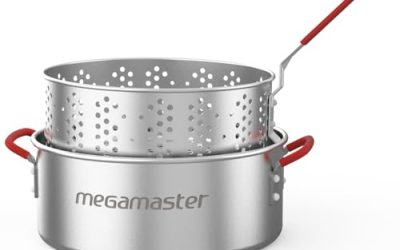
Aluminum pots heat quickly and are light, but they dent and discolor. Stainless steel resists warping and cleans better but costs more. Look for heavy-gauge walls and a basket with a long, heat-protected handle.
Temperature control
Fish fries best at 350 to 375 F. A clip-on or probe thermometer is not optional on a propane cooker, because a burner without a thermostat will overshoot quickly. If your kit lacks one, buy a separate thermometer rated for deep frying.
Frying temperatures and times
| Item | Oil temperature | Approximate time | Done when |
|---|---|---|---|
| Catfish fillets, 1/2 inch | 350 to 365 F | 3 to 5 minutes | Golden and floating, 145 F inside |
| Cod or haddock, battered | 360 to 375 F | 4 to 6 minutes | Crisp, flakes easily |
| Whole small perch or bluegill | 350 F | 4 to 6 minutes | Fins crisp, flesh opaque |
| Shrimp, medium | 350 to 375 F | 2 to 3 minutes | Pink, curled |
| Hush puppies | 350 F | 2 to 3 minutes | Golden brown |
The USDA recommends cooking fish to 145 F internally. Use fresh, dry fillets and pat them dry before breading, because moisture lowers oil temperature and softens the crust.
Safety and ownership realities
- Set up outdoors only on level ground, well away from structures, decks and overhanging branches.
- Never overfill the pot. Food displaces oil; overfilling is the most common cause of boil-over fires.
- Thaw and dry food completely. Ice and water cause violent splatter.
- Keep a fire extinguisher rated for grease fires nearby and never use water on an oil fire.
- Oil life: strain after each use and store in a sealed container. Fish oil flavors transfer, so many cooks keep one batch just for seafood and replace it after three or four fries.
- What wears first: hoses, regulators and thin aluminum pans. Inspect hoses each season for cracks.
Step-by-step: a clean outdoor fish fry
- Set up the cooker on level, non-flammable ground. A tilted pot shifts oil toward one side and can tip.
- Measure the oil with the water-displacement method described above, then dry the pot completely before adding oil.
- Heat to 350 F with the thermometer clipped in place. Heating slowly protects the oil from scorching.
- Season, dredge and rest the fish. A 5 to 10 minute rest after breading helps the coating adhere instead of falling off in the oil.
- Lower the basket slowly. A gentle entry limits splatter and keeps pieces from clumping.
- Fry in batches and hold in a 200 F oven on a wire rack so the crust stays crisp instead of steaming on a plate.
- Turn off the burner, let the oil cool completely (this can take several hours), then strain and store it.
Cleaning and storage
Wash aluminum pots by hand and dry them fully; dishwashers darken the metal. Stainless pots can take a baking-soda scrub for baked-on residue. Wipe the burner and check for spider webs in the venturi tube, which is a common cause of low flame. Store hoses coiled loosely and out of direct sun, and keep the propane tank upright in a ventilated area. A cover for the stand extends its life if you leave it on a porch.
Buying mistakes to avoid
- Choosing by BTU alone. A powerful burner with a tiny pot only overheats the oil; match the pot to your usual batch size.
- Skipping the thermometer. Even a quality burner swings widely without one.
- Buying a turkey fryer for fish. A deep, narrow pot suits poultry; for fillets a wider, shallower pot with a basket is more practical and uses less oil.
- Ignoring storage. A four-gallon stainless set is bulkier than it looks, so measure garage or shed space first.
Choosing by situation
| Your situation | Best choice |
|---|---|
| Weekend fish fries for 6 to 10 people | King Kooker 24-inch package |
| Frequent large fries, want durability | Bayou Classic 4-gallon stainless |
| Trying outdoor frying for the first time | Bayou Classic fish cooker set |
| Family of four, limited storage | King Kooker 16-inch |
| Apartment or no outdoor space | Presto electric skillet or FryDaddy |
Frequently Asked Questions
What is the best oil for frying fish?
Peanut oil is the traditional choice because of its high smoke point of about 450 F and mild flavor. Canola, vegetable and soybean oils also work well. Avoid olive oil, which smokes at frying temperatures. If anyone eating has a peanut allergy, use canola.
How hot should the oil be for fish?
Aim for 350 to 375 F. Lower temperatures make the coating greasy, while higher ones burn the outside before the center cooks. Let the oil return to temperature between batches.
How much oil do I need in an outdoor fish fryer?
For a 15-quart pan, use about 6 to 8 quarts. Test by placing the food in the empty pot, covering with water to about an inch above the food, then removing the food and marking the water line; this prevents overfilling.
Can I reuse frying oil after cooking fish?
Yes, usually two or three times. Let the oil cool, strain it through fine mesh or a coffee filter, and store it sealed in a cool, dark place. Discard it if it smells fishy or rancid, foams, or darkens heavily.
What fish is best for frying?
Catfish, cod, haddock, perch, crappie and tilapia fry well because they are mild and flake cleanly. Cut fillets to a uniform thickness of about half an inch so they cook evenly.
Is an electric fish fryer good enough?
For small households, yes. Electric units are safer indoors and easier to clean, but their smaller heating elements and capacity limit batch size. For parties and large families, a propane cooker is faster and more practical.
More from Amazon
Programs that pair well with the guide above. Offers and eligibility are set by Amazon and may change.
Free shipping on eligible items, Prime Video and more. Eligible new members can start with a free trial.
Start a Prime free trialA Prime membership for ages 18-24 with a trial period. Eligibility is set by Amazon.
See Prime for Young AdultsAudiobooks and podcasts to listen to on the go. Eligible new members can start with a free trial.
Try Audible freeAd-free music streaming. Eligible new subscribers can start with a free trial.
Try Music Unlimited freeAs an Amazon Associate we earn from qualifying purchases.

Write Your Review
No reviews yet. Be the first to share your experience!