

Easy Pancake Recipe Homemade & Fluffy
The best easy pancake recipe homemade fluffy result comes from a thick but pourable batter, a moderately hot griddle at about 190°C (375°F), and gentle mixing that leaves a few small lumps. Use roughly 60 ml (¼ cup) of batter per pancake; this size cooks through evenly while staying light and tender inside.
For about 10 to 12 pancakes, whisk together 240 g (2 cups) plain all-purpose flour, 25 g (2 tablespoons) sugar, 2 teaspoons baking powder, ½ teaspoon baking soda, and ½ teaspoon fine salt. In a separate bowl, whisk 360 ml (1½ cups) buttermilk, 1 large egg, 45 g (3 tablespoons) melted butter, and 1 teaspoon vanilla extract. Pour the wet mixture into the dry ingredients and fold only until no large dry pockets remain. Rest the batter for 5 minutes, then cook portions on a lightly greased griddle until bubbles form and the edges look set.
Our top picks
 Sisi Lola Pancake Mix
- Sisi Lola Pancake Mix is made for fluffy,…
- Simply add water to the mix, prepare your…
- Prepare a batch of pancakes in minutes for…
 DivineKuizine Complete & Fluffy Pancake and Waffle
- Divine Kuizine pancakecake and waffle mix is premeasured,…
- Our silver dollar pancakes are made to order,…
- When it comes to pancakes, we think yours…
As an Amazon Associate we earn from qualifying purchases at no extra cost to you.
What makes homemade pancakes light and fluffy?
Fluffy pancakes depend less on complicated ingredients than on controlling four variables: batter thickness, mixing, heat, and portion size. A batter that is too thin spreads quickly and produces flat pancakes. A batter that is too thick may brown outside before the centre cooks.
| Variable | Ideal target | What happens if it is wrong |
|---|---|---|
| Batter consistency | Thick ribbon that slowly levels out | Thin batter spreads flat; stiff batter cooks unevenly |
| Griddle temperature | About 190°C (375°F) | Too cool causes pale, greasy pancakes; too hot burns the outside |
| Portion size | 60 ml (¼ cup), about 9–10 cm wide | Large portions are difficult to flip and may stay raw inside |
| Mixing | Fold 10–15 times, leaving small lumps | Overmixing develops gluten and makes pancakes chewy |
| Resting time | 5–10 minutes | Skipping it can give less even texture and thinner pancakes |
Ingredients for fluffy buttermilk pancakes
- 240 g (2 cups) plain all-purpose flour
- 25 g (2 tablespoons) granulated sugar
- 2 teaspoons baking powder
- ½ teaspoon baking soda
- ½ teaspoon fine salt
- 360 ml (1½ cups) buttermilk
- 1 large egg, about 50 g without the shell
- 45 g (3 tablespoons) unsalted butter, melted and slightly cooled
- 1 teaspoon vanilla extract
- Extra butter or neutral oil for the cooking surface
Buttermilk supplies acidity for the baking soda and adds a mild tang. If you do not have it, stir 1 tablespoon lemon juice or white vinegar into 360 ml milk and leave it for 5 minutes. The substitute will work, although commercial buttermilk is usually thicker and may produce a slightly fuller batter.
How to make easy homemade fluffy pancakes
1. Combine the dry ingredients
Whisk the flour, sugar, baking powder, baking soda, and salt in a large bowl for about 20 seconds. This distributes the raising agents before liquid is added, so one part of the batch does not rise more than another.
2. Mix the wet ingredients separately
Whisk the buttermilk, egg, melted butter, and vanilla until blended. Let the melted butter cool until warm rather than hot. Very hot butter can partially cook the egg or form small solid pieces when it meets cold buttermilk.
3. Fold, do not beat
Make a well in the dry ingredients and pour in the wet mixture. Use a whisk or rubber spatula to fold from the bottom and sides, stopping when the flour is mostly incorporated. Ten to fifteen broad strokes are often enough.
A few pea-sized lumps are desirable. They disappear during cooking and indicate that the gluten network has not been worked excessively. Smooth, glossy batter may look appealing, but it often produces flatter, chewier pancakes.
4. Check the batter consistency
Lift the spatula or whisk. The batter should fall in a thick ribbon and slowly disappear into the bowl within 2 to 3 seconds. It should not pour like cream, and it should not sit as a solid mound.
If the batter is too thin, add flour 1 tablespoon at a time. If it is too stiff, add buttermilk 1 tablespoon at a time. Flour absorbs liquid differently depending on humidity, brand, and how it was measured, so consistency is more useful than following the volume measurement without adjustment.
5. Rest for 5 to 10 minutes
Set the batter aside while the griddle heats. Resting gives the flour time to absorb liquid and allows some of the bubbles created by mixing to settle into a more stable structure. Do not leave the batter at room temperature for several hours because the leavening action and texture will decline.
6. Preheat the griddle correctly
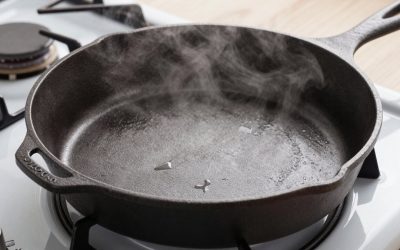
Heat a heavy frying pan, cast-iron skillet, or electric griddle over medium heat. Aim for approximately 190°C (375°F). If you do not have an infrared thermometer, drop a few drops of water on the surface: they should sizzle and evaporate within about 2 seconds, not sit motionless or vanish instantly.
Brush the surface with a very thin film of butter or neutral oil. Too much fat can fry the edges and cause uneven browning. Wipe away excess with a folded paper towel, taking care around the hot surface.
7. Cook 60 ml portions
Scoop 60 ml (¼ cup) of batter for each pancake and pour it without spreading. A ¼-cup measuring cup gives pancakes of approximately 9 to 10 cm in diameter, leaving enough room in the pan to flip them cleanly.
Cook the first side for about 2 to 3 minutes. Flip when several bubbles have risen and burst across the surface, the edges look slightly dry, and the underside is golden brown. Cook the second side for another 1 to 2 minutes.
Do not press down with the spatula after flipping. Pressing forces out the steam that helps create a light interior. Transfer finished pancakes to a wire rack or a warm plate rather than stacking them tightly while very hot; a wire rack helps prevent the bottoms from becoming damp.
Batch size and pan-space guide
| Pan or griddle width | Recommended pancakes per batch | Approximate batter used | Expected cooking time |
|---|---|---|---|
| 20 cm (8 inches) | 1 pancake | 60 ml | 3–5 minutes |
| 25 cm (10 inches) | 2 pancakes | 120 ml | 4–6 minutes |
| 30 cm (12 inches) | 3 pancakes | 180 ml | 5–7 minutes |
| Electric griddle, 45–50 cm | 5–6 pancakes | 300–360 ml | 6–8 minutes |
Leave at least 3 cm (about 1¼ inches) between pancakes. Crowding lowers the surface temperature and makes flipping awkward. For an even batch, cook pancakes of the same portion size together rather than combining small and large portions in one pan.
How to adjust the recipe for different situations
| Your situation | Best adjustment | Trade-off |
|---|---|---|
| Cooking for two | Halve every ingredient and make 5–6 pancakes | Small batches have less margin for measuring errors |
| Feeding four to six people | Use the full recipe and keep finished pancakes on a rack in a 95°C (200°F) oven | Long holding can dry the edges |
| No buttermilk available | Acidify milk with 1 tablespoon lemon juice or vinegar | The batter may be slightly thinner |
| Extra-tall pancakes | Use 75 ml batter per pancake and reduce heat slightly | They take longer to cook through |
| Limited cooking space | Use a 20 cm pan and cook one pancake at a time | The batch takes longer but heat control is easier |
Common pancake problems and practical fixes
Flat or dense pancakes
Overmixing is the most common cause. Baking powder and baking soda can also lose strength after extended storage. Check the date on the packet and replace old leavening if pancakes repeatedly fail to rise.
Burnt outside and raw centre
The pan is too hot, the pancakes are too large, or both. Lower the heat to medium-low and use 60 ml portions. If the underside browns before bubbles appear on top, the surface temperature is higher than the batter can tolerate.
Pale, greasy pancakes
The cooking surface may be underheated, or too much butter may have been added. Preheat for several minutes and apply only a thin coating of fat. Butter contains water and milk solids, so it can darken quickly; a little neutral oil is more forgiving for long batches.
Tough edges
Excess flour and repeated stirring can make the edges firm. Measure flour by weight when possible: 240 g is the target for this recipe. If using cups, spoon flour into the cup and level it instead of scooping directly from the bag.
Unevenly coloured pancakes
Uneven heat, excess grease, or a pan that has not preheated fully can create pale patches. Let the pan recover its temperature between batches and wipe away burnt butter solids before continuing.
Serving ideas for a seafood-focused breakfast
These pancakes are lightly sweet, so they can support both traditional toppings and savoury seafood pairings. For a classic plate, serve them with butter, maple syrup, berries, or sliced banana. For a brunch-style option, reduce the sugar to 1 tablespoon and serve smaller 45 ml pancakes with smoked salmon, crème fraîche, dill, and lemon.
For a savoury version, omit the vanilla, reduce the sugar to 1 teaspoon, and add chopped chives or black pepper. Pair the pancakes with cooked crab, prawns, or smoked trout rather than raw seafood. Keep perishable toppings chilled until serving and do not hold seafood on a warm pancake plate for extended periods.
Storage, reheating, and cleanup
Cool leftover pancakes completely, place baking paper between them, and refrigerate in a sealed container for up to 3 days. For longer storage, freeze them in a single layer first, then transfer them to a freezer-safe bag for up to 2 months. Reheat in a toaster, toaster oven, or 175°C (350°F) oven until hot throughout; microwaving is quick but gives a softer, less crisp surface.
Clean the pan after it has cooled enough to handle. For a seasoned cast-iron pan, wipe away residue, use a small amount of water and a soft brush if necessary, then dry it completely and apply a very thin layer of oil. Non-stick surfaces should be cleaned with a soft sponge rather than abrasive pads, which can damage the coating. The first items to wear out in pancake equipment are usually non-stick coatings, spatulas, and warped pans, not the recipe ingredients themselves.
Frequently Asked Questions
How thick should pancake batter be?
It should fall from a spoon in a thick ribbon and slowly level out within 2 to 3 seconds. It should spread slightly when poured but should not run rapidly across the pan. Add flour or buttermilk one tablespoon at a time to correct the consistency.
What temperature is best for fluffy pancakes?
A griddle temperature of about 190°C (375°F) works well for 60 ml portions. Without a thermometer, water droplets should sizzle and disappear in roughly 2 seconds. Lower the heat if the bottoms brown before bubbles appear on the surface.
Why should pancake batter have lumps?
Small lumps mean the flour has not been overworked. Excessive whisking develops gluten, which can make pancakes chewy rather than tender. Stop mixing as soon as no large dry pockets remain.
How much batter should I use for each pancake?
Use 60 ml (¼ cup) for a pancake about 9 to 10 cm wide. This portion is large enough to rise attractively but small enough to cook through before the outside becomes too dark. Use 45 ml for mini pancakes or 75 ml for thicker, larger pancakes, adjusting the heat downward as needed.
Can homemade pancakes be made without buttermilk?
Yes. Add 1 tablespoon lemon juice or white vinegar to 360 ml milk and let it stand for 5 minutes before using. The acidity helps activate the baking soda, although the finished batter may be a little thinner than one made with cultured buttermilk.
How do I keep pancakes fluffy after cooking?
Place them on a wire rack or loosely cover them while cooking the rest. If holding them warm, use an oven set to about 95°C (200°F) and avoid keeping them there for more than 20 to 30 minutes, since extended heat can dry them out.
More from Amazon
Programs that pair well with the guide above. Offers and eligibility are set by Amazon and may change.
Free shipping on eligible items, Prime Video and more. Eligible new members can start with a free trial.
Start a Prime free trialA Prime membership for ages 18-24 with a trial period. Eligibility is set by Amazon.
See Prime for Young AdultsAudiobooks and podcasts to listen to on the go. Eligible new members can start with a free trial.
Try Audible freeAd-free music streaming. Eligible new subscribers can start with a free trial.
Try Music Unlimited freeAs an Amazon Associate we earn from qualifying purchases.
Write Your Review
No reviews yet. Be the first to share your experience!