

The best chamber vacuum sealers for seafood are the VacMaster VP215 for most home fishers, the VacMaster VP230 for larger portions and frequent use, and the Avid Armor USV32 when a smaller countertop footprint and strong bag flexibility matter most.
Chamber machines are usually the better choice than external suction sealers for fish because they remove air from the entire chamber rather than pulling liquid toward a pump. That makes them more tolerant of moist fillets, marinades, soups, and partially frozen seafood. The trade-off is a higher purchase price, greater weight, and the need for chamber-specific bags rather than textured external-sealer rolls.
Our top picks
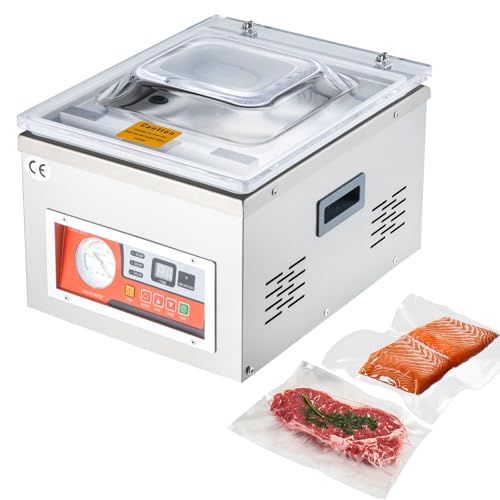 VEVOR Chamber Vacuum Sealer 260W Sealing Power
- -100KPa Vacuum Power: This vacuum sealer nearly removes…
- Dual Lock Seal: The 8 mm wide seal…
- Fits Big & Small Items: With a deep…
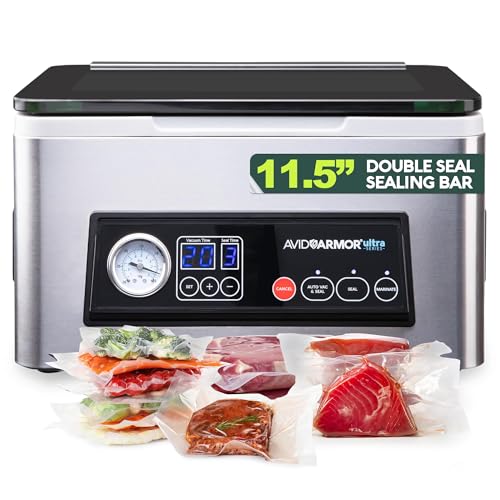 Avid Armor USV20 Chamber Vacuum Sealer Machine
- Master Liquid Sealing Without Mess: Our chamber vacuum…
- Precision Vacuum & Seal Control: Dial in adjustable…
- Compact Footprint For Easy Storage: Sous vide vacuum…
 Mesliese 100kPa Chamber Vacuum Sealer
- 【𝐏𝐨𝐰𝐞𝐫𝐟𝐮𝐥 𝟏𝟎𝟎𝐤𝐏𝐚 𝐒𝐭𝐫𝐨𝐧𝐠 𝐕𝐚𝐜𝐮𝐮𝐦 𝐒𝐮𝐜𝐭𝐢𝐨𝐧】With impressive 100kPa deep…
- 【𝐒𝐩𝐚𝐜𝐢𝐨𝐮𝐬 𝟔𝐋 𝐂𝐚𝐩𝐚𝐜𝐢𝐭𝐲 & 𝐔𝐧𝐢𝐯𝐞𝐫𝐬𝐚𝐥 𝐁𝐚𝐠 𝐂𝐨𝐦𝐩𝐚𝐭𝐢𝐛𝐢𝐥𝐢𝐭𝐲】Features an…
- 【𝐑𝐞𝐦𝐨𝐯𝐚𝐛𝐥𝐞 𝟏𝟏.𝟐𝟔" 𝐃𝐮𝐚𝐥 𝐒𝐞𝐚𝐥𝐢𝐧𝐠 𝐁𝐚𝐫】Equipped with a detachable…
| Product | Key specs | |
|---|---|---|
| VEVOR Chamber Vacuum Sealer 260W Sealing Power | -100KPa Vacuum Power: This vacuum sealer nearly removes… Dual Lock Seal: The 8 mm wide seal… Fits Big & Small Items: With a deep… | Check price |
| Avid Armor USV20 Chamber Vacuum Sealer Machine | Master Liquid Sealing Without Mess: Our chamber vacuum… Precision Vacuum & Seal Control: Dial in adjustable… Compact Footprint For Easy Storage: Sous vide vacuum… | Check price |
| Mesliese 100kPa Chamber Vacuum Sealer | 【𝐏𝐨𝐰𝐞𝐫𝐟𝐮𝐥 𝟏𝟎𝟎𝐤𝐏𝐚 𝐒𝐭𝐫𝐨𝐧𝐠 𝐕𝐚𝐜𝐮𝐮𝐦 𝐒𝐮𝐜𝐭𝐢𝐨𝐧】With impressive 100kPa deep… 【𝐒𝐩𝐚𝐜𝐢𝐨𝐮𝐬 𝟔𝐋 𝐂𝐚𝐩𝐚𝐜𝐢𝐭𝐲 & 𝐔𝐧𝐢𝐯𝐞𝐫𝐬𝐚𝐥 𝐁𝐚𝐠 𝐂𝐨𝐦𝐩𝐚𝐭𝐢𝐛𝐢𝐥𝐢𝐭𝐲】Features an… 【𝐑𝐞𝐦𝐨𝐯𝐚𝐛𝐥𝐞 𝟏𝟏.𝟐𝟔" 𝐃𝐮𝐚𝐥 𝐒𝐞𝐚𝐥𝐢𝐧𝐠 𝐁𝐚𝐫】Equipped with a detachable… | Check price |
 VEVOR Chamber Vacuum Sealer | Better Preservation: Our chamber vacuum sealer packs a… Time-Saving Efficiency: Our chamber sealer machine blasts through… Modern Kitchen Essential: This sleek chamber sealer is… | Check price |
As an Amazon Associate we earn from qualifying purchases at no extra cost to you.
Quick comparison: the leading choices
| Model | Approx. chamber size | Seal-bar length | Pump and cycle style | Approx. countertop footprint | Best suited to |
|---|---|---|---|---|---|
| VacMaster VP215 | 10 x 12 x 5 in | 10 in | Oil-lubricated pump; automatic cycle | 19 x 14 x 15 in | Home seafood storage and moderate batches |
| VacMaster VP230 | 12 x 15 x 5 in | 12 in | Oil-lubricated pump; automatic cycle | 22 x 16 x 16 in | Large fillets, bulk portions, and frequent use |
| Avid Armor USV32 | 12 x 15 x 5 in | 12 in | Oil-pump chamber system; programmable cycle | 22 x 16 x 15 in | Users wanting strong control in a compact format |
| Avid Armor USV41 | 16 x 18 x 5 in | 16 in | Oil-pump chamber system; programmable cycle | 27 x 20 x 16 in | Whole sides, broad bags, and high-volume prep |
Dimensions are approximate external or usable measurements and can vary slightly by production revision. Check the manufacturer’s current specification sheet before ordering, particularly if the machine must fit beneath cabinets or on a narrow worktop.
Our picks by seafood-storage situation
Best overall for a home fish freezer: VacMaster VP215
The VP215 is the sensible starting point for most households. Its chamber is large enough for individual salmon portions, cod loins, shrimp bags, crab meat, and typical freezer portions, while its 10-inch seal bar keeps bag costs and machine size under control. The oil-lubricated pump is slower to maintain than a dry pump, but it is generally better suited to repeated cycles and damp food than many entry-level external sealers.
Its main limitation is width. A whole broad fillet or a large flat bag may need to be folded, trimmed, or divided into two packages. For most seafood, that is not a serious drawback: smaller flat portions freeze faster and are easier to thaw without waste.
Best for large portions and regular batch work: VacMaster VP230
The VP230 earns its extra space when you freeze a large catch, prepare several family-size portions at once, or seal food every week. The 12-inch seal bar accepts wider bags, and the deeper chamber gives more room for bulky contents. It is also a better match for users who do not want to compress a broad salmon side or a generous amount of shellfish into a narrow package.
The price is not its only penalty. This machine is heavy and occupies a substantial section of a counter. Measure both the footprint and the lid’s opening arc; a location that fits the base may not leave enough clearance to load the chamber comfortably.
Best alternative for control and bag flexibility: Avid Armor USV32
The USV32 sits in the same general size class as the VP230 but is aimed at users who want adjustable vacuum and sealing controls. That can be useful for delicate fish, soft fruit, baked goods, or containers where maximum vacuum could crush the contents. It accepts smooth chamber pouches and rolls, and its 12-inch sealing capacity handles ordinary seafood portions without demanding a large industrial-style machine.
Choose it over a smaller unit if you regularly seal liquids or several packages in succession. Choose it over a larger 16-inch machine if most of your bags are under 12 inches wide and counter space is limited.
Best for broad bags and high-volume processing: Avid Armor USV41
The USV41 is the specialist choice for large fish portions, wide cuts of meat, meal-prep containers, and users who process a substantial catch at once. Its 16-inch sealing width reduces the need to fold or split broad items. That can improve presentation and reduce the number of separate packages.
It is excessive for occasional fillets. A large chamber also means more air to evacuate per cycle, and the machine demands a strong, permanent workstation. Before buying, confirm that the electrical circuit, ventilation around the motor, and storage location are suitable.
What matters more than maximum vacuum
Chamber size
Measure the food, not just the bag. A chamber’s listed width does not mean every inch is equally convenient because the bag must lie flat and the opening must reach the seal bar. For a 10-inch seal bar, a practical bag width is usually 8 to 10 inches. For a 12-inch bar, 10 to 12 inches is more comfortable. Leave room for the open end to sit straight across the sealing strip.
Chamber depth also matters for containers and irregular food. Flat frozen fillets need less height than dressed fish, marinated portions, or a rigid container. If seafood is pre-frozen, bulky liquid is less of a problem, but the package still has to close without pressing against the lid.
Seal-bar length
Seal-bar length determines the widest reliable package, not the total amount of food a machine can hold. A 10-inch bar is adequate for most individual portions. A 12-inch bar is a useful middle ground for family packs. A 16-inch bar is valuable for broad fillets but adds cost, weight, and footprint.
Pump strength and pump type
Manufacturers describe pumps using horsepower, vacuum level, or cycle time, which makes direct comparisons difficult. For seafood, the practical questions are whether the pump handles repeated cycles, how consistently it reaches its programmed vacuum, and whether it tolerates liquid vapor.
Oil-lubricated pumps are common in serious chamber machines. They generally require more care but are well suited to frequent operation. Change or inspect the oil according to the manual, keep the machine level, and allow it to cool when the instructions call for a rest period. A dry pump may be simpler for occasional use, but simplicity does not automatically mean better performance with wet foods.
Bag compatibility
Chamber sealers require smooth, non-embossed pouches or rolls because the machine removes air from around the bag. Textured bags designed for external suction sealers may not work correctly. Smooth chamber bags are commonly made from multilayer plastic film and are sold in different thicknesses and widths.
For sharp crab shells, fish bones, or rough-edged portions, use a heavier bag or wrap the exposed edge before sealing. A double seal is inexpensive insurance for long freezer storage. Do not fill the bag so high that food reaches the sealing area; leave roughly 3 inches of clean film at the opening.
Decision matrix
| Your situation | Best machine class | Why |
|---|---|---|
| Occasional portions, limited counter space, under about $700 | Compact 10-inch chamber sealer | Lower bag use and easier storage; enough for individual fillets |
| Weekly seafood prep or several kilograms per batch | 12-inch oil-pump machine | Better throughput, wider bags, and more forgiving loading |
| Large salmon sides, broad cuts, or commercial-style prep at home | 16-inch chamber sealer | Reduces folding and splitting, but needs dedicated workspace |
| Delicate foods, mixed household use, or varying bag contents | Programmable chamber sealer | Adjustable vacuum and seal time provide more control |
Worked cost calculation
Suppose a chamber machine costs $600 and you use it for 300 seafood portions over three years. The machine cost is $2 per portion before bags and electricity. If each smooth pouch costs about $0.20 to $0.60 depending on size and thickness, the packaging cost is roughly $60 to $180 for the same 300 portions. A realistic equipment-plus-bag total is therefore about $660 to $780, or $2.20 to $2.60 per portion.
This calculation favors a chamber sealer when you process regularly. If you seal only 30 portions over three years, the equipment portion rises to $20 per package, making an external sealer or freezer paper more economical unless the chamber machine also serves frequent cooking and food-storage tasks.
Setup and maintenance that protect the seal
- Chill or freeze wet seafood first. Firm contents are easier to position and less likely to shift into the seal area.
- Load the bag with a clean margin. Wipe moisture, scales, oil, and marinade from the inside of the opening.
- Lay the opening flat across the seal bar. Wrinkles create channels that can leak slowly in the freezer.
- Use a moderate vacuum for fragile food. Maximum vacuum is not always necessary and can deform soft fillets or crush delicate items.
- Inspect the seal after cooling. Look for a continuous, even band. If it is thin or interrupted, trim the opening and make a second seal.
- Clean the chamber after wet cycles. Wipe the chamber, lid gasket, and seal area with an appropriate food-contact-safe cleaner, then dry them before closing.
- Maintain the pump. Follow the manufacturer’s oil inspection and replacement schedule, and replace worn gaskets when the machine struggles to reach its normal vacuum.
Common ownership mistakes
The part most likely to cause frustration is often not the pump but the lid gasket or seal wire. A dirty gasket can create a poor vacuum; a worn seal wire can produce an uneven closure. Keep spare sealing components available if the machine is important during fishing season.
Another mistake is buying bags that are too large. Excess film increases cost, occupies more chamber space, and creates more folds. A bag only slightly wider and longer than the portion is usually easier to seal and freezes more efficiently. Finally, vacuum sealing does not replace safe refrigeration, freezing, thawing, or cooking practices. It is packaging, not a substitute for temperature control.
Bottom line
Choose the VacMaster VP215 when you want the most practical home seafood machine and usually seal individual portions. Step up to the VacMaster VP230 or Avid Armor USV32 for weekly batches, wider bags, and more control. Choose the Avid Armor USV41 only when broad food and high volume justify its larger footprint. For most buyers, a reliable 10- or 12-inch chamber, smooth bags, an oil-capable pump, and easy cleaning matter more than chasing the highest advertised vacuum number.
More from Amazon
Programs that pair well with the guide above. Offers and eligibility are set by Amazon and may change.
Free shipping on eligible items, Prime Video and more. Eligible new members can start with a free trial.
Start a Prime free trialA Prime membership for ages 18-24 with a trial period. Eligibility is set by Amazon.
See Prime for Young AdultsAudiobooks and podcasts to listen to on the go. Eligible new members can start with a free trial.
Try Audible freeAd-free music streaming. Eligible new subscribers can start with a free trial.
Try Music Unlimited freeAs an Amazon Associate we earn from qualifying purchases.

Write Your Review
No reviews yet. Be the first to share your experience!